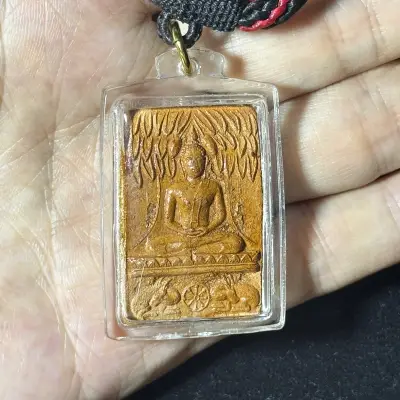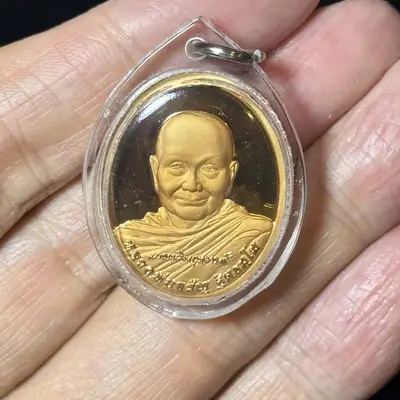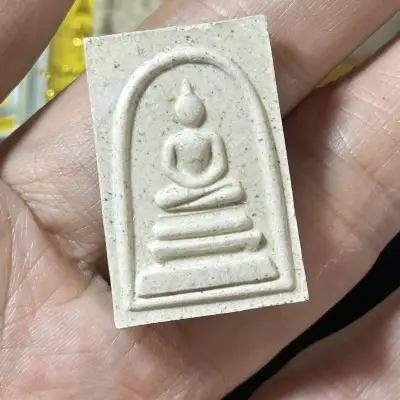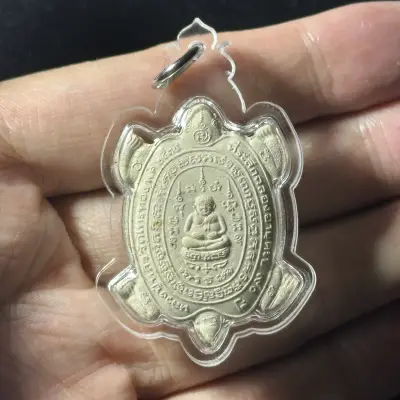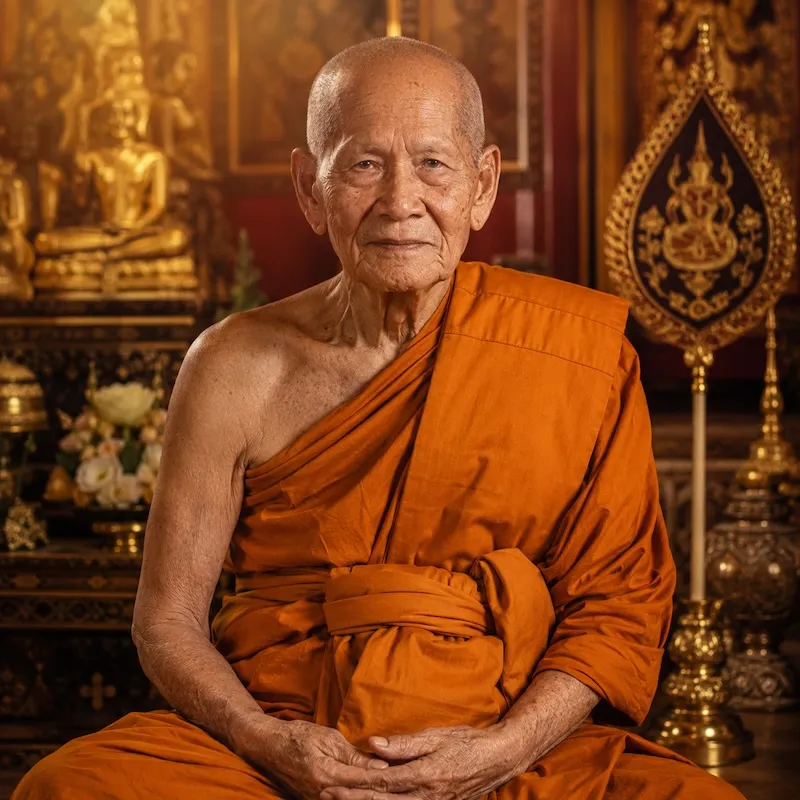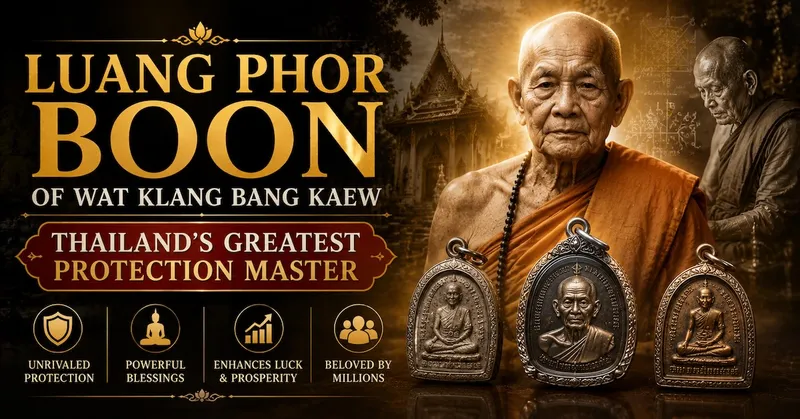
Who Was Luang Phor Boon?
Luang Phor Boon of Wat Klang Bang Kaew in Nakhon Pathom Province is widely regarded as the greatest creator of protective amulets in Thai Buddhist history. Active during the late 19th and early 20th centuries, he specialized in Phra Pidta (closed eyes) amulets imbued with extraordinarily powerful Kong Grapan (invulnerability) and Klaew Klaad (danger evasion) energy. Among serious Thai amulet collectors, a genuine Luang Phor Boon piece represents the pinnacle of protective spiritual craftsmanship.
His reputation is not based on marketing or modern hype — it was earned across decades of consistent testimonials from military officers, police, and ordinary citizens who credited his amulets with saving their lives in concrete, documented situations.
Life and Spiritual Practice
Luang Phor Boon was ordained at Wat Klang Bang Kaew, a modest temple in the rural heartland of Nakhon Pathom Province, about 50 kilometers west of Bangkok. He devoted his monastic life to the study and practice of protective Wicha (mystical knowledge), mastering the ancient Khmer and Pali scripts used in sacred inscriptions.
What distinguished Luang Phor Boon from other monks was the intensity and duration of his meditation practice. He was known for entering deep meditative states for extended periods while consecrating amulets, channeling his accumulated spiritual energy directly into each piece. Contemporaries reported that his consecration sessions were unusually powerful, with fellow monks describing palpable shifts in the atmosphere during his rituals.
He spent his entire monastic career at Wat Klang Bang Kaew, never seeking fame or attention beyond his immediate community. His reputation grew entirely through word of mouth — soldiers who wore his amulets during conflicts returned to testify about their experiences, and their stories spread across Thai society.
The Famous Phra Pidta
Luang Phor Boon's signature creation is his Phra Pidta — the closed-eyes Buddha amulet that has become synonymous with his name. His Phra Pidta pieces are distinctive for several reasons:
- Sacred powder composition — Luang Phor Boon mixed his own sacred powder from carefully selected ingredients, including powdered limestone from the temple walls, crushed sacred texts he had personally inscribed, specific herbs gathered under astrologically favorable conditions, and other elements from his personal spiritual practice.
- Hand-pressed production — Each piece was individually pressed by Luang Phor Boon himself, resulting in natural variations that distinguish genuine pieces from later imitations.
- Concentrated consecration — Rather than blessing large batches in a single ceremony, Luang Phor Boon reportedly consecrated smaller numbers of amulets over extended periods, resulting in what practitioners describe as unusually dense spiritual energy per piece.
- Multiple arm styles — His Phra Pidta range from standard two-arm designs to the elaborate multi-arm Phra Pidta Maha Ut, each carrying varying levels of protective inscription coverage.