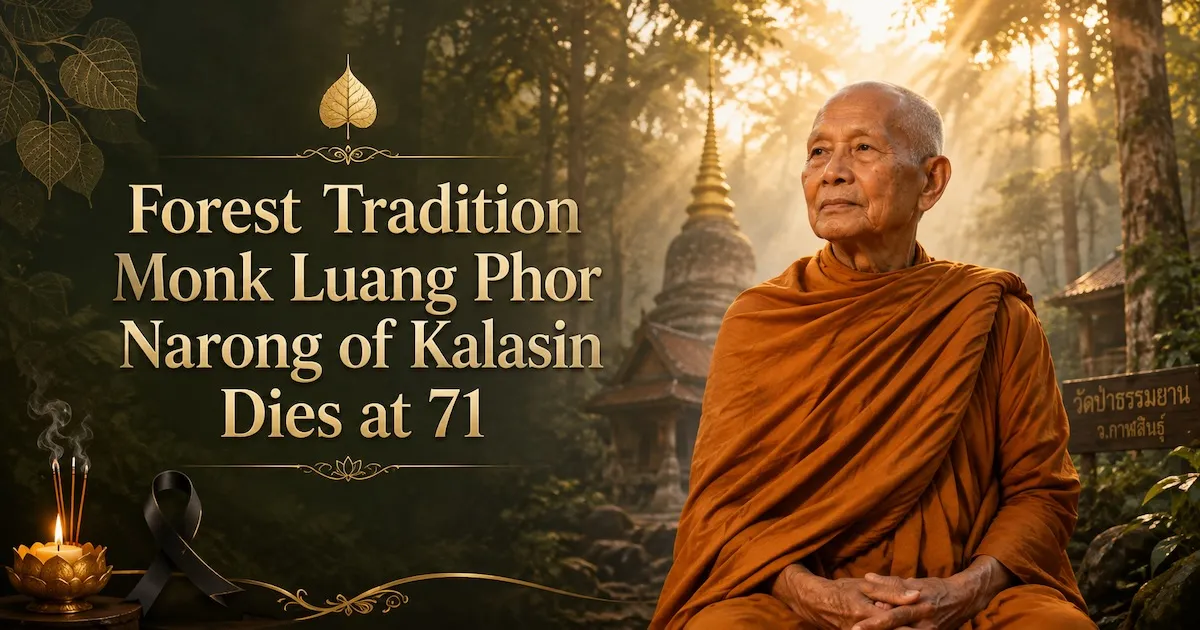
Luang Phor Narong Chayamongkalo (หลวงพ่อณรงค์ ชยมงฺคโล), abbot of Wat Phutthanimit Phu Khao (วัดพุทธนิมิต ภูค่าว) in Ban Na Si Nuan village, Sahatsakhan district, Kalasin province, northeastern Thailand, passed away peacefully at 1:47 p.m. on August 7, 2026. He was 71 years old and had spent 38 years in the monkhood. Ordained in 1985 (2528 BE) under his preceptor Phra Dhamma Vachiraniwit, he belonged to the Thammayut Nikaya, the reform monastic order founded by King Mongkut (Rama IV), and was known locally as a "phra geji" — a monk of recognized meditative attainment. Temple officials held the cremation rite that same afternoon at 2:30 p.m., with monks from multiple traditions chanting alongside grieving disciples and lay devotees.
A Life in the Forest Tradition
The Thammayut order Luang Phor Narong belonged to split from Thailand's larger Mahanikaya order in the 19th century, emphasizing strict monastic discipline (vinaya) and meditation practice over ceremonial ritual. Within Thammayut, the "Forest Tradition" (สายป่า) descending from Ajahn Mun Bhuridatto pushed this further, sending monks into remote wilderness to practice austerities and insight meditation (vipassana) rather than reside in city temples. That lineage produced some of modern Thailand's most revered meditation masters, including Luang Pu Waen Sucinno in the north and Luang Ta Maha Bua in the northeast. Luang Phor Narong spent his monastic life on a modest hill in Kalasin rather than achieving nationwide fame, but within his own province he was regarded as a living link to that same austere, meditation-first tradition — see our guide to Ajahn Mun and the Thai Forest Tradition for more background.
From a Bare Hilltop to a Regional Buddhist Landmark
When Luang Phor Narong arrived at what is now Wat Phutthanimit in 1985, it was little more than a bare hill known locally as "Phu Khao," meaning "buffalo-horn hill." Over the following 38 years he oversaw construction of a wooden ordination hall, a chedi, and pilgrim walkways, and preserved a reclining Buddha image said to be more than 2,000 years old, opening it to public veneration. The temple also houses a heritage hall, Sala Sangkhanimit, displaying Buddha images, amulets, antique coins and ritual objects collected over generations — today one of Sahatsakhan district's most visited religious and cultural sites.
What This Means for Amulet Collectors
Unlike the wealth or protection monks frequently featured on this site, Luang Phor Narong is not publicly known for producing a signature amulet series of his own — no widely documented rian or phra pim bearing his name circulates in the collector market as of this writing. That absence is itself instructive: Forest Tradition monks have historically prioritized discipline and meditation over the mass production of sacred objects, one reason genuine Forest Tradition amulets tend to be scarcer and more understated than those from large urban temples, as outlined in our guide to Thailand's nine great monk lineages. Temples do sometimes issue small memorial batches (rian thi raluek) after a revered abbot's passing, and because these runs are small and commercially undocumented, they are also a favorite target for counterfeiters trading on a monk's death. Collectors interested in any future Wat Phu Khao memorial issue should confirm it was released directly by the temple and verify authenticity through a recognized Samakom Phra certificate before buying — not on the strength of a seller's unverified "memorial edition" claim alone.
Source: khaothaitoday.com