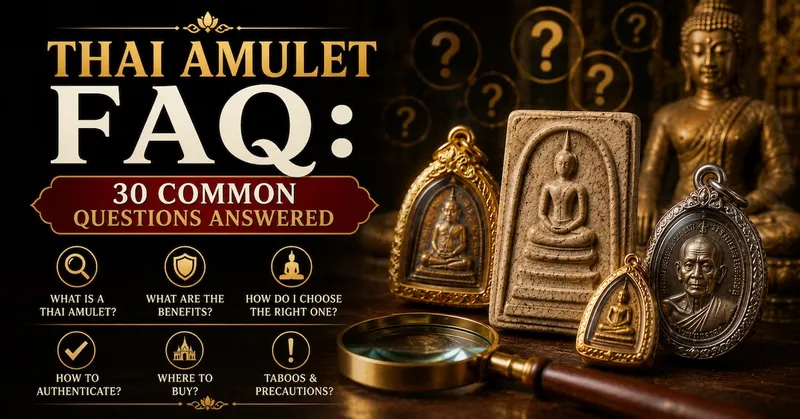
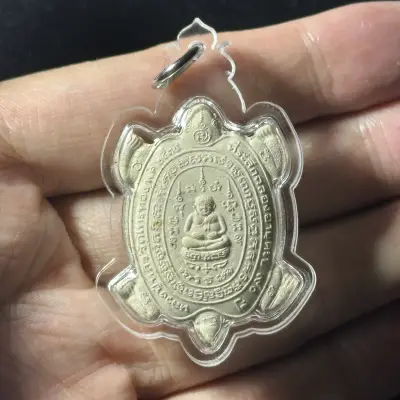
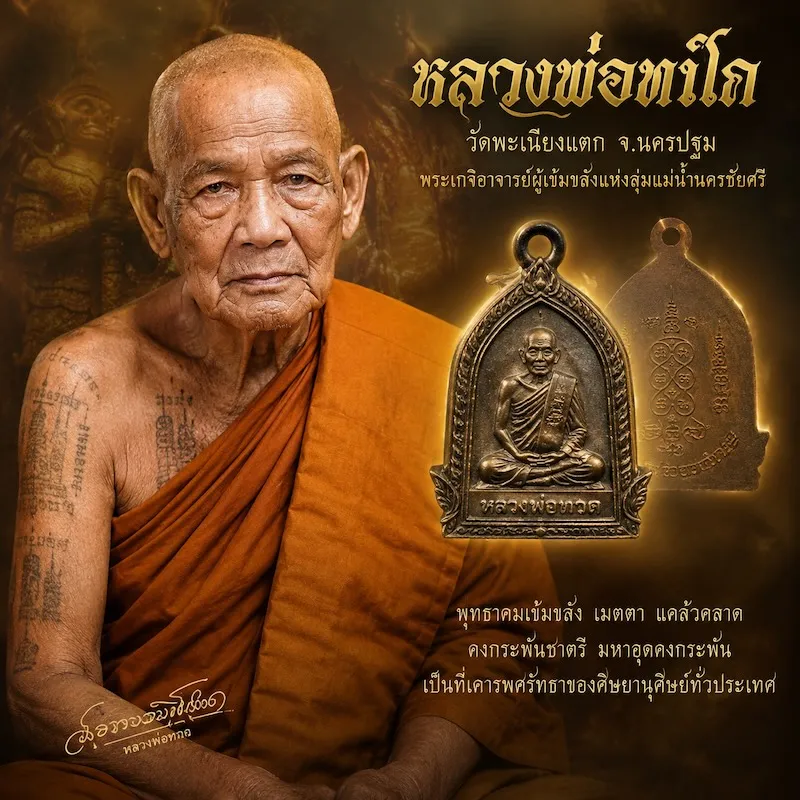
Everything you want to know about Thai amulets in one place. 30 answers covering basics, choosing, wearing rules, buying, and cultural context — from a dealer who handles these questions daily.
Basics
1. What exactly is a Thai amulet?
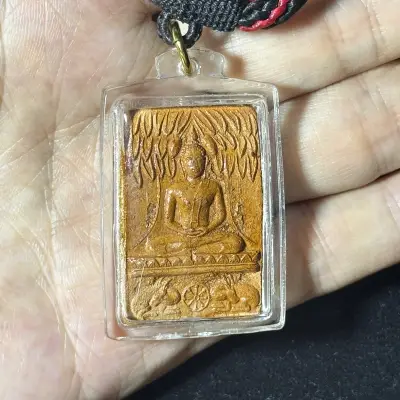
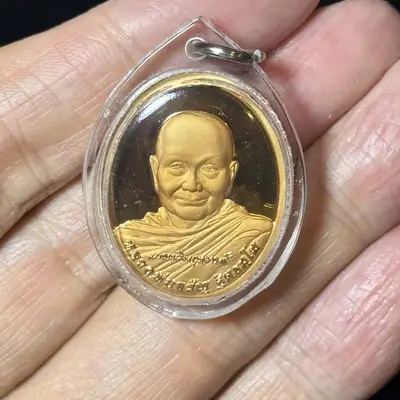
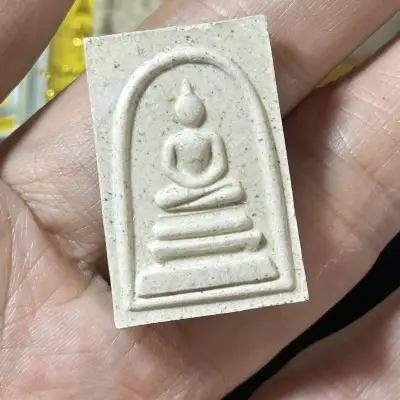
A Thai amulet is a small sacred object — usually depicting a Buddha image, revered monk, or protective symbol — that has been blessed by Buddhist monks in a consecration ceremony called Puttapisek. They are worn on a chain around the neck, above the waist, and are believed to provide spiritual benefits including protection, prosperity, love, and good fortune.
2. Are Thai amulets a Buddhist practice?
Yes, Thai amulets are rooted in Theravada Buddhism, though they also incorporate elements from Hinduism, Brahmanical traditions, and Thai animist beliefs. This blending reflects the natural evolution of Buddhism as it integrated with local Thai culture over more than a thousand years.
3. Do Thai amulets actually work?
This depends on your framework. Millions of Thai people across all social classes — from farmers to generals to prime ministers — wear amulets daily and credit them with real effects in their lives. From a Buddhist perspective, amulets serve as focal points for faith and mindfulness, which in turn influence behavior, confidence, and outcomes. Whether the mechanism is supernatural, psychological, or both, the tradition has thrived for centuries because practitioners experience tangible benefits.
4. Do I need to be Buddhist to wear a Thai amulet?
No. Thai amulets are worn by people of many faiths and by those with no religious affiliation. Thai monks do not impose religious requirements on amulet wearers. What matters is respectful treatment of the object and genuine intention. Christians, Muslims, Hindus, and secular individuals all wear Thai amulets without any cultural or spiritual contradiction in the Thai understanding.
5. What is the difference between an amulet and a Buddha statue?
Size and portability are the practical differences — amulets are small enough to wear on the body, while statues are meant for display in homes or temples. Spiritually, both carry consecrated energy, but amulets are specifically designed to accompany the wearer throughout daily life, providing continuous spiritual support.
6. Why do Thai people take amulets so seriously?
Thai amulet culture is deeply woven into the country's social fabric. Amulets connect wearers to revered monks, temple traditions, and the broader Buddhist practice of seeking spiritual support. The tradition is reinforced by generations of personal testimonies — stories of protection, good fortune, and life-changing experiences attributed to amulets.
Choosing an Amulet
7. What is the best first amulet to buy?
Phra Somdej or Luang Phor Thuad are the two most universally recommended first amulets. Phra Somdej provides all-around blessings (wealth, protection, luck, goodwill), while Luang Phor Thuad specializes in protection and safety. Both are available at every price point and carry deep cultural significance.
8. How do I choose the right amulet for my needs?
Identify your primary need — protection, wealth, love, career, or general good fortune — and match it to the amulet type that specializes in that area. Our guide to the 7 powers explains which amulets carry which spiritual energies.
9. Can I wear more than one amulet at a time?
Yes. Many Thai people wear multiple amulets simultaneously, often combining different types to cover multiple needs (for example, one for protection and one for wealth). There is no spiritual conflict between properly consecrated amulets from different monks or temples.
10. Can I buy an amulet for someone else as a gift?
Yes, gifting amulets is a common and respected practice in Thailand. Parents give amulets to children, spouses exchange them, and friends gift them as expressions of care and well-wishing. The amulet's spiritual energy transfers to whoever wears it.
11. Does the amulet have to choose me, or do I choose it?
There is a Thai belief that certain amulets "call" to specific people — you feel drawn to a particular piece for reasons you cannot fully explain. While this spiritual resonance is real for many practitioners, it is not a requirement. Choosing an amulet based on practical needs (protection, wealth, etc.) is perfectly valid and effective.
12. Does size matter for amulets?
No. A small amulet carries the same consecrated energy as a large one. Size is a matter of personal preference and wearing comfort, not spiritual power. Some of the most powerful and valuable amulets in Thai history are quite small.
Wearing and Care
13. Can I shower with my Thai amulet on?
It is best to remove your amulet before showering. While waterproof cases protect the physical amulet, the tradition of removing it during bathing is about respect — treating the amulet as a sacred object rather than an accessory you never take off.
14. Can I sleep with my amulet on?
Yes, many Thai people sleep with their amulets. If you find it uncomfortable, place it in an elevated location near your bed — never on the floor or ground level.
15. Do I need to remove my amulet during intimacy?
Yes, this is one of the most consistently observed rules. Remove your amulet and place it respectfully in an elevated position before intimate activities.
16. How should I store my amulet when not wearing it?
Place it in an elevated location — on a shelf, in a dedicated amulet box, or on a small altar. Never place amulets on the floor, in a shoe rack, or in a pants pocket below the waist. A clean, elevated surface demonstrates basic respect.
17. Can I let others touch my amulet?
Generally, it is best to avoid letting others casually handle your amulet. If someone asks to see it, you can show it without removing it. Close family members touching your amulet is generally fine.
18. What if I accidentally break a wearing rule?
Nothing catastrophic happens. Thai Buddhist tradition is forgiving and understanding. Simply acknowledge the mistake mentally, perhaps offer a brief prayer or moment of respect, and continue wearing the amulet normally. The intention behind the rules matters more than perfect compliance.
19. How do I clean my amulet?
Gently wipe with a soft, dry cloth. For metal amulets in cases, you can clean the case exterior with a slightly damp cloth. Never use chemicals, ultrasonic cleaners, or submerge sacred powder amulets in water. Handle with clean hands and treat the process as a mindful act of care.
20. Can I wear my amulet while exercising?
Light exercise is generally fine. For vigorous activities where the amulet might be damaged or lost (swimming, contact sports, heavy lifting), it is better to remove it and store it safely.
Buying and Authenticity
21. How do I know if an amulet is real or fake?
Buy from a reputable dealer who can provide provenance information: which temple, which monk, which year, and which ceremony. For valuable pieces, seek competition certificates from recognized Thai amulet associations. Our buying guide covers authentication in detail.
22. How much should I expect to pay?
Genuine consecrated amulets start at ฿400-20 for recent temple editions. Mid-range pieces from well-known monks run ฿1,700-300. Premium and collector pieces range from ฿9,900 to tens of thousands. Read our price guide for a complete breakdown.
23. Is it safe to buy Thai amulets online?
Yes, if you buy from a dealer with verifiable temple relationships and transparent sourcing. Look for detailed provenance information, clear return policies, and the ability to answer specific questions about each piece.
24. Do amulets come with certificates?
Some do. Temple-issued certificates confirm the amulet was created and consecrated at that temple. Competition certificates from amulet associations verify authenticity and grade the piece. Not all legitimate amulets have certificates — many affordable temple pieces do not — but certificates add an extra layer of confidence for valuable purchases.
Culture and Meaning
25. Is wearing a Thai amulet cultural appropriation?
Thai monks and practitioners generally welcome people of all backgrounds wearing amulets. The tradition is seen as universal Buddhist practice, not an exclusive cultural artifact. What matters is wearing the amulet with respect and genuine intention, not your nationality or ethnicity.
26. Can Christians wear Thai amulets?
Many people of various faiths, including Christians, wear Thai amulets. This is a personal decision. Some see amulets as complementary to their faith — a form of spiritual protection that does not conflict with their primary beliefs. Others prefer not to mix traditions. There is no universally correct answer.
27. Are Thai amulets related to black magic?
No. Mainstream Thai amulets are created by Buddhist monks through legitimate Buddhist practices: chanting, meditation, and consecration ceremonies. This is white magic or spiritual blessing in the Buddhist tradition. There are separate categories of Thai mystical objects (not amulets) associated with darker practices, but these are distinct from the Buddhist amulets discussed here.
28. What happens to an amulet when the owner dies?
Amulets can be passed down to family members, donated to temples, or kept as family heirlooms. Inheriting an amulet from a deceased relative is considered meaningful — the amulet carries the accumulated merit and devotion of the previous owner. There is no tradition requiring amulets to be buried or destroyed.
29. Can I return or resell an amulet?
Yes. Amulet resale is a major part of Thai amulet culture — the entire Tha Prachan market in Bangkok is essentially a resale marketplace. There is no spiritual prohibition on selling an amulet you no longer wish to keep.
30. Where can I learn more about specific amulet types?
Start with our comprehensive guides: Phra Somdej, Phra Pidta, Khun Paen, Luang Phor Thuad, and Thai deity amulets. Browse our full collection to see real examples of each type.