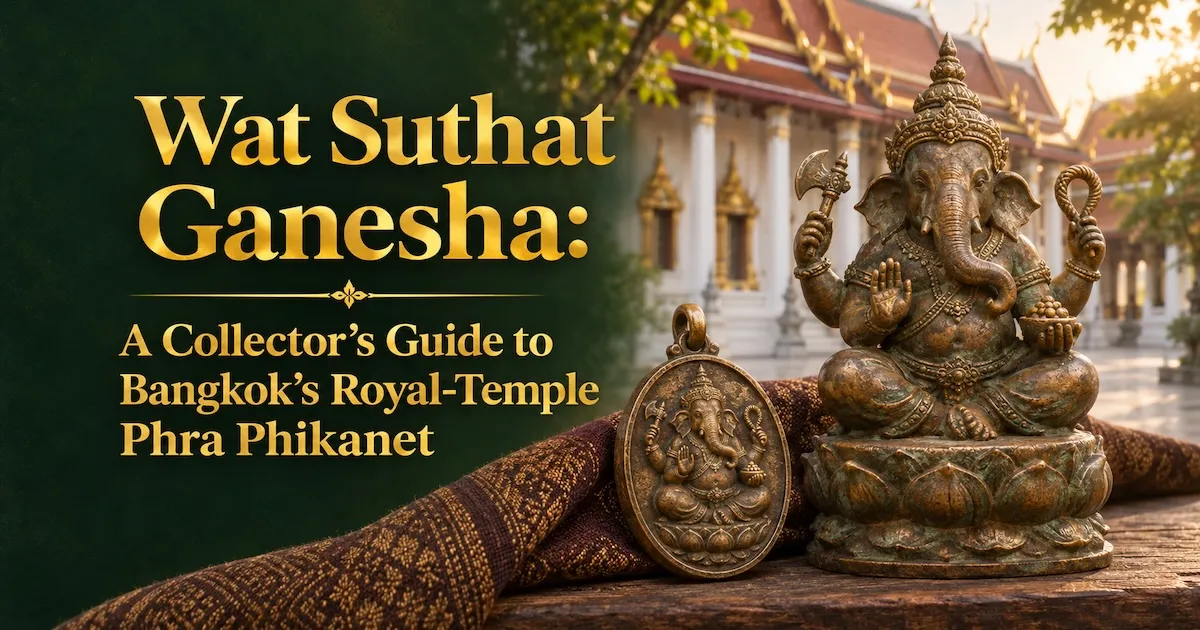
TL;DR: Ganesha (Phra Phikanet, พระพิฆเนศ) is Thailand's god of wisdom, the arts and smooth beginnings; the Fine Arts Department and Silpakorn University both use him as their emblem. Wat Suthat (วัดสุทัศนเทพวรารามราชวรมหาวิหาร) is a first-class royal temple with the Giant Swing at its gate and the royal Brahmin shrine next door, which makes it one of the most respected sources of Ganesha images. Before buying, check that the Association certificate can be looked up, and separate what it says from the seller's claims.
Ganesha in Thailand
Ganesha is the Hindu remover of obstacles and lord of beginnings. In Thailand he is honoured especially by artists, designers, media people, teachers and business owners. The emblems of the Fine Arts Department (กรมศิลปากร) and Silpakorn University both show Ganesha, which says a lot about his standing as the god of arts and learning. More in our Ganesha guide and Thai deity amulets explained.
Why Wat Suthat
Wat Suthat stands in the heart of old Bangkok, a first-class royal temple begun under King Rama I and known for its murals and the Giant Swing (เสาชิงช้า) at its gate. Beside the swing is the royal Brahmin shrine (เทวสถาน), where court Brahmins still conduct royal ceremonies and honour Shiva, Ganesha and other deities. A Buddhist royal temple next to the Brahmin shrine gives Wat Suthat Ganesha a particular authority in the eyes of Thai collectors, and its batches have long been sought after.
What Wat Suthat Ganesha look like
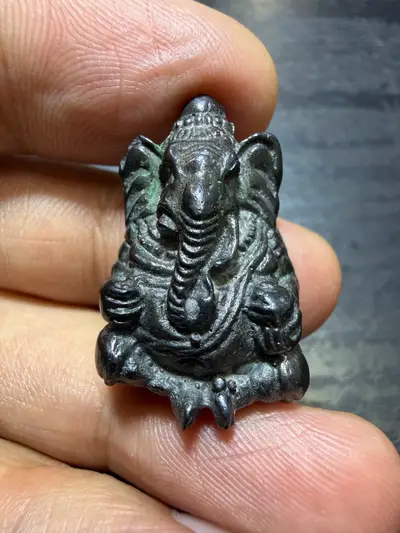
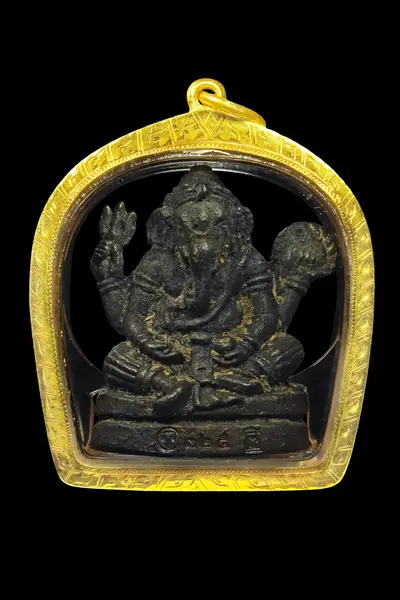
- Cast figures: a four-armed Ganesha seated on a pedestal, upper hands holding emblems, lower hands on the knees, often cast in nawaloha (nine-metal alloy), dark in colour with earthy deposits in the recesses.
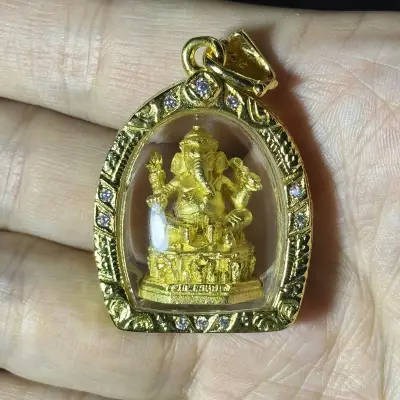
- Medals and tablets: the image struck or pressed for easy wearing.
- Base markings: many figures carry numerals, symbols or a batch name on the base, one clue to the batch.
What to check before buying
- Association certificate: the Thai Buddha Image Admiration Association records name, material, year and temple, for example พระพิฆเนศ รุ่นทรงยักฉัตร เนื้อนวโลหะ พ.ศ. 2536. It only counts if you can look it up online; see the Samakom Phra certificate guide.
- Certificate vs story: edition sizes, who presided over the ceremony and who poured the metal are usually not on the certificate. An honest seller labels these as the supplier's account.
- Dates: Thai pieces use the Buddhist Era; subtract 543 for the Western year, so B.E. 2536 is 1993.
Worship and wearing
Ganesha can be worn or kept on a desk or workbench. Traditional offerings are sweets, fruit such as bananas and sugar cane, and red or yellow flowers. When worn with Buddhist amulets, the Buddha goes in the centre and deities to the sides; see Thai amulet rules and taboos.
Wat Suthat Ganesha in our collection
FAQ
Q: Is Ganesha Buddhist?
A: Ganesha comes from Hinduism but sits comfortably alongside Buddhism in Thailand, and many Buddhist temples issue Ganesha images.
Q: Who is a Wat Suthat Ganesha for?
A: Students, creative and media professionals, teachers, and anyone seeking a smoother career or business.
Q: What is nawaloha?
A: An alloy of nine metals (เนื้อนวโลหะ), believed to combine the protective qualities of each, and used for high-status pieces.
Q: Can I wear Ganesha with Buddhist amulets?
A: Yes, with the Buddha in the centre and Ganesha to the side.
Last updated: November 2026 | By the Merit Messenger team, based in Bangkok
Looking for certified Ganesha and deity pieces? Browse our collection or contact us.