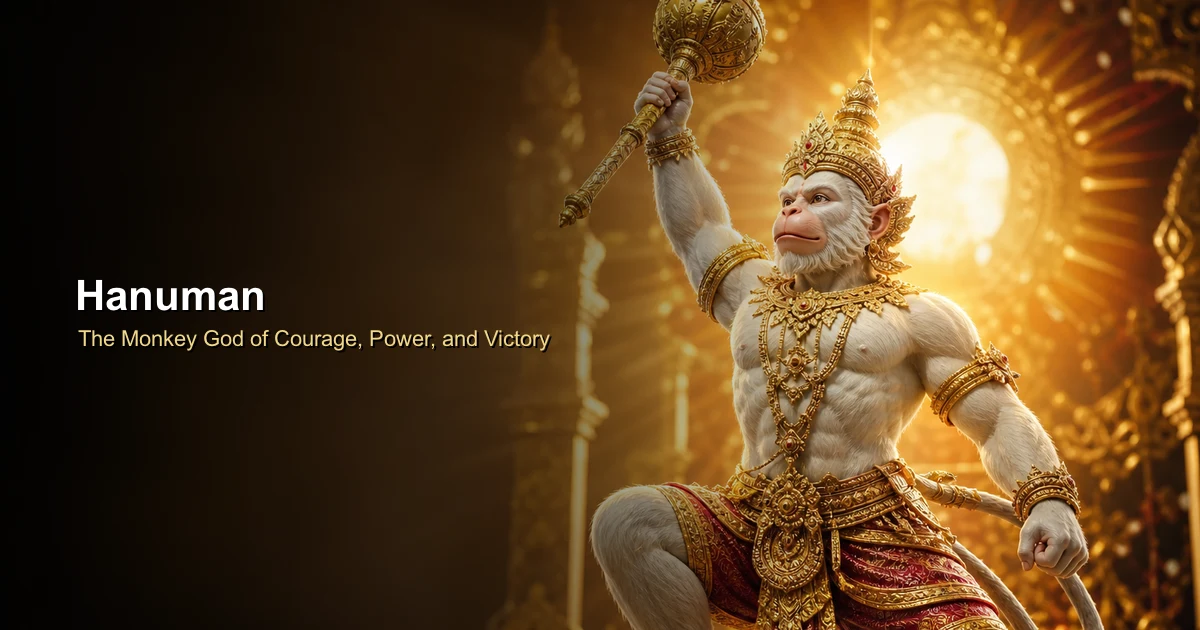
Hanuman (Thai: หนุมาน) is the white monkey deity of the Indian epic the Ramayana (the Thai Ramakien), son of the wind god, renowned for peerless loyalty and courage, boundless strength and invulnerability. As the faithful champion and vanguard of Rama (Phra Ram), he helped vanquish the demon king and recover Sita.
Deity of Courage and Authority
In Thai belief Hanuman is a war deity symbolising courage, authority and victory, deeply revered by soldiers and police, athletes, and those who seek prestige in their careers and fearlessness in the face of danger. Those seeking boldness, prestige, a breakthrough from hardship or invulnerable protection venerate him, and he is especially esteemed by those in fiercely competitive fields and roles that demand decisive action.
Iconography
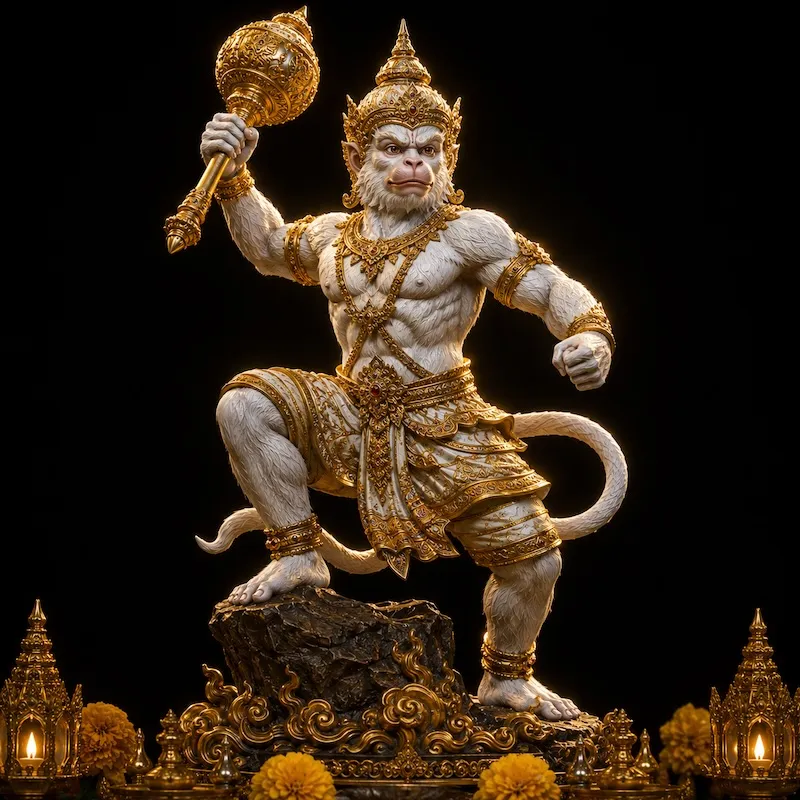
Hanuman is depicted as a white monkey warrior in a crown and armour, wielding a mace or trident in a leaping, valiant pose. Legend holds that with a single yawn he could swallow and release the sun, moon and stars, symbolising his boundless and ever-changing power. Common offerings include flowers, white offerings and martial objects, presented in prayer for courage and commanding presence.
Valour in the Ramakien
The Ramakien is an epic known to every Thai, and Hanuman's loyalty, wit and fearlessness form some of its most stirring chapters; his figure appears throughout Thailand's classical masked dance-drama (Khon) and temple murals, becoming an embodiment of the martial spirit in Thai culture.
Wearing and Collecting
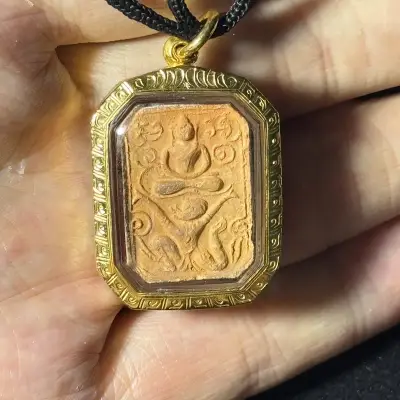
Hanuman amulets are a classic category among Thailand's fierce protective sacred objects, signifying fearless courage, protection from danger, authority in one's career and victory in every contest, and suit those who seek boldness and prestige or work in competitive fields, worn on the person. They are honoured with a righteous heart and proper devotion.