Life of Luang Phor Kuay
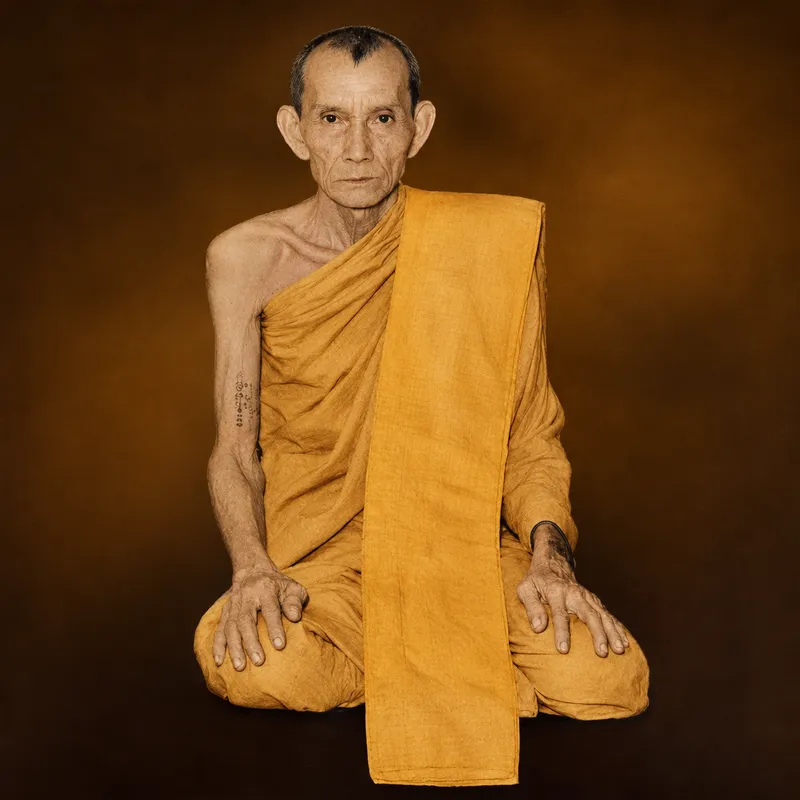
Luang Phor Kuay Chutintharo (Thai: หลวงพ่อกวย ชุตินฺธโร) was the abbot of Wat Khositaram (วัดโฆสิตาราม) in Sankhaburi district, Chai Nat province, a temple known locally as Wat Ban Khae (วัดบ้านแค). He was born Kuay Pan-son on 2 November BE 2448 (1905) in Ban Khae village, Bang Khut subdistrict. According to Thairath his father was named Tui and his mother Tuan.
On 5 July BE 2467 (1924), having reached twenty, he was ordained as a monk at Wat Bot in Pho Ngam subdistrict of the same district and received the name Chutintharo. He spent years studying elsewhere, then returned to Wat Ban Khae and became its abbot. According to Matichon the temple dates from the early Bangkok period and was renamed Wat Khositaram during his time as abbot. Local tradition holds that the name honours Somdej Toh of Wat Rakhang, though the article presents this as hearsay.
Thairath reports that he was hospitalised for malnutrition in BE 2521 (1978). He died on the morning of 12 April BE 2522 (1979) after 54 rains retreats. Thairath gives his age as 74 and PPTV as 73, a difference in how age is counted.
Practice and lineage
The Thai press names two main teachers: Luang Phor Sri of Wat Phra Prang in Sing Buri, who passed on yantra and incantations, and Luang Phor Derm of Wat Nong Pho in Nakhon Sawan. Thairath adds that he studied traditional medicine and scripture as well as ritual knowledge.
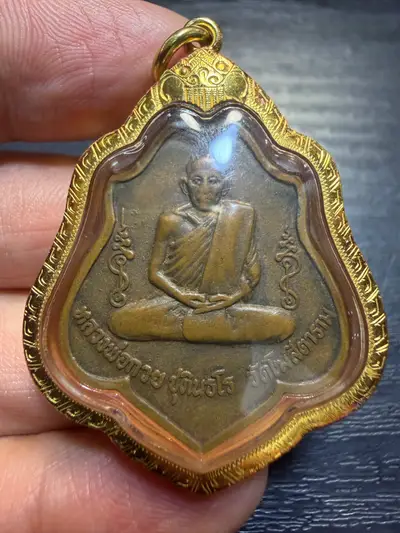
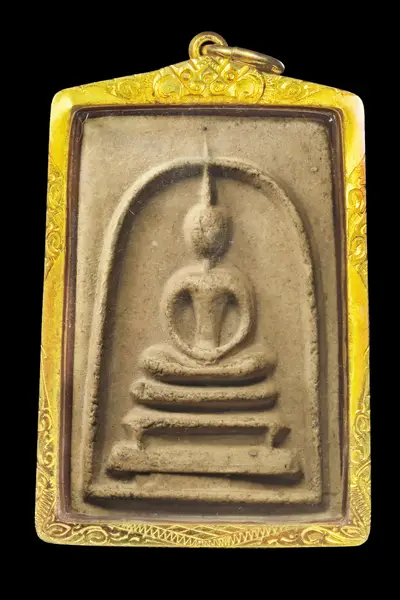
Luang Phor Kuay was well known for sak yant, and tattooed disciples himself. He made a wide range of objects: portrait coins, cast figures, Somdej powder amulets, yantra cloths, takrut, ritual knives, rings and wax. Thai devotees traditionally associate them with livelihood, good fortune and protection from harm; that is folk belief, not a promised result.
Notable batches
- BE 2504 (1961) first round portrait coin: the Thai market treats this round coin as his first, most often seen in brass alloy. No press account of how it was made was found.
- About BE 2514 to 2515 (1971 to 1972) Somdej with Phra Sivali on the back: according to Khaosod these were pressed at Wat Ban Khae itself, with a three-tier base on the front and Sivali on the back, in narrow-waist and wide-waist moulds. Khaosod describes it as the most valued of his powder amulets.
- BE 2521 (1978) coin with Hanuman bearing a flag: called his third coin by Khaosod and also known as the boundary-stone batch, struck in alpaca for the consecration of the ordination hall boundary that year, about 20,000 pieces.
- BE 2521 coin with yantra back, known as the batch given to the cooks: according to Thairath it is shaped like a rice-offering mound, with a full seated portrait on the front and yantra and text on the back; about 10,000 were made to thank the cooks and helpers at the ceremony.
- Coin with the Three Refuges yantra: full seated portrait on the front, with blackened, browned and bright finishes. Thairath calls this one the third coin, which differs from Khaosod's numbering, so identify a coin by its reverse design, not by its ordinal.
Collecting notes
Lifetime versus later issues: he died on 12 April BE 2522, and the BE 2521 boundary ceremony pieces were his last large batch. Wat Khositaram has continued to issue items with his portrait, such as the BE 2555 Mongkhon Thawon coin and the BE 2561 first-batch Bucha Khru bangle mentioned by Thairath. These are temple commemoratives consecrated by later monks; anything dated after BE 2522 belongs in this group.
Other temples using his name: The Thaiger reported that in June BE 2565 (2022) the abbot of Wat Khositaram posted a statement on the temple's official page saying it had not authorised another temple to use Luang Phor Kuay's image to make and sell amulets, and had no connection with it. A new piece bearing his portrait is therefore not necessarily from his own temple, and the registered temple name needs to be read carefully. Some lifetime pieces were also released through other temples; go by the registration.
Similar names: กวย is rendered several ways in Chinese and English. Luang Phor Koy (หลวงพ่อกอย) of Wat Khao Din Tai in Buriram, who also appears on this site, is a different monk at a different temple in a different province.
Reading the card: the registration should show "หลวงพ่อกวย" and "วัดโฆสิตาราม" (sometimes with วัดบ้านแค or จ.ชัยนาท), with the year and the reverse design. Global buyers should first check that the year is before BE 2522, then that the reverse, whether Hanuman, yantra or Three Refuges, matches the description on the card.