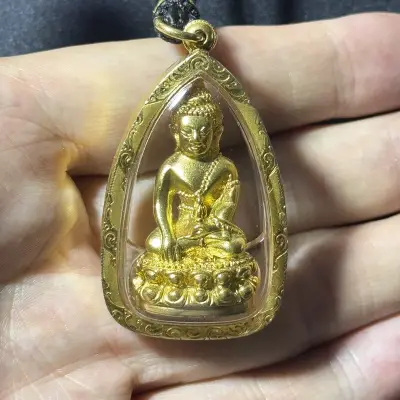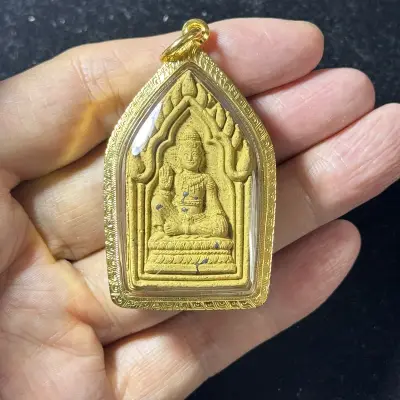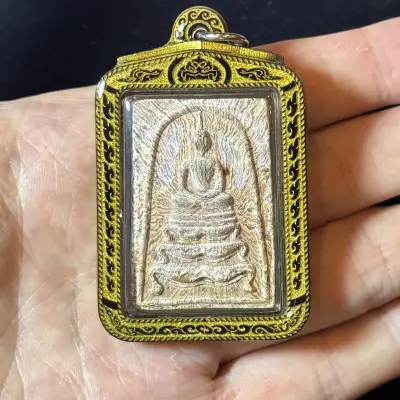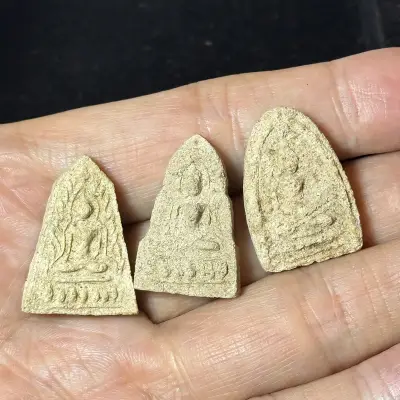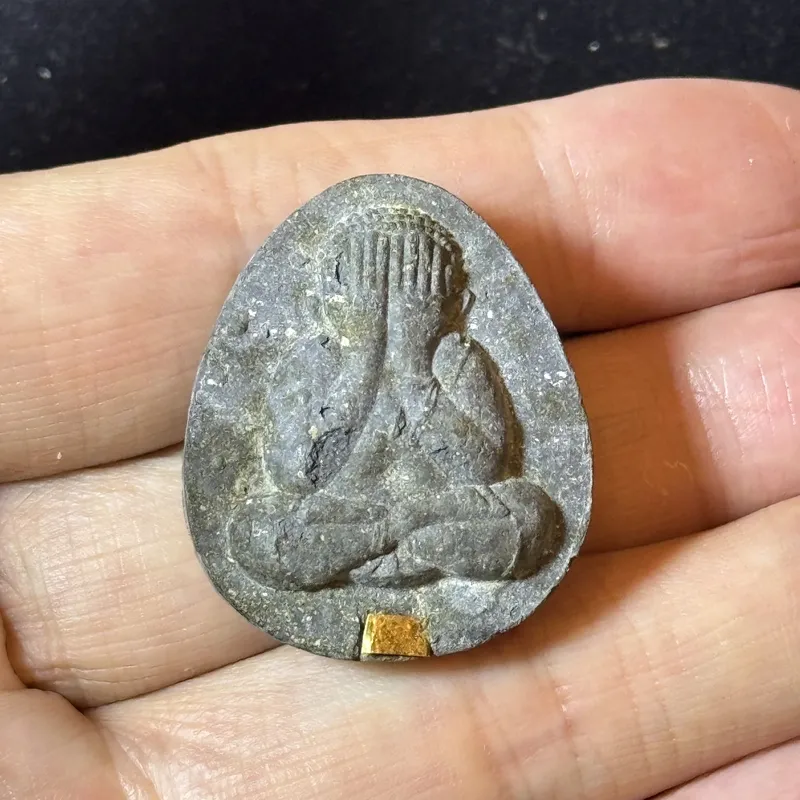
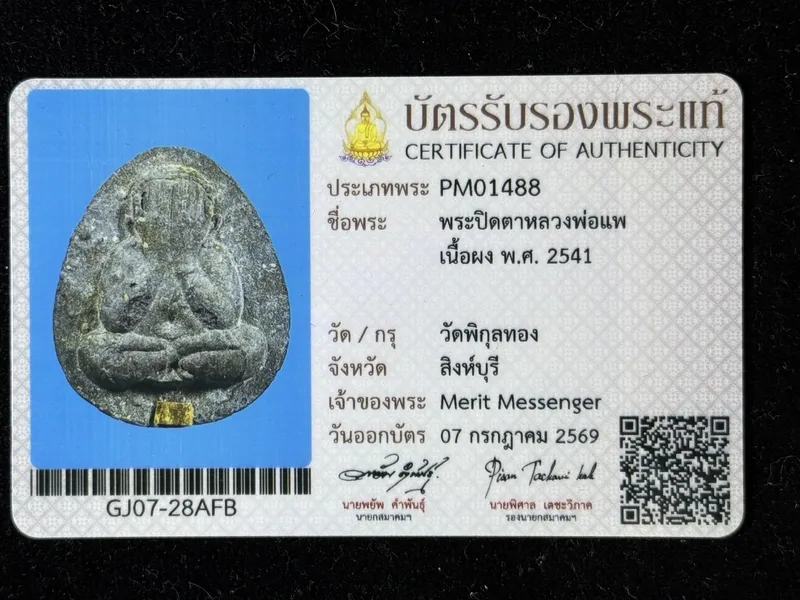
Phra Pidta (พระปิดตา, closed-eyes Buddha) in sacred powder with gold leaf, consecrated by Luang Pho Pae Khemangkaro at Wat Pikun Thong, Singburi, in B.E. 2541 (1998) — the final year of his life. Offered uncased, one piece only, ฿5,600.
1. What is a Phra Pidta?
Phra Pidta means closed-eyes Buddha: the Buddha covers his face with both hands, sealing the senses — seeing no evil, hearing no slander, inviting no trouble. In Thai amulet tradition the form unites two powers: maha-ut (deflecting harm) and maha-lap (gathering fortune that does not leak away). Powder-material Pidta by masters who milled their own sacred powder are the most prized — and Luang Pho Pae's powder work, famous through his Somdej Pae Phan series, is exactly that pedigree.
Key facts
- Type: Phra Pidta (พระปิดตา), closed-eyes Buddha
- Material: dark sacred powder (เนื้อผง) with gold leaf set at the base
- Temple: Wat Pikun Thong, Tha Chang District, Singburi
- Consecrated by: Luang Pho Pae Khemangkaro (1905–1999)
- Year: B.E. 2541 (1998) — the master's final year
- Back: temple seal at center, inscribed ปิดตา and the name หลวงพ่อแพ วัดพิกุลทอง
- Presentation: bare votive, palm-sized egg shape, ready for the case of your choice
- Stock: one piece only
2. Who was Luang Pho Pae?
Born on 1 January 1905 in Singburi and orphaned of his mother at eight months, he ordained as a novice at sixteen at Wat Pikun Thong, studied Pali at Wat Chana Songkhram in Bangkok, and received full ordination in 1926 with the name Khemangkaro. From 1931 he served as abbot of Wat Pikun Thong for nearly seven decades, building hospitals, schools, police stations and bridges for the province — the people of Singburi called him the Divine Monk of the Mae Nam Noi basin. In 1996 the King conferred on him the ecclesiastical title Phra Thammamuni. He passed away on 10 February 1999, aged 94 years and 40 days.
3. Blessings
- Protection: senses sealed — danger, slander and trouble find no way in
- Wealth-keeping: closed means nothing leaks; savings hold and grow
- Fortune: maha-lap — customers and income find their way to you
- Harmony: gossip and workplace friction fade from around the wearer
Note: amulets support mindful living; they are not a guarantee. Guarded speech and honest dealing align the wearer with the Pidta's meaning.
4. Craftsmanship
Front: the Buddha seated cross-legged, both hands sealing the face, arms in thick confident relief; the dark grey powder body is dense and flecked with visible sacred material, with a square of gold leaf set at the base — a signature of Wat Pikun Thong issues. Back: the temple's dharma-wheel seal at center, ปิดตา inscribed above, and หลวงพ่อแพ วัดพิกุลทอง around the lower rim, leaving no doubt of origin. Egg-shaped, comfortable in the palm. Offered bare; a waterproof case is recommended for wear.
5. FAQ
Q: Can Luang Pho Pae amulets still be obtained?
A: The master passed away in February 1999; nothing new will ever be made, and late-life issues thin out fastest. This one comes through a legitimate channel with Merit Messenger certificate No. PM01488.
Q: Why does the B.E. 2541 date matter?
A: It places this piece in the master's final year — among the closing works of a seven-decade career, cleanly dated by the temple seal and inscription on the back.
Q: How do I care for a powder amulet?
A: Keep it dry and protected — a waterproof case for daily wear; store away from moisture and avoid rubbing the gold leaf.
Q: How do I verify the certificate?
A: Scan the QR code on the card for instant verification, or check number PM01488 (GJ07-28AFB). The card is double-signed and dated 7 July 2026.
Q: Who should wear it?
A: Merchants and professionals guarding against gossip, loss and risk; devotees of Luang Pho Pae; and collectors of the Pidta form.
6. About this specific piece
- Bare votive — we can suggest case options on request
- Price: ฿5,600
- Stock: one piece only, no restock
- Merit Messenger Certificate of Authenticity included; 10x refund if proven inauthentic
Last updated: 2026-07-18 | Merit Messenger team (Bangkok-based)