The Monkey God of Courage and Victory
Hanuman (หนุมาน) is the mighty monkey-warrior of the Ramakien — Thailand's national epic and its telling of the Ramayana. Fearless, loyal, and superhumanly strong, Hanuman is the devoted servant of Rama (an avatar of Vishnu) and the hero of countless feats: leaping across oceans, carrying mountains, and defeating demons. For devotees he embodies exactly the qualities people pray for in a hard fight — courage, unstoppable strength, and the will to win.
This guide explains who Hanuman is, what he governs, and why soldiers, athletes, leaders, and anyone facing a battle turn to him. See also our Hanuman deity page.
What Hanuman Governs
- Courage and valor — fearlessness in the face of difficulty
- Power and authority — commanding strength and presence
- Victory and success — prevailing in competition and conflict
- Protection and avoiding danger — a fierce guardian against harm
Hanuman's energy is active and martial. He is not a deity of quiet accumulation but of the decisive contest — the interview, the competition, the confrontation, the moment you must summon everything and win.
How to Recognize Him
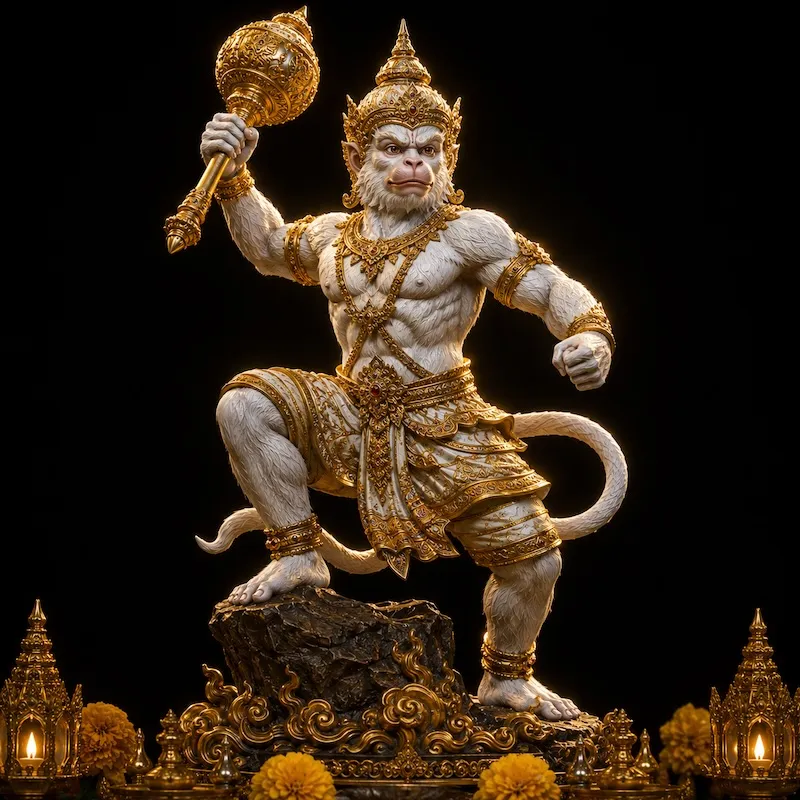
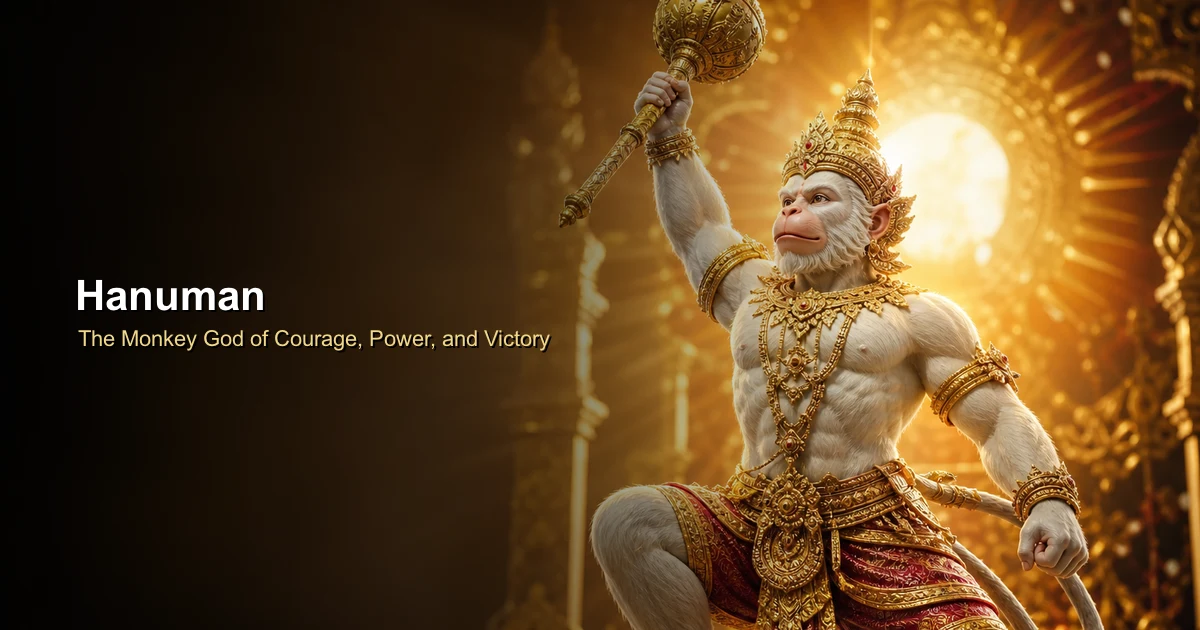
Hanuman is depicted as a powerful white monkey-warrior, often crowned, mid-leap or brandishing his weapon, radiating dynamic energy. In the Ramakien he is famous for his diamond-hard body and his ability to grow to enormous size — imagery that underscores his role as an invincible, unstoppable force in service of what is right.
Hanuman and the Ramakien
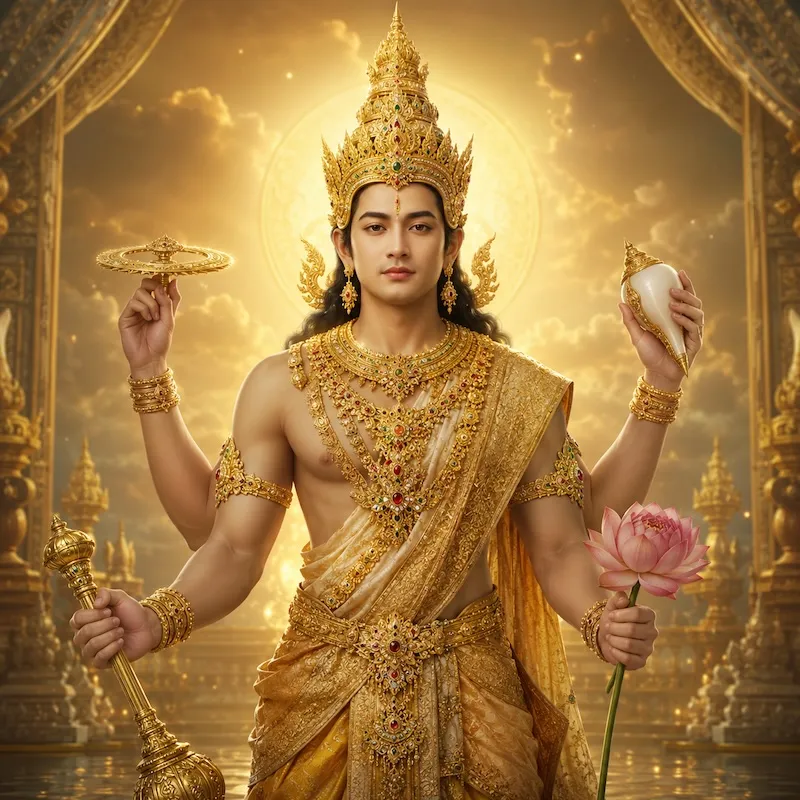
Hanuman's importance in Thailand flows from the Ramakien itself. As the loyal general of Rama, he is central to the epic's great war against the demon king. Because Rama is an avatar of Vishnu (Phra Narai), Hanuman belongs to the same interconnected divine world as Phra Narai and Garuda. Together these figures represent the Thai ideals of loyal strength, rightful power, and protective authority.
Who Should Honor Hanuman?
- Anyone facing a decisive contest — competition, confrontation, a high-stakes challenge
- Soldiers, police, athletes, and competitors who need courage and the will to win
- Leaders and those who must command with strength and presence
- People seeking a fierce protector against danger and ill intent
How He Is Honored
Hanuman is honored with offerings that suit his martial, energetic nature — bananas and other fruit, red and white flowers, and sometimes red drinks. Devotees value sincerity and a bold, upright intention. As a warrior deity, he responds to those who honor him with genuine courage and effort in their own struggles, rather than passivity.
Related Sacred Pieces in Our Collection
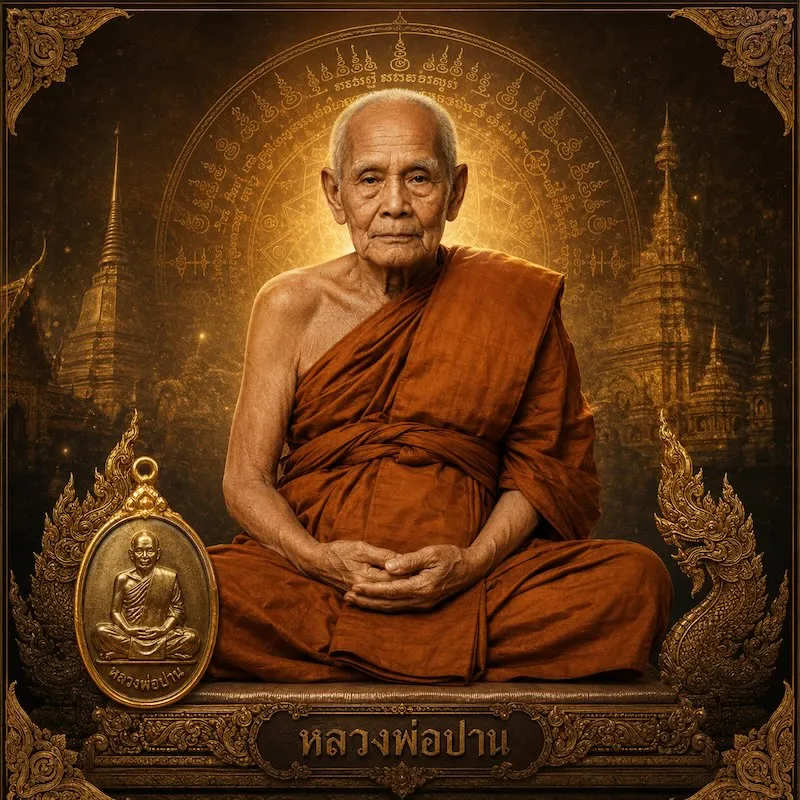
The centerpiece for Hanuman devotees is the Luang Phor Parn large Hanuman sacred-clay amulet, a one-of-a-kind certified piece depicting the monkey god in full power. For the same martial theme of victory and protection, consider the LP Namfon Garuda Meed Mor and the Luang Pu Wichit Twin Tiger Coin, both consecrated for authority, courage, and warding off danger.
Frequently Asked Questions
Is Hanuman a Hindu or Buddhist figure in Thailand?
Hanuman comes from the Hindu Ramayana, told in Thailand as the Ramakien. He is venerated within Thai culture as a powerful deity of courage and victory, comfortably alongside Buddhist practice as with other devas.
Who typically wears a Hanuman amulet?
Those who need courage, strength, and victory — soldiers, police, athletes, competitors, leaders, and anyone facing a decisive challenge. He is a classic choice for high-stakes contests.
What is Hanuman's connection to Phra Narai?
Hanuman serves Rama in the Ramakien, and Rama is an avatar of Vishnu (Phra Narai). Hanuman therefore belongs to the same divine world as Phra Narai and Garuda, all associated with loyal strength and rightful, protective power.
Interested in the Hanuman amulet? Message us on WhatsApp.