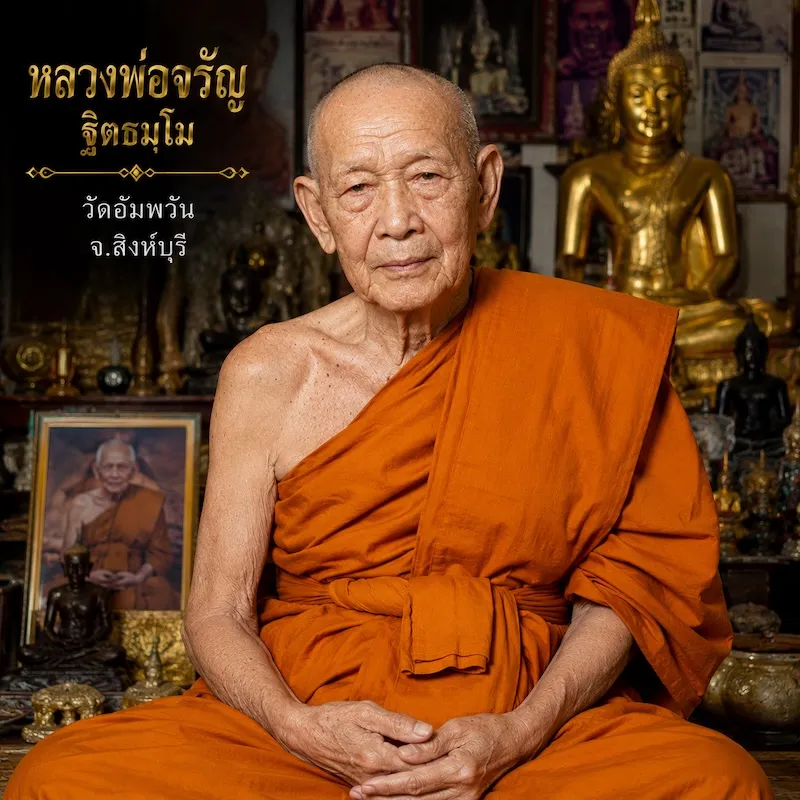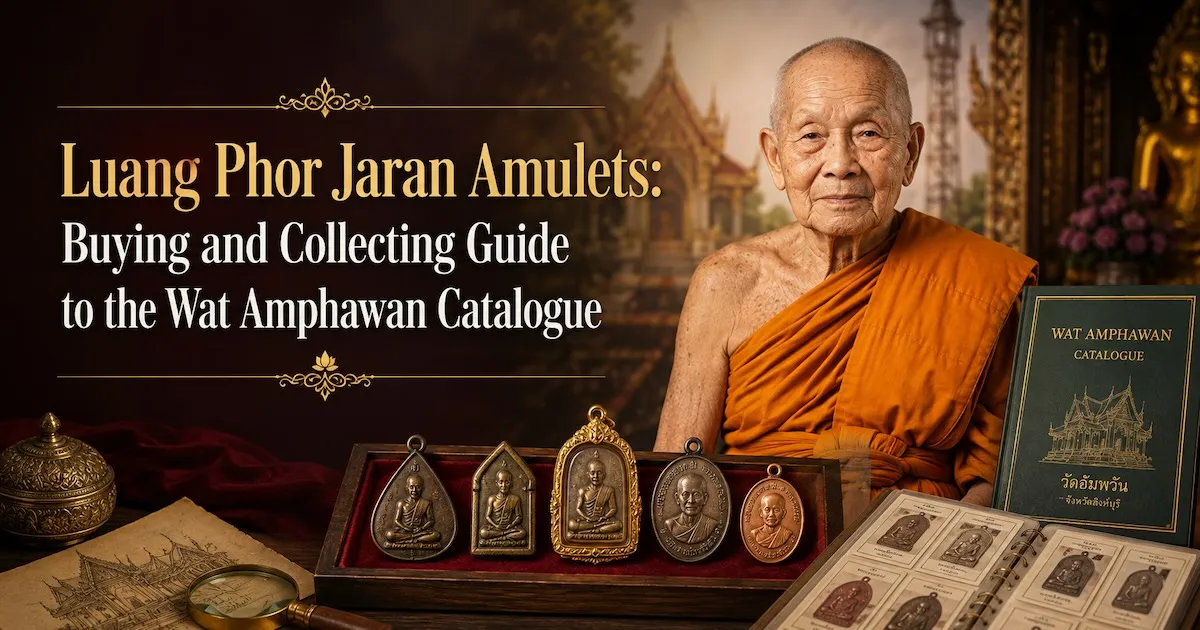
Luang Phor Jaran Thitadhammo of Wat Amphawan (Singburi Province) is one of the most respected vipassana meditation masters of modern Thailand, best known for his teachings on karma and mindfulness rather than for commercial amulet production. That is precisely why his amulets appeal to a particular kind of collector: they were issued in modest numbers by a temple centred on meditation practice, and the demand for them has grown steadily since his passing. This guide explains what Luang Phor Jaran amulets exist, how the materials and years rank, and how to choose one that fits your purpose and budget.
Why collect Luang Phor Jaran amulets
Three reasons stand out. First, provenance: Wat Amphawan issues are well documented, and many pieces circulate with certification cards, which keeps the authentication burden low compared with older, heavily faked lineages. Second, purpose: the flagship form is the Phra Kring — the Medicine Buddha bell amulet associated with health and recovery — a meaning that resonates with buyers caring for family members. Third, the master himself: Luang Phor Jaran's reputation rests on decades of vipassana teaching, so his amulets are consecrated by a monk whose practice, not marketing, built his name. For his life story, see our Luang Phor Jaran biography and the companion piece on his role as a spiritual leader.
The main forms, from entry level to top shelf
Phra Kring — the Medicine Buddha core line
The Phra Kring is the heart of the Wat Amphawan catalogue. The B.E. 2556 batch came in several materials that neatly illustrate the collecting hierarchy: sacred powder at the accessible end, copper in the middle, and nawa loha (the nine sacred metals alloy) above it. At the very top sits the B.E. 2554 solid gold Phra Kring, limited to nineteen pieces worldwide. In our current collection: the powder Phra Kring (2556), the nawa loha Phra Kring (2556), the certified nawa loha piece K02900, and the solid gold 2554 limited edition. If you are new to the Phra Kring form itself, our Phra Kring guide explains the bell chamber and its symbolism.
Self-image coins and sema medals
Rian (coin) issues carry the master's own image and are the classic way to keep a teacher's presence close. The B.E. 2556 self-image coin has a Brahma reverse and a fragment of the master's robe sealed inside — a feature collectors prize because it ties the piece physically to him. The enamel sema medals of B.E. 2554, such as this gold-enamel example, are the more decorative face of the same idea.
Early-era pieces
Anything from the master's earlier decades commands attention simply because so little of it surfaces. The B.E. 2513 Phra Narimit in clay, with robe and hair relics embedded in the back, is half a century old and representative of what early Wat Amphawan material looks like.
Khun Paen
Less expected from a meditation temple, the glazed Khun Paen (2556) shows the temple's take on Thailand's most popular charm amulet — temple-made and free of the spirit materials that make some Khun Paen lines controversial.
How to choose: three buyer profiles
- Buying for health and recovery: start with a Phra Kring. Powder is the accessible entry; nawa loha adds material significance for a serious gift.
- Buying to remember the teacher: a self-image coin, ideally one with a robe insert — the connection to the master is the point.
- Buying to collect: prioritise early years (2513), low-mintage materials (solid gold, 19 pieces), and certified examples. Condition and documentation drive long-term value more than any other factor.
Authentication and buying safely
Wat Amphawan pieces are less faked than famous wealth lineages, but the solid gold and nawa loha grades are valuable enough to attract copies. Buy pieces with certification cards where possible, insist on clear photos of mould details, and deal with sellers who state temple, year, and material for every listing. Our general rules in how to spot fake Thai amulets apply in full.
Frequently asked questions
Are Luang Phor Jaran amulets good for people who do not collect?
Yes. The Phra Kring line in particular is bought mostly for its health meaning, not for resale. A powder or copper piece serves that purpose without collector pricing.
Which single piece is the best investment?
Scarcity rules: the solid gold 2554 Phra Kring (nineteen worldwide) and clean early-era pieces are where rarity is structural rather than seasonal. But buy what you can verify — a certified mid-grade piece beats an undocumented rarity.