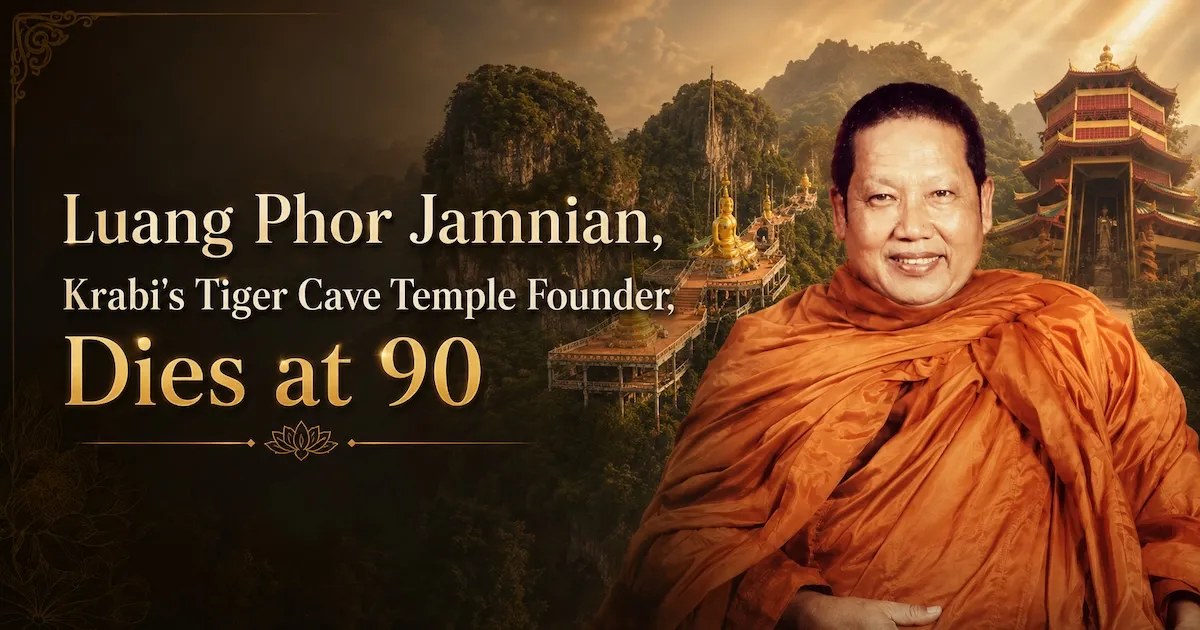
Luang Phor Jamnian Silasettho (หลวงพ่อจำเนียร สีลเสฏโฐ), the revered meditation master and founder of Wat Tham Suea Vipassana, known internationally as the Tiger Cave Temple, in Krabi, southern Thailand, died at 6:30 p.m. on August 18, 2026, at Pantai Hospital in Kuala Lumpur, Malaysia. He was 90 years old and had spent 69 years as an ordained monk. On August 21, his body was flown back to Thailand and received at Wat Tham Suea, where thousands of monks, nuns, and lay devotees gathered. A ceremonial bathing rite was held on August 22 at 1 p.m., allowing mourners to pay their final respects.
From a Fisherman's Son to a Meditation Master
Luang Phor Jamnian was born into a fishing family in Nakhon Si Thammarat province, the fifth of seven children. At age 20 he was ordained at Wat Naree Pradit under the preceptor Phra Ajarn Dhammakeso, and went on to specialize in Vipassana, or insight meditation, within the Theravada tradition. In 1975 (Buddhist Era 2518), he founded Wat Tham Suea on Khao Khuha Khiriwong hill in Krabi, building it from the ground up. Over the following decades he became known throughout southern Thailand for strict monastic discipline and deep meditative accomplishment, teaching the Four Sublime States of loving-kindness, compassion, sympathetic joy, and equanimity. He was widely respected across religious lines, including by many local Muslim residents. Wat Tham Suea grew into an internationally known meditation retreat and pilgrimage site, famous for its 1,237-step staircase leading to a hilltop Buddha shrine, one of Krabi's most recognizable religious landmarks, drawing both Thai devotees and foreign visitors year-round.
Return to Thailand and Funeral Arrangements
According to Thai media reports, Luang Phor Jamnian fell critically ill while in Malaysia. His disciples and fellow monks arranged for his body to be flown directly back to Wat Tham Suea, where crowds of white-robed devotees and monastics gathered, many having traveled long distances from other provinces to pay tribute. The August 22 bathing ceremony is a traditional Thai Buddhist rite for a deceased senior monk, symbolizing the washing away of worldly attachments. The temple is expected to hold the body in state with continued chanting before a cremation date is set; as of this report, no cremation date had been announced. Overseas devotees hoping to pay respects should watch for further announcements from the temple.
What This Means for Amulet Collectors
During his lifetime, Luang Phor Jamnian consecrated more than a dozen series of coins and amulets under the Wat Tham Suea name, including a first-edition bronze coin issued in 1979 that already holds modest recognition among collectors. In the Thai amulet market, a senior monk's passing typically triggers renewed interest in pieces he personally blessed during his lifetime, since no further consecration ceremonies will ever bear his direct involvement, permanently fixing the total supply. A similar pattern followed the recent death of Luang Phor Narong, a forest-tradition meditation monk from Kalasin, whose earlier amulets saw a short-term uptick in trading interest. That said, this kind of posthumous buying surge is also exactly when counterfeits tend to surface. Overseas buyers interested in Wat Tham Suea pieces should verify provenance through reputable channels and, where possible, check certification from bodies such as Samakom Phra rather than chasing the emotional rally. Readers wanting a broader picture of Thailand's monk lineages can consult our guide to The Nine Great Monks of Thailand, and those seeking protective amulets in this meditation tradition may find our Best Thai Amulets for Protection guide useful.
Source: Thai Post