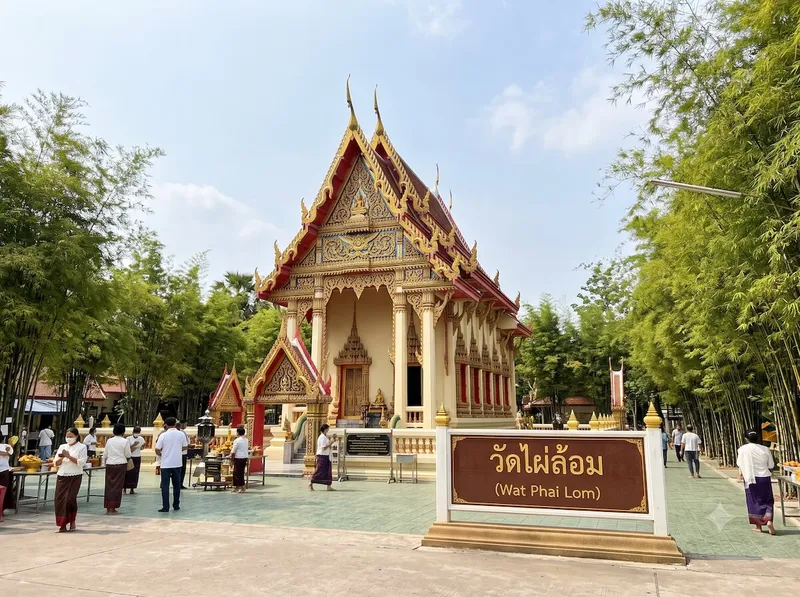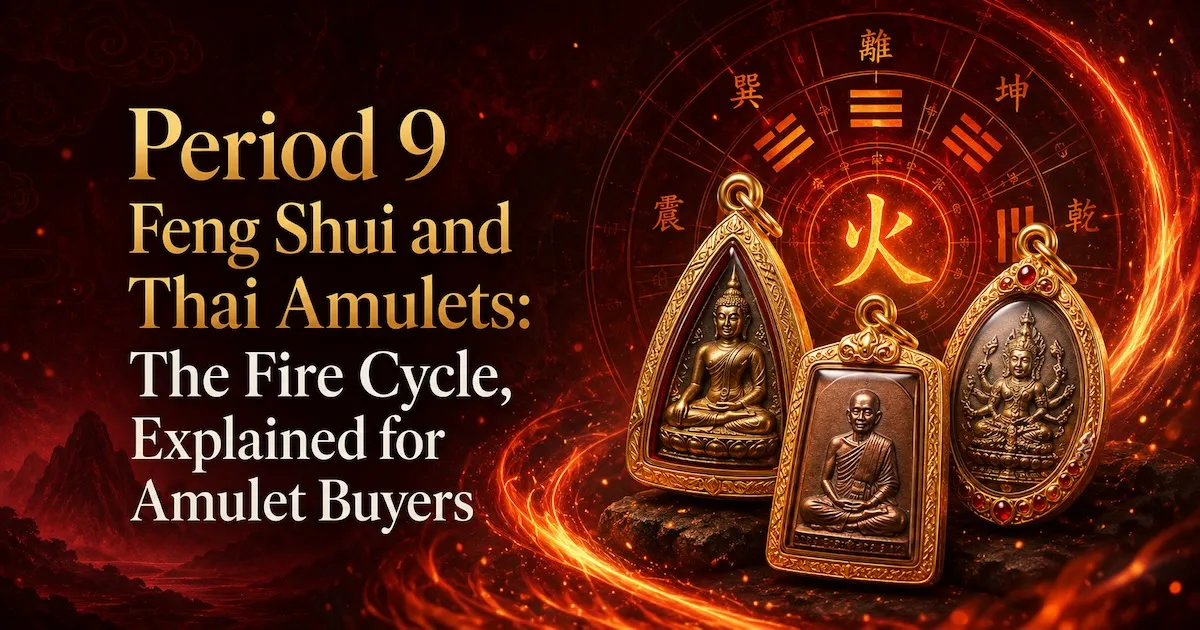
In Chinese feng shui, 2024 opened Period 9 — a twenty-year cycle (2024 to 2043) governed by the Li trigram, the element of fire. Practitioners associate Period 9 with visibility, culture, technology, and the fortunes of those who position themselves early in a new cycle. Interest in "Period 9 remedies" has surged across the Chinese-speaking world, and Thai temples have responded with a fascinating hybrid: Buddhist-consecrated objects designed around feng shui symbolism. This guide explains how the two systems meet, and looks at a concrete example — the Period 9 lapis lazuli cosmic coin blessed at Wat Phai Lom.
Period 9 in brief
The San Yuan system divides time into nine twenty-year periods. Period 9, which began in 2024, belongs to the Li trigram: fire, light, the south, the middle daughter, the eye. Feng shui writers link it to industries of attention and energy — media, beauty, spirituality, technology — and advise strengthening the fire element for those whose charts lack it. Whether one follows the system strictly or loosely, the cycle change has made many people rethink what they carry and display.
Where Thai amulets fit
Thai Buddhist amulets and Chinese feng shui answer different questions: an amulet carries the blessing of a specific monk and ceremony, while feng shui works with directional and elemental arrangement. They are not rivals, and Thai-Chinese communities have combined them for generations. We compare the two systems in detail in Thai amulets vs Chinese feng shui; the short version is that a consecrated object can carry feng shui symbolism without contradiction — the blessing and the symbolism operate on different layers.
The Wat Phai Lom Period 9 cosmic coin
The Period 9 lapis lazuli cosmic feng shui coin by Luang Pee Namfon was blessed in B.E. 2567 (2024) — the opening year of Period 9 — at Wat Phai Lom, a royal temple. The design carves a full cosmic star chart in yantra form into lapis lazuli, a deep-blue stone long associated in both Asian and Western traditions with clarity and protection. It is an unusual object: a Buddhist consecration, performed at a royal temple, wrapped around an explicitly feng shui concept. For buyers who follow Period 9 thinking, the appeal is obvious — a fire-cycle talisman with a verifiable Buddhist provenance.
How to choose between an amulet and a feng shui remedy
- You want a blessing tied to a monk and ceremony: choose a consecrated amulet; the ceremony is the substance.
- You want elemental correction per your BaZi chart: a symbolic object like the Period 9 coin fits, and our BaZi five-elements amulet guide shows how to match charts to amulets.
- You want both: objects like the Wat Phai Lom coin exist precisely for this overlap — consecrated and symbolic at once.
For wealth-focused buyers, pair this thinking with the wealth collection: classic wealth amulets like the Luang Pu Liew wealth turtle address fortune through the Thai tradition directly.
Frequently asked questions
Do I need to believe in feng shui for the coin to "work"?
The coin's Buddhist consecration stands on its own: it was blessed at a royal temple in a documented ceremony. The feng shui layer is meaningful to those who follow it and decorative to those who do not.
Is lapis lazuli traditional in Thai amulets?
Stone amulets are a minority next to powder and metal, but temples have long used auspicious materials for special batches. Lapis was chosen here for its colour-element symbolism and durability.