The Buddha Who Covers His Eyes
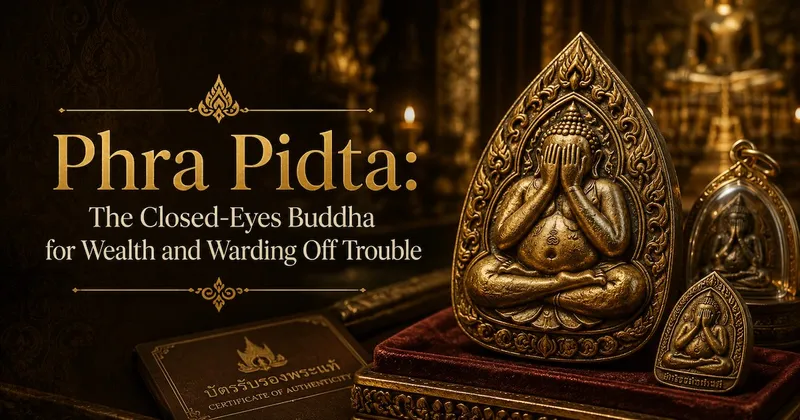
Few Thai amulets are as instantly recognizable — or as widely worn by businesspeople — as Phra Pidta (พระปิดตา), the "closed-eyes Buddha." The figure is a plump, contented arahant raising his hands to cover his face and eyes. It is one of the most popular amulet forms in Thailand, and its meaning is beautifully practical: what you do not see cannot disturb you.
This guide explains who Phra Pidta is, what covering the eyes signifies, and why the form is so strongly associated with keeping wealth and staying out of trouble.
Who Is Phra Pidta?
Phra Pidta is generally identified with an arahant renowned for his contentment and inner stillness — often linked in Thai understanding to the same well-fed, joyful figure as Phra Sangkajai, the arahant of abundance. In the Pidta form, the emphasis shifts inward: by covering the eyes, ears, and sometimes all nine bodily openings, the figure symbolizes the withdrawal of the senses from the chaos of the world and the guarding of one's inner treasure.
Some versions are called Pidta Maha Ut ("great stoppage"), a name associated with sealing and invulnerability — closing the body against harm and against loss.
What Covering the Eyes Means
The gesture carries several overlapping meanings that together explain the amulet's enduring popularity:
- Warding off trouble — refusing to "see" conflict, gossip, and provocation; not being drawn into disputes
- Keeping wealth — sealing fortune inside so it does not leak away; money that comes, stays
- Protection against ill intent — deflecting the envy, curses, and "small people" that success attracts
- Inner calm — the contentment of a mind that has turned away from disturbance
This combination — attract and hold wealth while staying clear of conflict — is exactly why Phra Pidta is a classic choice for shopkeepers, traders, and anyone who does business in a world of gossip and rivalry.
The Piece in Our Collection
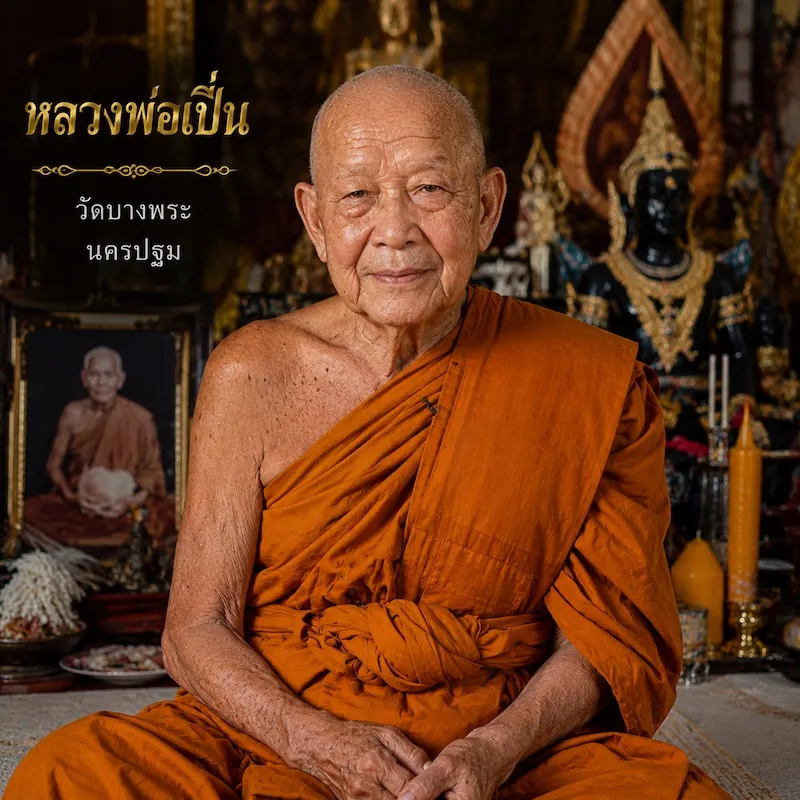
The Luang Pho Pae Phra Pidta, Sacred Powder with Gold Leaf, B.E. 2541 ($168) is a distinguished example. It was personally presided over by Luang Pho Pae Khemangkaro (1905–1999) — the revered Singburi master given the ecclesiastical title Phra Thammamuni and known affectionately as the "deity of the Noi River basin" — at Wat Pikun Thong in 2541 (1998).
Pressed from dark-grey sacred powder with gold leaf inlaid at the base, and bearing the temple seal and the master's name on the reverse, it is a final-year issue: Luang Pho Pae passed away in 1999, so this piece comes from the very last stretch of his life's work. It includes an authenticity card and a full guarantee. One of a kind in our inventory. To learn more about the master himself, read our profile of Luang Phor Pae of Wat Pikun Thong.
Who Should Wear a Phra Pidta?
- Business owners and shopkeepers who want to attract customers and keep their earnings
- Anyone in a gossip-heavy or politically charged workplace who needs to stay above conflict
- People troubled by "small people," envy, or ill-wishers
- Wearers who want a wealth amulet with a strong protective, sealing quality rather than pure attraction
Frequently Asked Questions
Is Phra Pidta a wealth amulet or a protection amulet?
Both, and that is its appeal. The closed eyes seal in wealth and simultaneously seal out trouble. It is best understood as a "keep and protect" amulet — ideal for people who already earn but want to hold their gains and avoid the conflicts that success invites.
Why is gold leaf added to some Phra Pidta?
Applying gold leaf (pit thong) is a traditional act of devotion and blessing, reinforcing the wealth meaning and marking the piece as specially honored. On this amulet the gold leaf is inlaid at the base of the piece.
What does "final-year issue" mean and why does it matter?
Luang Pho Pae passed away in 1999, one year after this 1998 piece was consecrated. Amulets from a master's final years are limited by definition and are valued as part of the closing chapter of his work.
Want more detail on this piece? Contact us on WhatsApp.