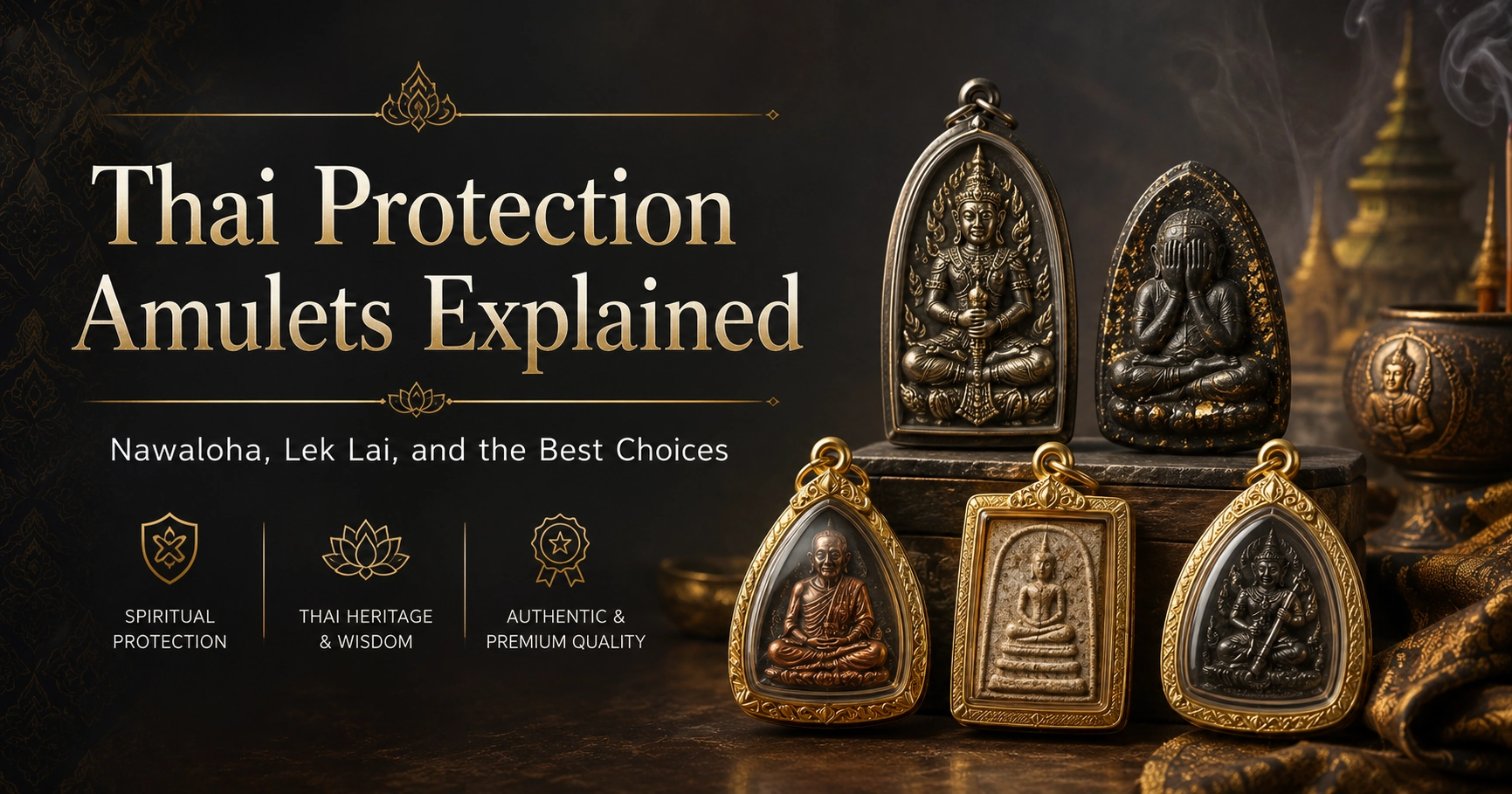
What Makes a Thai Amulet "Protection"?
In Thai Buddhist tradition, protection amulets don't create an invisible physical shield — they work by aligning the wearer's spiritual energy in a way that deflects harm, reduces negative karma, and strengthens internal resilience. The power comes from the monk's accumulated merit, channeled into the object through consecration, and activated by the wearer's respectful relationship with it.
Protection amulets cover a wide spectrum: personal safety during travel, defense against ill-wishes or black magic (khun sai), warding off accidents, and neutralizing environmental negative energy (sha qi). Understanding which type you need determines which amulet is right for you.
The Core Materials of Thai Protection Amulets
Nawaloha (Nine Sacred Metals)
Nawaloha — literally "nine metals" — is a sacred alloy that appears across Thai, Cambodian, and Burmese Buddhist traditions. The nine metals typically include gold, silver, copper, iron, tin, lead, mercury compounds, and two additional sacred metals specific to each temple's formula.
This alloy is believed to create a powerful energetic resonance due to the interaction between the metals. Amulets cast in Nawaloha are considered some of the most durable in both physical and spiritual terms. The LP Tim Nawaloha 2557 is an example — the Nawaloha composition amplifies both its wealth and protective properties.
Sacred Powder (Pong)
Many protection amulets are pressed from sacred powder — a mixture of ground temple relics, sacred herbs, consecrated ash, and sometimes mineral compounds including iron oxide. Each temple has its own formula, and master monks may spend years accumulating ingredients.
Powder amulets are prized for their subtle, pervasive protective energy — less aggressive than metal amulets, but deeply integrated with the wearer's aura over time.
Lek Lai (Sacred Celestial Iron)
Lek Lai is one of the most mystical materials in Thai amulet culture. Described in ancient texts as a "living metal" found in cave formations, it is believed to have inherent supernatural protective properties that even untreated pieces possess. Monks who can work with Lek Lai are considered especially powerful. Lek Lai amulets command significant premiums and are typically worn only by experienced practitioners.
Protection Amulets in the Merit Messenger Collection
Rama Nine Medicine Buddha 2511 — Royal Protection
The Rama Nine Medicine Buddha ($500) is one of the most historically significant pieces in our collection. Consecrated in Buddhist Era 2511 (1968) with the direct participation of King Rama IX and senior royal monks at Wat Makut Kasatriyaram in Bangkok, this amulet carries royal blessing alongside its core effects: health, protection, evil ward-off, and disaster prevention.
Royal consecrations are considered especially powerful in Thai Buddhism — the king's merit and the monks' combined energy create an unusually dense spiritual signature. This is a premium collector's piece for serious practitioners.
Luangphor Tim Somdej Chinbunchon 2559 — Somdej Protection
The LP Tim Somdej Chinbunchon 2559 ($360) takes the classic Somdej form — Thailand's most universally revered amulet shape — and consecrates it through LP Tim's lineage at Wat Laharn Rai. This piece emphasizes protection, power increase, and evil prevention alongside its wealth properties. Somdej amulets are considered "all-rounder" protective pieces suitable for any wearer.
Luangphor Sodh Wealth Protection 2566
From the LP Sodh lineage at Wat Paknam Bhasicharoen, the Wealth Protection 2566 ($100) combines financial and protective energy in an accessible package. LP Sodh is famous for his Dhammakaya meditation tradition, and pieces from his lineage carry strong mental-protective properties — useful for those facing psychological stress or workplace conflict.
Luangpor Chai Powder Amulet 2497 — Invulnerability
The LP Chai Powder Amulet 2497 ($200) from Wat Hua Wao, Singburi, is a remarkable vintage piece (consecrated circa 1954). LP Chai was known specifically for invulnerability blessings — his amulets carry effects including curse prevention, enemy transformation, and evil ward-off alongside wealth and relations benefits. A rare vintage piece with documented history.
How to Choose a Protection Amulet
- Physical safety (travel, work hazards): Nawaloha metal amulets or royal consecrations — their dense material composition corresponds to physical protection.
- Spiritual protection (negative energy, ill-wishes): Sacred powder Somdej or LP Sodh lineage — their pervasive energy integrates well against subtle threats.
- Enemy or conflict situations: LP Chai's invulnerability formula — specifically consecrated for these scenarios.
- All-purpose daily protection: LP Tim Somdej or LP Sodh Wealth Protection — balanced pieces suitable for everyday wear.
Can You Combine Wealth and Protection Amulets?
Yes — this is actually the most common combination among experienced wearers. The logic is straightforward: a wealth amulet attracts opportunity, while a protection amulet ensures you can hold onto what you gain. Many Thai business owners wear one of each, with the wealth piece at the front of the necklace and the protection piece closer to the chest.
Frequently Asked Questions
Does a protection amulet prevent all accidents?
No. Thai Buddhist culture does not claim amulets create absolute invulnerability. Rather, they are believed to reduce exposure to harmful situations and, when harm does occur, to mitigate its severity. Many wearers report "near misses" — situations where something bad should have happened but didn't.
How do I know if my protection amulet is working?
Pay attention to patterns: fewer conflicts, smoother daily situations, a general sense of ease in navigating difficult environments. The effects are often subtle and cumulative rather than dramatic.
Is it okay to wear a protection amulet to bed?
Generally yes — many practitioners wear their amulets continuously. However, if you share your bed, some traditions suggest placing the amulet on a clean surface nearby rather than wearing it during intimate activity, out of respect for the sacred object.
Browse all protection-focused pieces at Merit Messenger or ask our team for a recommendation based on your specific situation.