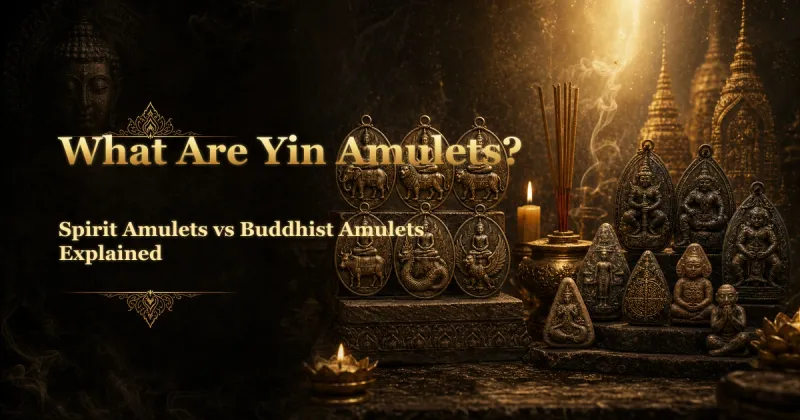
A "yin" amulet is a Thai sacred object empowered by invoking a spirit — a departed soul, a child spirit, or a nature spirit — as its core source of power, in contrast to a "yang" amulet consecrated purely through Buddhist scripture, sacred powders, and a monk's meditative attainment. Put simply: a yang amulet channels the Buddha and the Dhamma; a yin amulet channels a spirit. Both can protect and attract fortune, but their care, taboos, and the mindset they demand are completely different — and confusing the two is the single most common beginner mistake.
What exactly makes an amulet "yin"?
"Yin" refers to the source of the empowerment, not to "evil." Any amulet whose central consecrated force is a departed soul, a spirit child, an animal spirit, or a nature entity is classed as yin. It is not the same as a "dark" or harmful piece. When an orthodox temple or a reputable master uses White Magic to guide and merit-make for a wandering spirit, the amulet gives that spirit a chance to be cared for, earn merit, and eventually move on — while protecting its keeper. What genuinely warrants caution are pieces of unknown origin made through harmful "black magic" rites.
Yin vs yang: the core differences
- Source of power: yang amulets draw on Dhamma, chanting, sacred powder, and a monk's concentration (for example the Phra Somdej); yin amulets are built around inviting and housing a spirit.
- Care requirements: yang amulets ask mainly for incense, precepts, and a sincere heart — relatively relaxed. Yin amulets usually need regular offerings (water, red drinks, sweets, toys) and to be treated like a member of the household; neglect is considered a serious breach.
- Typical benefits: yang amulets favor all-round fortune, protection, and inner cultivation; yin amulets are prized for direct, fast-acting worldly results — wealth, charm, warnings of danger.
- Mindset threshold: yin amulets follow "invite it, feed it, respect it." They cannot be discarded casually, and mishandling is believed to invite backlash. Beginners with an unsettled mind are usually steered toward yang amulets first.
The main types of Thai yin amulet
Kumanthong
The best known yin amulet, based on the consecrated spirit of a child, invited and cared for by a monk. It is kept for wealth, protection, and household luck, and is treated much like raising a child when done properly. See our full Kumanthong guide for its history and care.
Hoon Payon
A humanoid effigy bound from inscribed sheets, rattan, or metal and animated with a guardian spirit — Thailand's classic "sentry" yin amulet, kept to guard the home and warn of danger. Where Kumanthong leans toward wealth and household luck, Hoon Payon guards a place and its owner; see the Hoon Payon guide.
Phra Ngang
A red-faced, downward-gazing seated figure kept for charm and windfall luck, especially popular with people in nightlife and business. Offerings often include red flowers and red drinks. Its effect is direct and its taboos are correspondingly strict.
Prai oils (Nam Man Prai) and Look Krok
Oil-based sacred substances refined through specific rites, used mainly for charm, drawing customers, and attraction — the strongest and most cautionary branch of yin amulets. Look Krok (a fetus spirit) is one of the older roots of the Kumanthong tradition. Both demand an exceptionally high standard of care and character and are strongly discouraged for newcomers.
Three questions to settle before getting a yin amulet
- Will you commit to long-term offerings? A yin amulet is a relationship that needs daily care, not a piece you simply wear. If you cannot keep up regular offerings, do not take one on.
- Is the origin orthodox? Only take amulets made by legitimate temples or masters through White Magic, with clear provenance and consecration records. Avoid any "black magic" or "harm-someone" sales talk.
- Is your intention sound? Care for the spirit with respect and merit-making. Seeking to harm others through a yin amulet is believed to guarantee backlash.
FAQ
Are yin amulets always more powerful than yang amulets?
No. Yin amulets are known for direct results, but at the cost of heavier care and taboos. Efficacy depends on the piece's orthodoxy, your offerings, and your character — not on the yin/yang label. For all-round protection and long-term fortune, yang amulets are the safer, simpler choice.
Should a beginner's first amulet be a yin amulet?
Usually not. Yin amulets need a steady offering routine and a sound mindset. Newcomers are better starting with yang amulets such as Phra Somdej or Phra Pidta, then considering an orthodox White-Magic Kumanthong once they are comfortable with care and etiquette.
Can yin and yang amulets be worn and kept together?
Yes, if you keep their roles and offerings distinct. Many Thais wear a yang amulet for protection alongside a yin amulet for wealth. For wearing and stacking rules, see the rules and taboos guide.
What if I no longer want to care for it?
A yin amulet should not be thrown away. Return it to a temple, ask a monk to handle it, or respectfully pass it to someone willing to care for it — telling the spirit sincerely. Never neglect or discard it carelessly.
Last updated: July 2026 | Author: The Merit Messenger Team (based in Bangkok)
Looking for an orthodox, White-Magic Kumanthong with clear provenance? Browse our pieces or contact us — each one lists its temple origin and consecration details. For terminology, see the Thai amulet glossary.