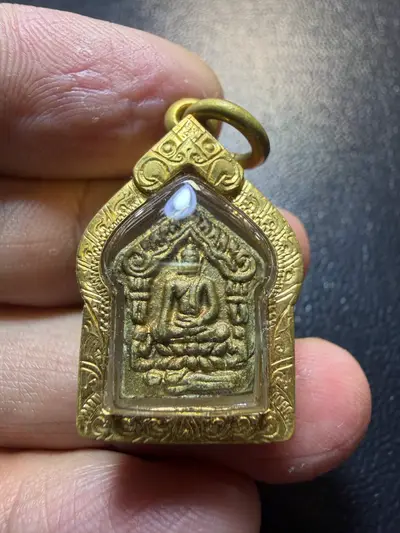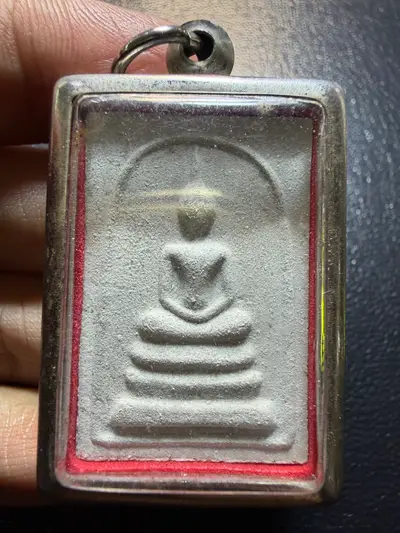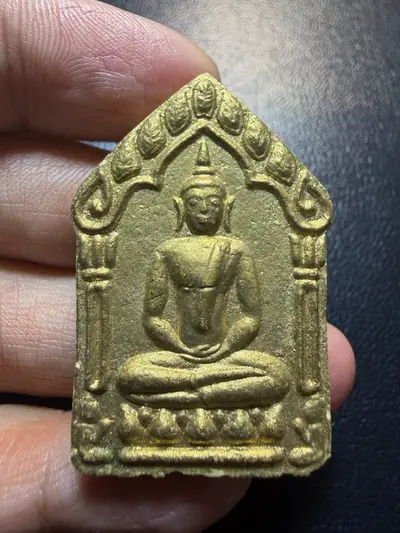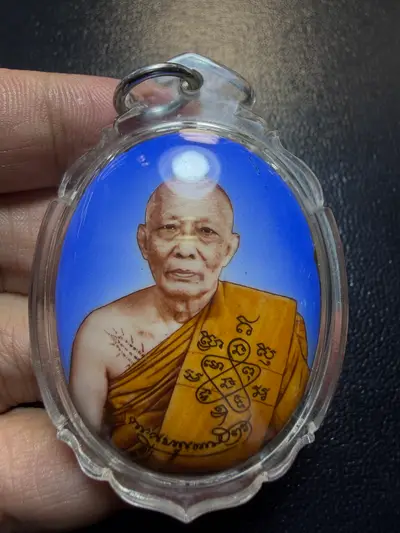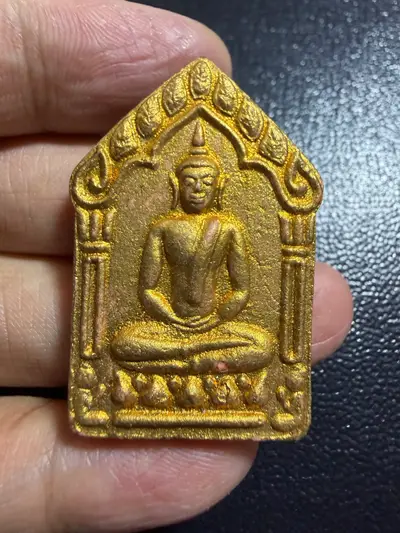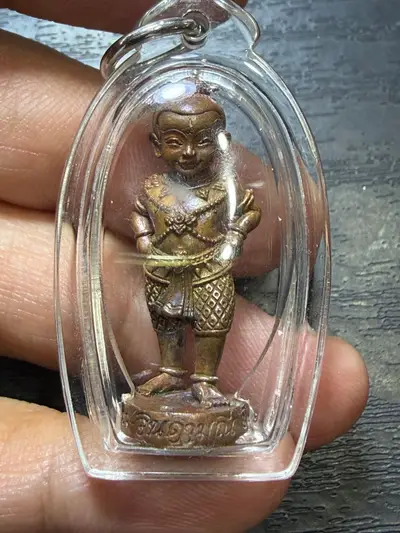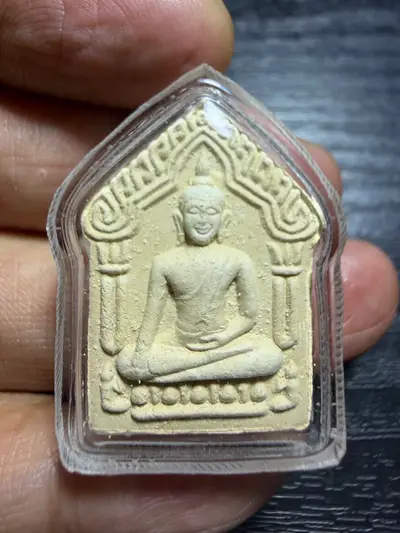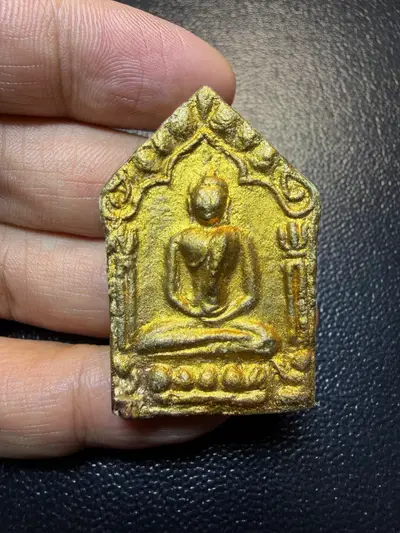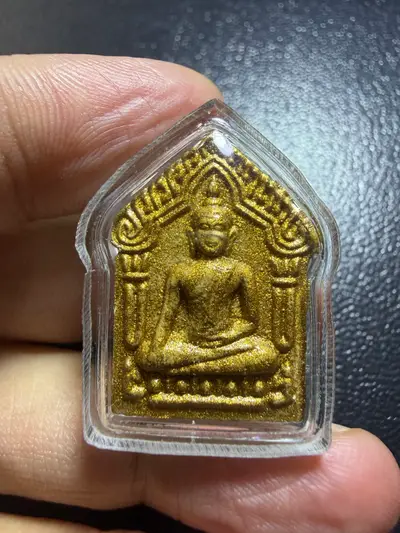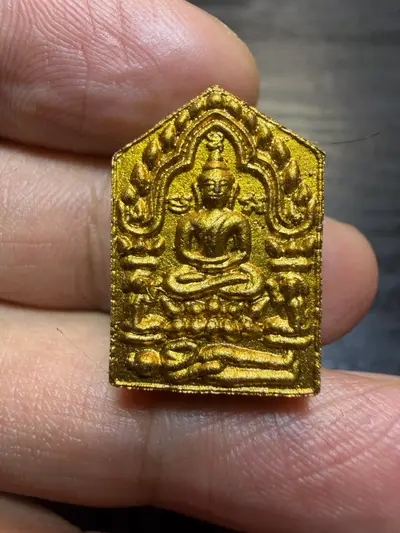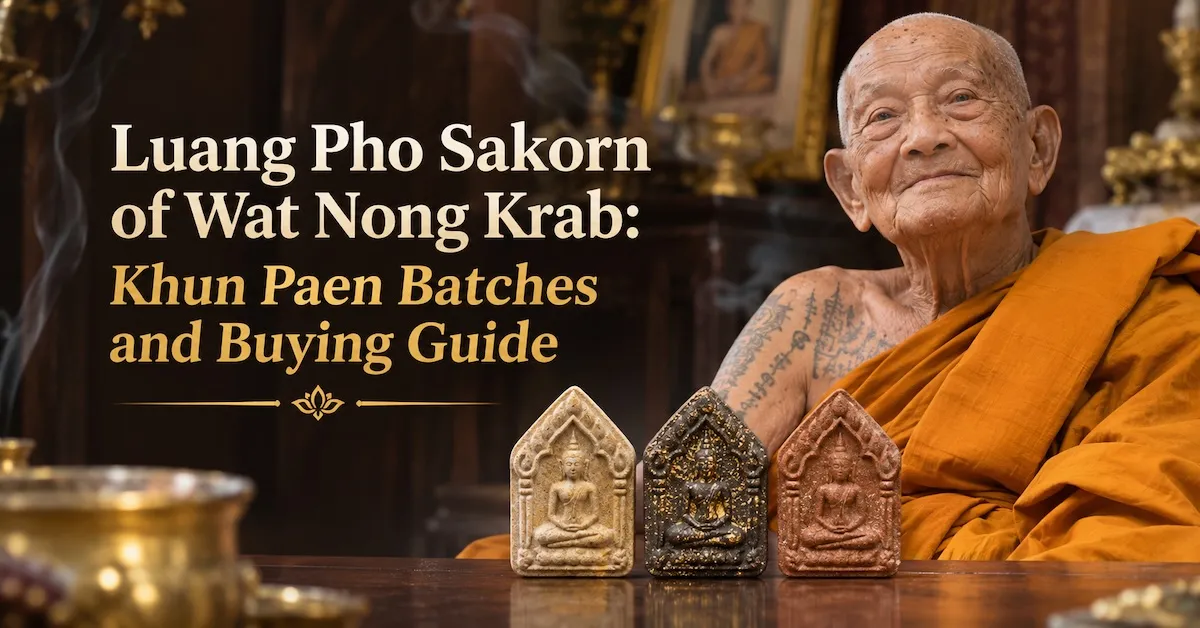
Luang Pho Sakorn Manunyo (หลวงพ่อสาคร มนุญโญ, 1938–2013) was the abbot of Wat Nong Krab in Ban Khai district, Rayong, and a direct student of Luang Pu Tim Issariko of nearby Wat Lahanrai. He is best known for his Phra Khun Paen made with Phrai Kuman powder, a line that started in B.E. 2530 (1987) and continued through several numbered batches until his death in 2013. For collectors who want the Lahanrai Khun Paen tradition without paying Luang Pu Tim prices, his pieces are the most direct continuation of that line.
Who was Luang Pho Sakorn?
Thai sources record that he was born Sakorn Phaisali on Tuesday, 3 February B.E. 2481 (1938), into a farming family in Ban Thai Thung, Nong Krab subdistrict, Ban Khai, Rayong — the same subdistrict as the temple he would later lead. As a young monk he stayed at Wat Lahanrai and trained under Luang Pu Tim, the master behind Thailand's most sought-after Khun Paen. He also studied with Luang Pu Hin of Wat Nong Sanom and other teachers of the eastern seaboard.
Collector accounts say the villagers of Nong Krab asked Luang Pu Tim to release him so he could lead their own temple, and he became abbot of Wat Nong Krab while still in his late twenties. He held the ecclesiastical title Phra Khru Manun Thammawat. He died of emphysema on 18 September B.E. 2556 (2013) at Samitivej Srinakarin Hospital in Bangkok, aged 75, after 55 rains as a monk.
Key facts
- Thai name: หลวงพ่อสาคร มนุญโญ (Luang Pho Sakorn Manunyo), title พระครูมนูญธรรมวัตร
- Temple: Wat Nong Krab (วัดหนองกรับ), Ban Khai district, Rayong Province
- Lived: 3 February 1938 – 18 September 2013 (B.E. 2481–2556)
- Teacher: Luang Pu Tim Issariko, Wat Lahanrai, Rayong
- Signature amulet: Phra Khun Paen in Phrai Kuman powder, first batch B.E. 2530
Why his Khun Paen matters: the Lahanrai connection
Luang Pu Tim's Khun Paen Phrai Kuman is one of the most expensive modern amulets in Thailand. Its fame rests on the Phrai Kuman powder in the mix. Thai collector references widely record that Luang Pho Sakorn received Phrai Kuman powder from his teacher and blended it into his own first Khun Paen batch of B.E. 2530, which came in small and large moulds with gold, silver or copper takrut set into the back. That is why collectors treat his early batches as the closest living branch of the Lahanrai lineage rather than as a separate style.
If you are new to the form, our guide to Luang Phor Tim and the Lahanrai Khun Paen explains the original, and the Khun Paen version comparison shows where the main lineages sit against each other.