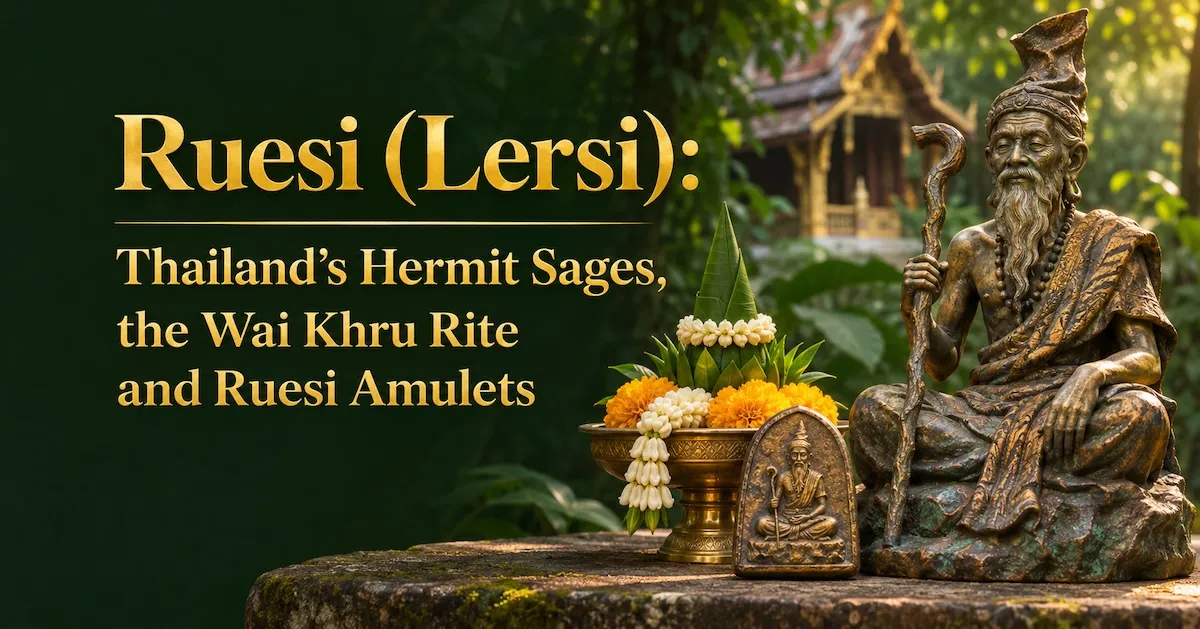
TL;DR: The Ruesi (ฤๅษี, also spelled Lersi) is the hermit sage of Thai belief, descended from the Indian rishi. In Thailand the Ruesi are honoured as the first teachers of magic, medicine, classical dance and music, and are affectionately called พ่อแก่ (Por Gae, "old father"). They are central to the Wai Khru teacher-honouring rite. Ruesi amulets are kept for success in work and study and for all-round blessing; check the provenance and maker before buying.
Who are the Ruesi?
A Ruesi is a forest ascetic who has gained wisdom and power through austerity. The figure travelled from India into Southeast Asia and became, in Thailand, the archetypal teacher and source of every art. Even the Thai alphabet carries the word: the letter ษ is named ษ ฤๅษี.
Ruesi are usually shown as white-bearded elders in a pointed tiger- or leopard-skin hat, wrapped in animal skin, holding a staff or a book.
The Ruesi and Wai Khru
Wai Khru (ไหว้ครู) is the rite of honouring one's teachers, held everywhere from schools and boxing gyms to sak yant temples and dance troupes. In sak yant and classical performing-arts ceremonies the Ruesi are among the most important teachers honoured, with Ruesi masks or images on the altar and, at times, participants believed to be possessed by a Ruesi. The best-known example is the festival at Wat Bang Phra; see the Wai Khru festival at Wat Bang Phra and Sak Yant and Thai amulets.
Famous Ruesi
- Ruesi Narot (ฤๅษีนารอด): the great sage of legend, often regarded as first among the Ruesi.
- Ruesi Ta Fai (ฤๅษีตาไฟ): the "fire-eyed" Ruesi whose third eye is said to emit flame.
- Jivaka Komarabhacca (ชีวกโกมารภัจจ์): physician of the Buddha's time, honoured as the father of Thai traditional medicine by massage and herbal practitioners.
At Wat Pho in Bangkok a set of Ruesi Dat Ton (ฤๅษีดัดตน) statues demonstrates stretching and self-massage postures, a vivid meeting of Thai medicine and Ruesi devotion.
What Ruesi amulets are kept for
- Career and craft: artisans, teachers, performers and massage therapists honour the Ruesi as their first teacher.
- Study and wisdom: success in learning and exams.
- All-round blessing and prosperity: many Chinese-speaking devotees treat the Ruesi as a general patron.
They come as amulets, medals, altar figures and masks, made by temple monks or lay masters (ajarn).
Keeping and buying
- Respect: the Ruesi is a teacher; keep the image high and clean with water, fruit, flowers and incense. Thursday is the traditional day for honouring teachers.
- With Buddhist amulets: the Buddha in the centre, the Ruesi to the side; see Thai amulet rules and taboos.
- Provenance: Ruesi items come from many sources; prefer temples or well-known masters, and for old pieces check the Association certificate (how to check).
FAQ
Q: Is the Ruesi a Buddha or a god?
A: Neither. The Ruesi is an ascetic sage honoured in Thailand as the teacher of knowledge and crafts, alongside Buddhism.
Q: Ruesi or Lersi?
A: The same word, ฤๅษี, romanised either way.
Q: Who is a Ruesi amulet for?
A: Craftspeople, teachers, performers, massage therapists, students and anyone wanting all-round blessing.
Q: Is a Ruesi amulet black magic?
A: Pieces blessed by temple monks belong to the mainstream tradition. Ask questions about anything of unclear origin claiming unusual materials.
Last updated: November 2026 | By the Merit Messenger team, based in Bangkok
Looking for certified pieces with clear provenance? Browse our collection or contact us.