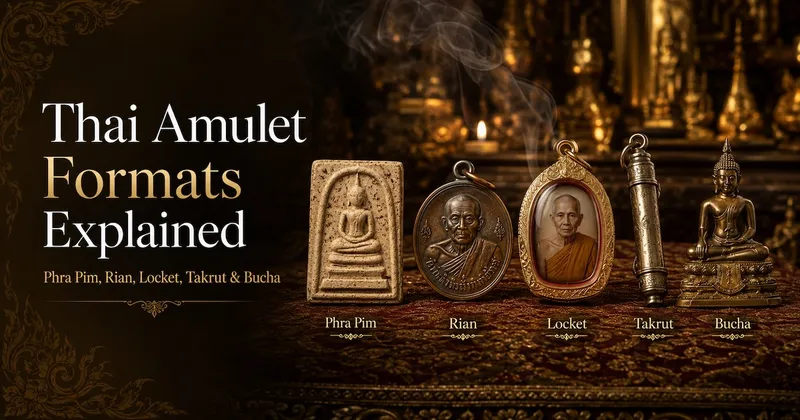
Most people identify a Thai amulet by "who it depicts," but not by its format — the physical form it takes. Thai sacred objects fall into five main formats: the powder tablet (Phra Pim), the coin-medal (Rian), the photo-amulet (Locket), the scroll (Takrut), and the statue (Bucha). This guide explains what each format is, its materials, how it is worn or venerated, and its collectibility, so you can tell at a glance what form a piece takes.
There are two ways to classify a Thai amulet: by "who it depicts" (Buddha, monk, deity, or spirit) and by "what form it takes" — its format. The same monk may issue a powder tablet, a coin-medal, or a photo-amulet. Understand format and you can say at a glance what form of sacred object you are holding. Thai pieces fall into five main formats:
1. Phra Pim — the classic pressed image tablet
A Phra Pim is a tablet pressed from sacred powder, incense ash, pollen, and sacred earth — the vehicle for the most classic types such as the Phra Somdej, Pidta, and the Benjapakee. It is prized for its texture, powder recipe, and patina; the Benjapakee are almost all powder or clay tablets. For materials, see the materials guide.
2. Rian — the stamped metal coin-medal
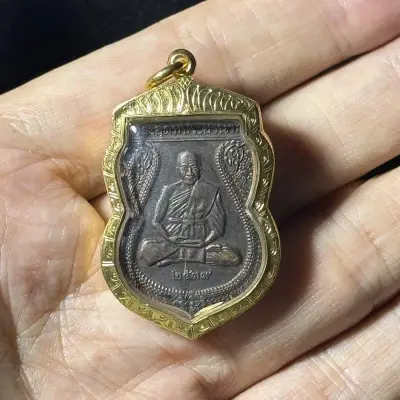
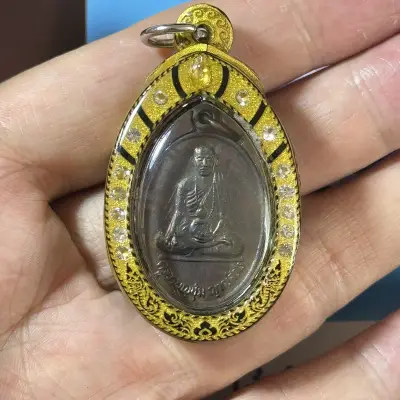
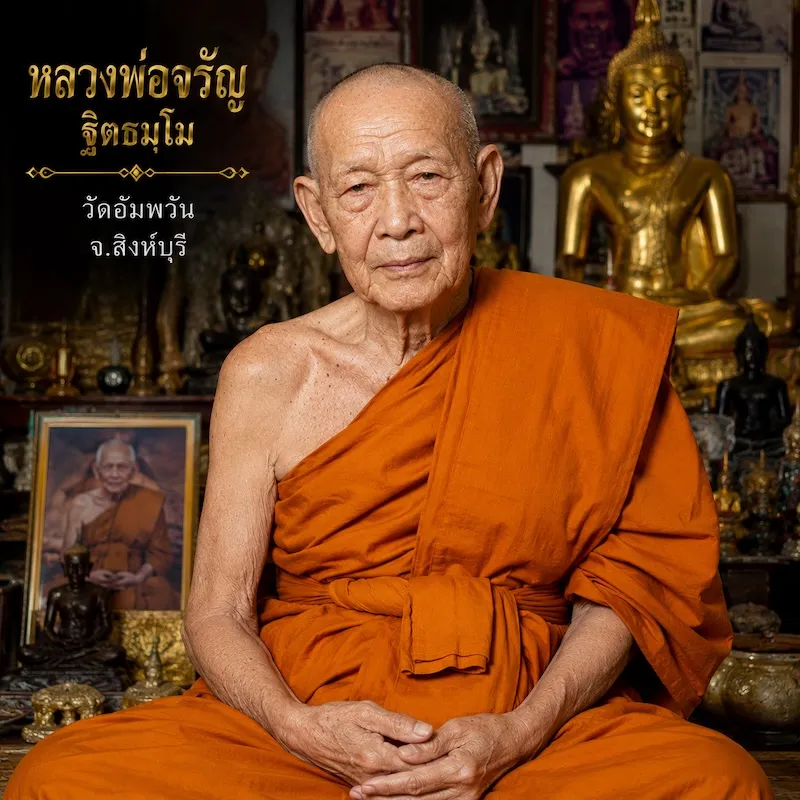
The Rian (Thai: เหรียญ) is a coin- or medal-shaped amulet struck from metal, usually bearing a monk's image on the front. Popular since the early twentieth century, it is one of the largest collecting categories. Common metals include Nawaloha (nine sacred metals), copper (tong daeng), silver (ngern), and gold (tong kam), with first-edition and competition-winning rian especially prized. The Luang Phor Jaran sema rian, Luang Phor Pern sema rian, and Kruba Boonchum rian we offer are all of this format.
3. Locket — the large image-amulet set with sacred materials
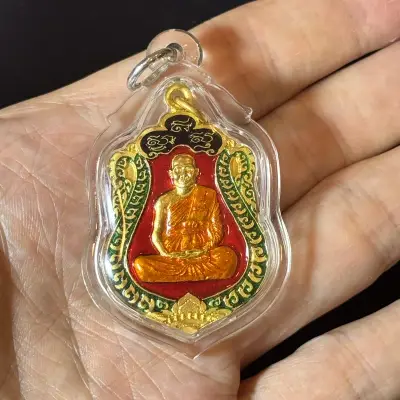
A Locket sets a monk's image (a photo or painting) into a resin frame, usually backed with sacred powder and takrut. It is larger, with a clear frontal image, serving for wearing, veneration, and collecting alike — a favored format of contemporary masters such as Kruba Ariyachat.
4. Takrut — the inscribed rolled scroll
A Takrut is a metal or leaf sheet inscribed with sacred script, rolled into a tube, sealed, and consecrated. It can be worn on its own or set into the back of a tablet or locket to strengthen it. See the Takrut guide.
5. Bucha (Roop Lor) — the statue for the home altar
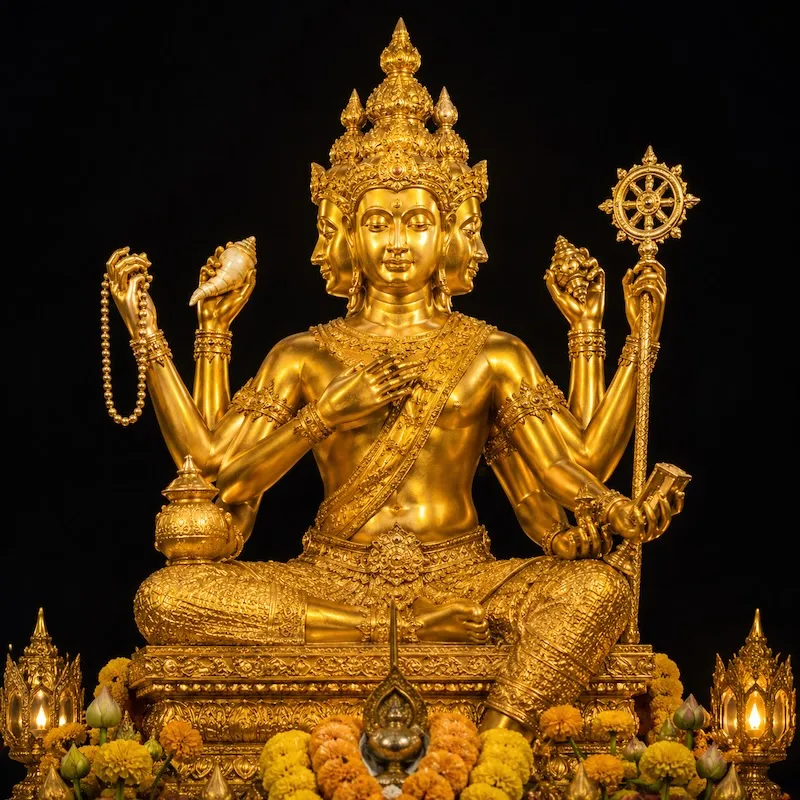
A Bucha (from the word for "to venerate"; a cast or carved figure is a Roop Lor) is a three-dimensional image kept on a home altar rather than worn, ranging from desktop to life-size. Phra Phrom, Ganesha, and Kumanthong are often brought home in statue form.
The five formats at a glance
| Format | Form & material | Use | Examples |
|---|
| Phra Pim | Pressed sacred powder/clay | Worn | Somdej, Pidta, Benjapakee |
| Rian | Struck metal | Worn/collected | Monk commemorative medals |
| Locket | Image in resin + sacred materials | Worn/venerated/collected | Modern monk lockets |
| Takrut | Rolled inscribed sheet | Worn/set into others | Scriptural scrolls |
| Bucha | Cast/carved statue | Altar veneration | Phra Phrom, Ganesha, Kumanthong |
FAQ
Is a Phra Pim or a Rian better?
Neither is superior — they are simply different formats and materials. Phra Pim excels in powder recipe and antique character; Rian in metalwork and the monk's portrait. Choose by preference and by which format best represents that monk's lineage.
Can a Locket be worn out and about?
Yes. Though larger, lockets are designed for both wearing and veneration, suitable to wear daily or keep on an altar as you prefer.
Can a Bucha and a worn amulet replace each other?
They serve different purposes. A Bucha is a statue for home-altar veneration; a worn amulet (tablet, rian, etc.) protects you on the go. Many people use both — a statue at home and an amulet worn.
How do I quickly tell a piece's format?
Look at material and form: pressed powder = Phra Pim, metal medal = Rian, framed image = Locket, rolled tube = Takrut, standing figure = Bucha. Combine that with "who it depicts" for a full description.
Last updated: July 2026 | Author: The Merit Messenger Team (based in Bangkok)
Want to pick a piece by format? Browse our pieces or contact us. For terminology, see the Thai amulet glossary.