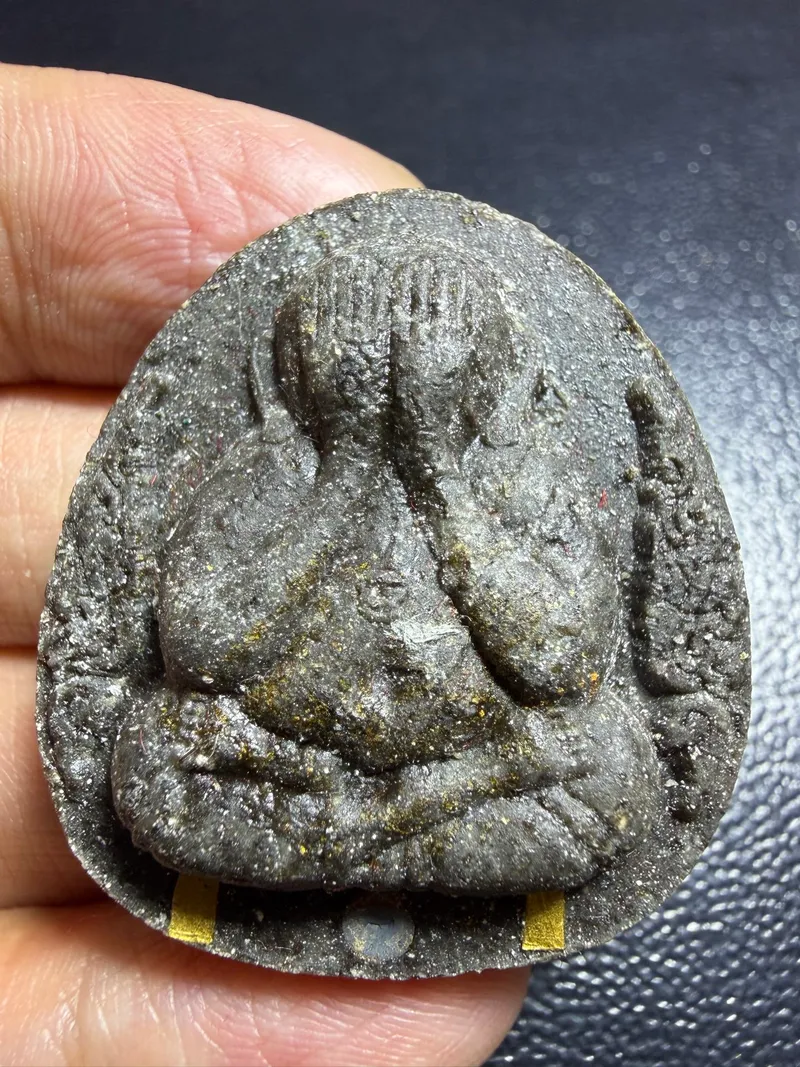
Luang Phor Khun B.E. 2537 (1994) "Sao 5 Khun Phan Lan" (เสาร์ 5 คูณพันล้าน) jumbo Phra Pidta (พระปิดตาจัมโบ้) from Wat Ban Rai, Nakhon Ratchasima, a batch Chinese-speaking collectors know as the "Million Pidta". It is made of sacred powder (เนื้อผง) with a pair of gold takrut (ตะกรุดทองคำคู่) set below the figure. "Sao 5" is a Saturday that falls on the fifth waxing day of the fifth lunar month, one of the most auspicious days in Thailand for consecrating amulets; "Khun Phan Lan" plays on the master's name, as khun (คูณ) means "to multiply", wishing wealth multiplied into the billions. The front shows the Pidta seated with both hands over his face; the back carries a crowned yantra and the inscription "หลวงพ่อคูณ". Thai Buddha Image Admiration Association formal certificate No. 6510-09818 with a QR code. One piece only; it is held by a partner supplier, so please submit a request and we confirm availability by email within 24 hours.
What is the Luang Phor Khun B.E. 2537 "Million Pidta" (Phra Pidta Jumbo Luang Phor Khun Run Sao 5 Khun Phan Lan)?
A Phra Pidta (พระปิดตา) is a Buddha figure covering his face with his hands, symbolising the closing of the senses to outside distraction. In Thai tradition it is worn for protection from misfortune and danger, and it is also regarded as an amulet that keeps wealth from slipping away. "Jumbo" (จัมโบ้) means this batch is larger than the usual size.
Luang Phor Khun Parisuttho (หลวงพ่อคูณ ปริสุทฺโธ) of Wat Ban Rai (วัดบ้านไร่), Nakhon Ratchasima, is known across Thailand as the "living god of wealth". This batch was made at Wat Ban Rai in B.E. 2537 and blessed on a Sao 5 day; its name, "Khun Phan Lan", plays on the multiplying meaning of the master's name. According to the supplier, it was made in small numbers and is one of Luang Phor Khun's most sought-after powder Pidta after his B.E. 2519 six-armed Pidta.
Key facts
- Type: Phra Pidta (พระปิดตา), jumbo size (จัมโบ้)
- Batch: Sao 5 Khun Phan Lan (เสาร์ 5 คูณพันล้าน)
- Material: sacred powder (เนื้อผง) with a pair of gold takrut (ตะกรุดทองคำคู่), as recorded on the association certificate
- Temple: Wat Ban Rai (วัดบ้านไร่), Nakhon Ratchasima Province
- Master: Luang Phor Khun Parisuttho (หลวงพ่อคูณ ปริสุทฺโธ)
- Year: B.E. 2537 (1994)
- Certification: Thai Buddha Image Admiration Association formal certificate (บัตรรับรองพระแท้), No. 6510-09818, issued 25 October B.E. 2565 (2022), with QR code
- Stock: one piece only, held by a partner supplier
Who was Luang Phor Khun?
Luang Phor Khun was born in B.E. 2466 (1923) and passed away in B.E. 2558 (2015), spending his monastic life at Wat Ban Rai. Born into a farming family, he was known for blessing devotees while squatting and tapping them on the head, and for giving the donations he received to schools, hospitals and public causes. He has a large following in Thailand, Malaysia, Singapore and beyond, and his amulets are prized for wealth and protection from danger. According to the supplier, after blessing this batch he said that anyone who wished to prosper should choose it.
Blessings
- Keeping wealth: the Pidta is traditionally worn to hold on to money, here paired with Luang Phor Khun's wealth blessing
- Protection: the classic Pidta blessing against misfortune and danger
- Protection from gossip: keeping clear of quarrels and slander
- Calm: the closed senses remind the wearer to stay steady
Please note: an amulet supports your own efforts and intentions; it does not guarantee any outcome. Keeping the Five Precepts is traditionally encouraged.
Craftsmanship
A rounded shield-shaped powder plaque in dark grey-black, flecked with fine white, gold and red particles. On the front the Pidta sits cross-legged with both hands over his face, the finger lines clearly defined and decorative scrolls on either side. Below the figure a gold takrut shows on each side, with a round insert between them (described by the supplier as a silver takrut; the certificate records only the pair of gold takrut). The back has a round yantra beneath a crown, "คูณ" and "ล้าน" on either side, and "หลวงพ่อคูณ" below. According to the supplier, the powder includes the master's hair. The edges show natural wear; it is not currently cased.
FAQ
Q: How do I know it is from this batch?
A: The Thai Buddha Image Admiration Association formal certificate reads "พระปิดตาจัมโบ้หลวงพ่อคูณ รุ่นเสาร์ 5 คูณพันล้าน เนื้อผงตะกรุดทองคำคู่ พ.ศ. 2537": Luang Phor Khun jumbo Pidta, Sao 5 Khun Phan Lan batch, sacred powder with a pair of gold takrut, B.E. 2537, from วัดบ้านไร่, Nakhon Ratchasima, No. 6510-09818, with a QR code.
Q: What does "Sao 5" mean?
A: It is a Saturday that falls on the fifth waxing day of the fifth lunar month. Thai tradition holds it to be an exceptionally powerful day, and senior monks often choose it to bless amulets, so batches named "Sao 5" are especially valued.
Q: Can I wear a powder amulet every day?
A: Yes, ideally in a waterproof case. Powder dislikes long soaking, so take it off for bathing or swimming.
Q: Who is it suited to?
A: People in business who want to hold on to what they earn, frequent travellers seeking protection, and collectors of Luang Phor Khun's Pidta.
Q: Why do I request first and pay later?
A: This piece is held by a partner supplier rather than in our Bangkok stock. So that nobody pays for a piece that has already gone, we confirm with the supplier first and reply by email within 24 hours. If it is available, the email includes a payment link valid for 24 hours. Submitting a request costs nothing.
About this piece
- Includes: the Pidta (uncased) and the Thai Buddha Image Admiration Association formal certificate (No. 6510-09818)
- Price: ฿40,000
- Stock: one piece only
- How to buy: submit a request on this page; pay through the emailed link once availability is confirmed
Last updated: 2026-10-29 | Merit Messenger team (Bangkok-based)