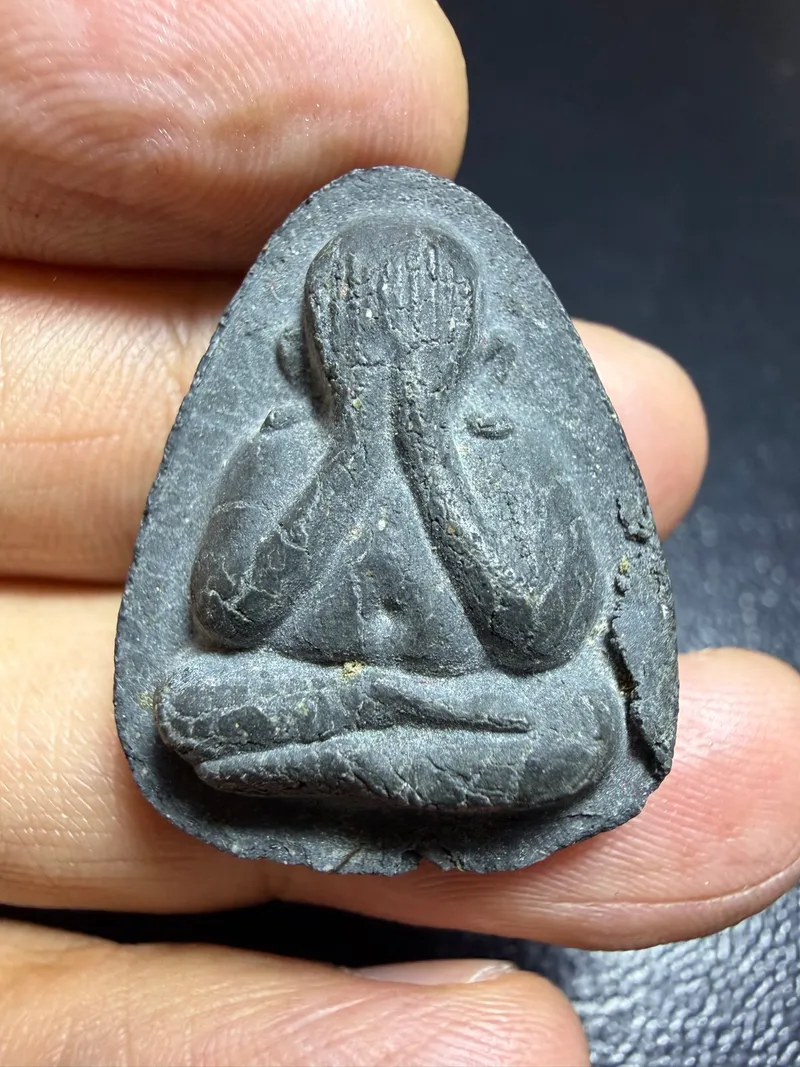
Luang Pu Toh Phra Pidta, Plot Ni batch (พระปิดตาหลวงปู่โต๊ะ รุ่นปลดหนี้ พิมพ์หลังยันต์ตรีฯ เนื้อผงใบลาน ประมาณพ.ศ. 2521 - 2523), palm-leaf ash powder, recorded by the Association as about B.E. 2521-2523 (1978-1980), registered to Wat Pradu Chimphli (วัดประดู่ฉิมพลี), Bangkok. Certificate GJ07-F4009. One piece only. It is held by a partner supplier, so please tap Hold this piece for me and we confirm availability by email within 24 hours.
What is the Plot Ni Pidta of Luang Pu Toh?
Phra Pidta (พระปิดตา) is a seated figure covering his face with both hands, a sign of closing off the senses. Devotees wear it for protection from danger and to keep what they earn. Luang Pu Toh Inthasuwanno (หลวงปู่โต๊ะ อินทสุวัณโณ) of Wat Pradu Chimphli in Bangkok is one of the most famous makers of Phra Pidta in Thailand. In the batch name ปลดหนี้, ปลด is to release and หนี้ is debt: clearing debt. In the material line, ผงใบลาน is powder made from the ash of inscribed palm-leaf manuscripts, which gives a grey-black body. พิมพ์หลังยันต์ตรีฯ is the mould with the Yan Tri Nisinghe yantra (ยันต์ตรีนิสิงเห) pressed into the back, abbreviated on the record.
The Association website records this piece as พระปิดตาหลวงปู่โต๊ะ รุ่นปลดหนี้ พิมพ์หลังยันต์ตรีฯ เนื้อผงใบลาน ประมาณพ.ศ. 2521 - 2523: Luang Pu Toh Phra Pidta, Plot Ni batch, Yan Tri back mould, palm-leaf ash powder, about B.E. 2521-2523, from Wat Pradu Chimphli in Bangkok. That agrees with the supplier on monk and batch. On the date, the record gives a span of about B.E. 2521 to 2523; the supplier's title says B.E. 2521 (1978) and the copy says the consecration began in B.E. 2521 and was completed in B.E. 2523. The two do not conflict, and this page follows the span on the record. The following are supplier statements and are not on the record: that this batch was blessed for three years together with another well-known batch, and several stories of wearers whose trade recovered, who won the lottery, who cleared a bank debt or who walked away from a road accident. These stories have no source and are not treated as fact here. The supplier's title mentions an Association card; the photo shows the Association's yellow slip and sealed box. The slip is ticked แท้ (genuine), numbered 04348 and dated 14 ก.ค. 2569, with a handwritten name that cannot be read in the photo, and the barcode on the box reads GJ07-F4009. The supplier's copy says nothing about condition; the chip and crack visible in the photos are described below.
Key facts
- Type: Phra Pidta powder amulet (พระปิดตา), rounded top, no lug
- Batch: Plot Ni (รุ่นปลดหนี้), clearing debt
- Mould: Yan Tri back (พิมพ์หลังยันต์ตรีฯ)
- Material: palm-leaf ash powder (เนื้อผงใบลาน), grey-black
- Year: about B.E. 2521-2523 (1978-1980) on the Association record; B.E. 2521 according to the supplier
- Monk: Luang Pu Toh (หลวงปู่โต๊ะ อินทสุวัณโณ)
- Temple: Wat Pradu Chimphli (วัดประดู่ฉิมพลี), Bangkok
- Condition: chip and a crack at the right edge of the front, small nick at the top edge of the back, fine crazing on the figure
- Case: none, uncased
- Certification: Thai Buddha Image Admiration Association, GJ07-F4009 (slip no. 04348), verifiable on the Association website; the photo shows the yellow slip and sealed box, and the formal card ships with the piece
- Stock: one piece, held by a partner supplier
About Luang Pu Toh
Luang Pu Toh Inthasuwanno (หลวงปู่โต๊ะ อินทสุวัณโณ) of Wat Pradu Chimphli (วัดประดู่ฉิมพลี) in Bangkok is one of the most famous makers of Phra Pidta in Thailand, and his powder amulets are highly regarded by collectors. The span on the Association record, about B.E. 2521-2523, falls within his lifetime.
What people wear it for
- Clearing debt and recovering finances
- Attracting and keeping wealth
- Protection from danger
- Keeping ill-wishers and gossip away
These are devotional beliefs. An amulet does not guarantee any outcome.
Craftsmanship and condition
A powder amulet rounded at the top and wide below, like a triangle with rounded corners, with no lug. It is grey-black throughout with a matt, fine-sand surface and a scatter of pale yellow grains. The front is a Pidta in high relief: a large round head, both palms side by side over the whole face with the ten fingers marked as vertical lines, an ear showing at each side of the head, thick arms with the elbows pushed outward, a slightly swelling belly with a sunken navel, and legs folded with one shin laid across the other. Condition needs stating plainly. Seen from the front, the middle and lower part of the right edge has a chip where a piece of the surface is lost, and beside it a crack runs along the line of the edge, with the surface slightly lifted there. The lower edge is uneven with a few small nicks, and fine crazing shows on the arms and legs. The back is flat and pressed with a yantra: crossing diagonal lines form triangles and lozenges, each holding a character, the ends of the lines turned into small loops, and a line of raised Thai along the bottom that cannot be read in full in the photo. The top edge of the back has a small nick and a turned-up lip. Uncased. The chip and crack show in all three photos; please enlarge them before asking us to hold it. Powder amulets are brittle, and this one is best cased before wearing.
FAQ
Q: How do I check the certification?
A: The photo shows the yellow slip (the receipt) and the sealed box, whose barcode is the certificate number. Enter GJ07-F4009 on the Thai Buddha Image Admiration Association website to see the registered name พระปิดตาหลวงปู่โต๊ะ รุ่นปลดหนี้ พิมพ์หลังยันต์ตรีฯ เนื้อผงใบลาน ประมาณพ.ศ. 2521 - 2523, registered to วัดประดู่ฉิมพลี (กรุงเทพมหานคร). The formal Association card ships with the piece.
Q: Why does the photo show a yellow slip instead of a plastic card?
A: The yellow slip is the receipt the Association issues on the spot. A tick at แท้ means the piece was judged genuine, and the barcode on the sealed box is the certificate number. The formal card is issued later by the Association and ships with the piece.
Q: What is wrong with the condition?
A: There is a chip with a crack along the middle and lower right edge of the front, a small nick at the top edge of the back, and fine crazing on the figure. The body is whole, with the head, hands and legs of the Pidta all present. All of this shows in the photos, and the price reflects the piece as it is.
Q: Is the debt-clearing Pidta the same as Plot Ni?
A: Yes. ปลดหนี้ means clearing or escaping debt, and that is the batch name on the Association record.
Q: Which year is it from?
A: The record says about B.E. 2521 to 2523 and does not fix a single year. The supplier writes B.E. 2521 and states the consecration ended in B.E. 2523.
Q: Who is it for?
A: Collectors of Luang Pu Toh Pidta, people hoping to put their finances right and seeking protection, and buyers who accept an edge chip and value the certification and the batch.
Q: Why do I ask you to hold it before paying?
A: This piece is held by a partner supplier rather than in our Bangkok stock. To avoid taking payment for a piece that has already sold, we confirm with the supplier first and reply by email within 24 hours, with a payment link valid for 24 hours if it is available. Asking us to hold it costs nothing.
About this piece
- Includes: one Luang Pu Toh Plot Ni palm-leaf ash powder Phra Pidta (uncased, with a chip and crack at the edge), with Association card GJ07-F4009
- Price: ฿76,000
- Stock: one piece only
- How to buy: tap Hold this piece for me on this page and pay by the emailed link once availability is confirmed
Last updated: 2026-11-24 | Merit Messenger team, based in Bangkok