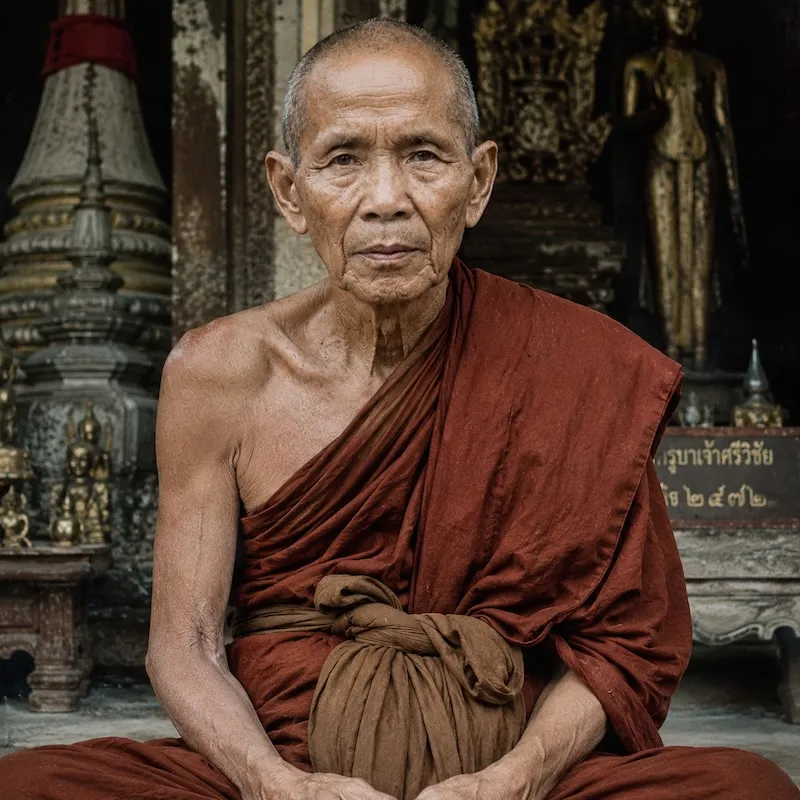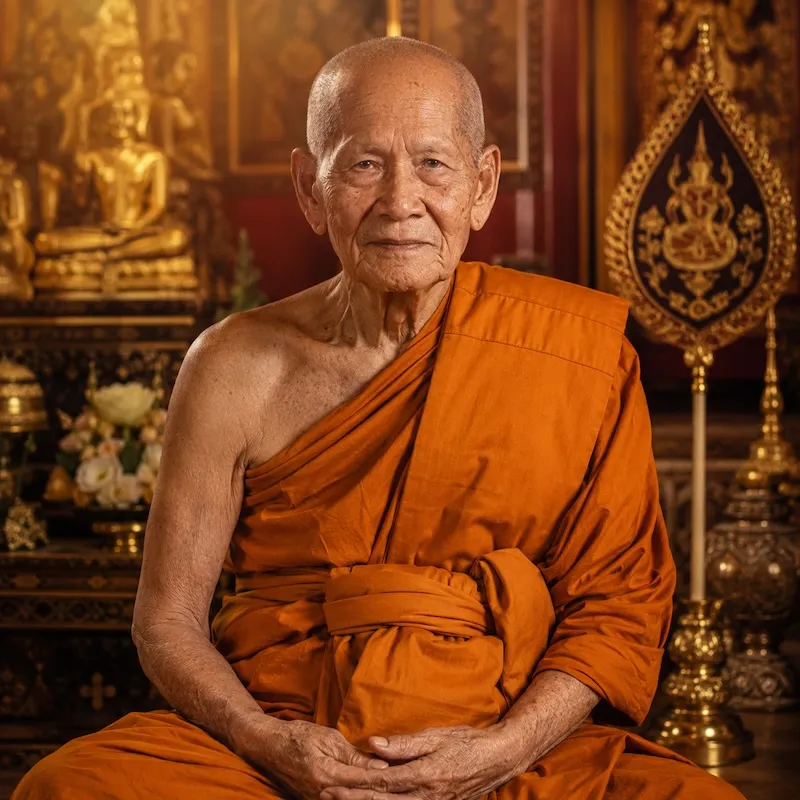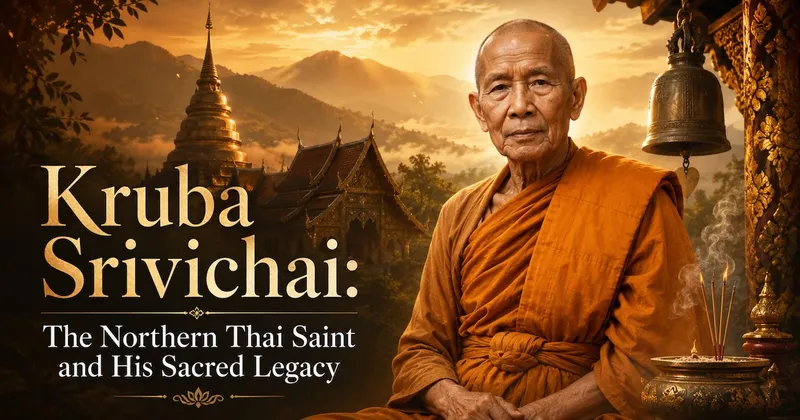
Who Was Kruba Srivichai?
Kruba Srivichai (1878–1938) is the most revered monk in the history of northern Thailand, honored as the "Saint of Lanna" — a title that reflects both his spiritual attainment and his extraordinary impact on the physical and cultural landscape of the region. His most famous achievement was organizing the construction of the road to Doi Suthep temple in Chiang Mai, completed in 1935 using entirely volunteer labor — no government funding, no machinery, just thousands of devotees who believed in their monk enough to build a mountain road with their bare hands.
His amulets are treasured across northern Thailand and increasingly valued nationwide, carrying the spiritual energy of a monk who combined deep meditative practice with visible, practical service to his community.
Life in the Lanna Tradition
Kruba Srivichai was born in Lamphun Province and ordained at a young age within the Lanna Buddhist tradition — the distinct form of Theravada Buddhism that developed in northern Thailand (historically the Lanna Kingdom, centered on Chiang Mai). Lanna Buddhism has its own meditation techniques, ceremonial practices, and sacred scripts that differ from the central Thai Buddhist establishment.
This regional identity put Kruba Srivichai at odds with the central Thai Buddhist authorities in Bangkok, who were working to standardize Buddhist practice nationwide. He was investigated and temporarily defrocked multiple times — not for any misconduct, but because his enormous popularity and independent spiritual authority challenged the centralized hierarchy. Each time, he was restored to his position after massive popular outcry from northern Thai devotees who considered him their true spiritual leader.
This tension between institutional authority and grassroots spiritual legitimacy is central to understanding Kruba Srivichai. He represented an authentic, community-rooted Buddhism that resonated with ordinary people precisely because it was not controlled by distant bureaucrats.
The Doi Suthep Road
In 1934, Kruba Srivichai announced his intention to build a road from the base of Doi Suthep mountain to the ancient Wat Phra That Doi Suthep temple at its summit. The existing path was a steep, difficult climb that made the temple inaccessible to many devotees.
Without government assistance, he mobilized thousands of volunteers from across northern Thailand. Men, women, and children came to carve the road through dense mountain forest, working with hand tools and carrying away rock and earth in baskets. The 11-kilometer road was completed in five months and 22 days — a feat that has become legendary in Thai culture.
This achievement cemented Kruba Srivichai's status as a monk who did not merely teach Buddhism but lived it through concrete service. His spiritual power was demonstrated not through miracles but through the ability to inspire massive collective action through faith alone.
Spiritual Powers and Amulet Benefits
Kruba Srivichai's amulets are associated with:
- Metta Mahaniyom (loving-kindness) — Given his ability to inspire devotion and cooperation from tens of thousands of people, his amulets are considered exceptionally strong in Metta energy.
- Serm Duang (fate enhancement) — His amulets are believed to elevate the wearer's overall life trajectory, removing obstacles and creating conditions for personal growth and success.
- Protection — As a monk who survived multiple attempts by authorities to suppress his ministry, his amulets carry a protective quality associated with resilience and endurance through adversity.
- Leadership and influence — For anyone in a position that requires inspiring others — managers, community leaders, teachers — Kruba Srivichai's energy of authentic, humble leadership is particularly relevant.
The Living Legacy
Kruba Srivichai's influence continues to shape northern Thai Buddhism today. His statue stands at the base of the Doi Suthep road he built, and devotees stop daily to pay respects and make offerings. The Kruba tradition — a lineage of charismatic, community-oriented monks in the Lanna style — continues through modern masters like Kruba BoonChum, who carry forward his spirit of practical spirituality.
His amulets, while not as widely circulated as those of Bangkok-area monks, are deeply valued in Thai amulet circles for their authentic spiritual lineage and the exceptional character of their creator.
Finding Kruba Srivichai Amulets
Original amulets from Kruba Srivichai's lifetime (pre-1938) are rare and valuable collector pieces. Temples in the Lanna region continue to create commemorative editions honoring his legacy, consecrated by monks in his spiritual lineage. These modern editions offer genuine connection to his tradition at accessible prices.
Browse our amulet collection, or learn about other revered Thai monks in our guides to Somdej Toh and Luang Phor Koon.