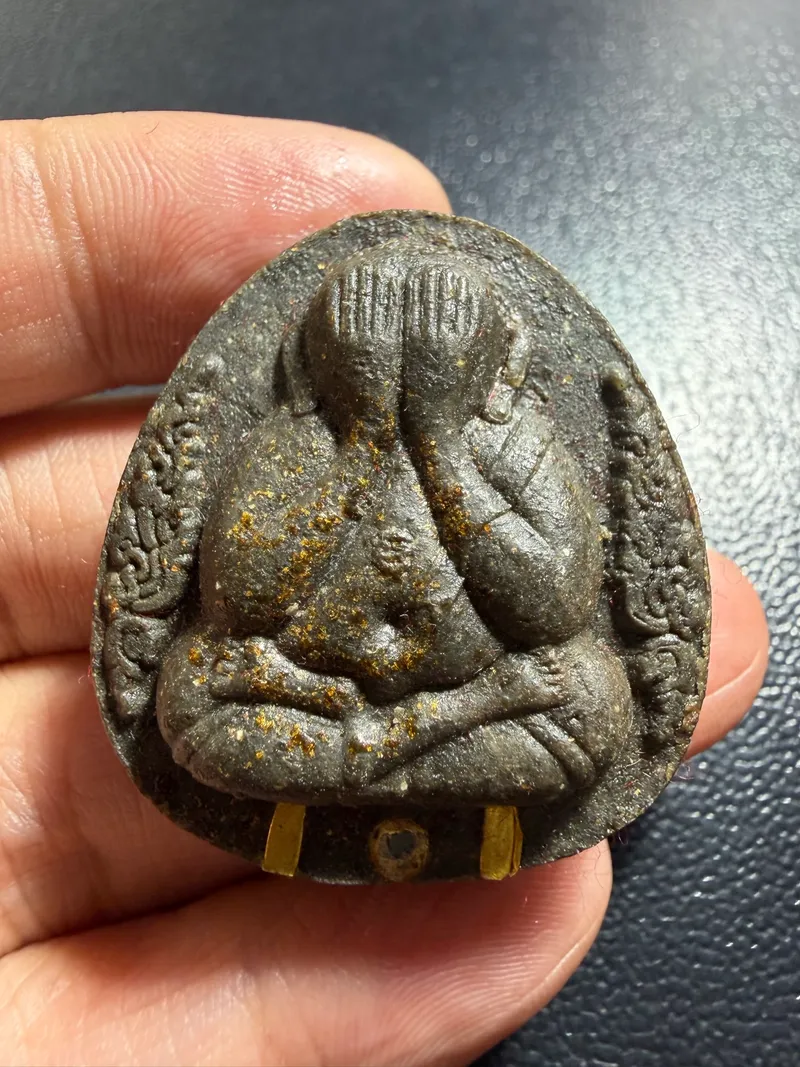
Luang Phor Khun Phra Pidta Jumbo, Sao Ha Khun Phan Lan batch (พระปิดตาจัมโบ้หลวงพ่อคูณ รุ่นเสาร์ 5 คูณพันล้าน เนื้อผง ฝังตะกรุดทองคำ), powder with embedded gold takrut, B.E. 2537 (1994), registered to Wat Ban Rai (วัดบ้านไร่), Nakhon Ratchasima. Older-format card 6502-05545. One piece only. It is held by a partner supplier, so please tap Hold this piece for me and we confirm availability by email within 24 hours.
What is the Sao Ha Khun Phan Lan Pidta?
Phra Pidta (พระปิดตา) is the seated figure covering its face with both hands, a sign of closing off the senses, worn for protection from harm and for attracting and keeping wealth. Luang Phor Khun Parisuttho (หลวงพ่อคูณ ปริสุทฺโธ) of Wat Ban Rai in Nakhon Ratchasima was one of the most widely followed monks of recent decades, and the years around B.E. 2537 were the height of demand for his pieces. In the batch name, เสาร์ 5, Saturday the Fifth, is a day traditionally held to be the most powerful for consecration, and คูณพันล้าน reads as Khun, a thousand million: his name, which also means to multiply. จัมโบ้ is the jumbo mould.
The Association card names this piece พระปิดตาจัมโบ้หลวงพ่อคูณ รุ่นเสาร์ 5 คูณพันล้าน เนื้อผง ฝังตะกรุดทองคำ พ.ศ. 2537: Luang Phor Khun Pidta, jumbo mould, Sao Ha Khun Phan Lan batch, powder, embedded gold takrut, B.E. 2537, from Wat Ban Rai in Nakhon Ratchasima, with the card issued on 8 February B.E. 2565. The supplier sells the batch as the Million Pidta; the batch name on the card is คูณพันล้าน, where พันล้าน is a thousand million, and this page follows the card. ฝังตะกรุดทองคำ means embedded gold takrut and corresponds to the two gold-coloured takrut at the foot; the card gives no fineness or weight for the gold. The following are supplier statements and are not on the card: that there are three takrut, two gold and one silver; that the powder contains the monk's hair, visible on the surface; that he was 72 that year; that few were made; and that he said many wearers would become wealthy. In the photos there is indeed a round insert between the two gold-coloured takrut, which the card does not mention. This is an older-format Association card with the old-style number 6502-05545 and no current lookup code, so the number search on the Association website does not apply to it.
Key facts
- Type: Phra Pidta powder amulet (พระปิดตา), jumbo mould (จัมโบ้)
- Batch: Sao Ha Khun Phan Lan (รุ่นเสาร์ 5 คูณพันล้าน); sold by the supplier as the Million Pidta
- Material: powder with embedded gold takrut (เนื้อผง ฝังตะกรุดทองคำ); fineness not stated on the card
- Year: B.E. 2537 (1994)
- Temple: Wat Ban Rai (วัดบ้านไร่), Nakhon Ratchasima
- Lettering: หลวงพ่อคูณ ปริสุทฺโธ along the lower edge of the back
- Takrut: two gold-coloured takrut under the seat with a round insert between them; two gold and one silver according to the supplier
- Case: none; uncased, shown in a red velvet box
- Certification: Thai Buddha Image Admiration Association, older-format card 6502-05545, with QR code; this format has no lookup code, so the number search on the Association website does not apply
- Stock: one piece, held by a partner supplier
About Luang Phor Khun
Luang Phor Khun Parisuttho (หลวงพ่อคูณ ปริสุทฺโธ), born B.E. 2466 (1923), passed away B.E. 2558 (2015), of Wat Ban Rai, Nakhon Ratchasima.
What people wear it for
- Attracting and keeping wealth
- Good trade
- Protection from harm
- Shielding from ill-wishers
These are devotional beliefs. An amulet does not guarantee any outcome.
Craftsmanship and condition
A tablet in the shape of a rounded triangle, narrow above and broad below, large enough to span more than two fingers. The powder is dark grey-brown and visibly grainy, and the front is scattered with gold-coloured flecks, most of them on the arms, belly and legs of the figure. The Pidta is in high relief: both hands side by side over the face with every finger cut, the elbows spread, the upper and lower arms full and round, a small yantra on the belly, the legs crossed with soles and toes distinct. A column of raised yantra script in linked curling strokes runs down each side. Set into the powder under the seat are two gold-coloured takrut, left and right, each showing as a flat strip; between them is a round insert with a yellowish rim and a grey-blue centre. The back is flatter and greyish green, with a large round yantra wheel at the centre divided into cells of characters, a tiered spire rising from the top of the wheel and a character on each side of the spire. Along the lower curve is หลวงพ่อคูณ ปริสุทฺโธ, with a further line of small lettering beneath that cannot be read in the photo. Fine pale grains are scattered over the back. The edge is whole all round, with no cracks or missing corners visible. It has no case and is shown resting in a red velvet box.
FAQ
Q: How do I check the certification?
A: The piece comes with an older-format Association card issued on 8 February B.E. 2565, numbered 6502-05545, printed with a photograph of the piece, the name พระปิดตาจัมโบ้หลวงพ่อคูณ รุ่นเสาร์ 5 คูณพันล้าน เนื้อผง ฝังตะกรุดทองคำ พ.ศ. 2537, the place วัดบ้านไร่ (นครราชสีมา) and a QR code. The older format has no current lookup code, so the number search on the Association website does not apply to it. The way to check is to compare the photograph on the card with the piece; the last product image shows the two together.
Q: Why can it not be looked up by number on the Association website?
A: This is an older-format Association card. It carries an old-style card number and not the current lookup code, so the number search on the Association website does not apply to this format. The card is printed with a photograph of this piece, which can be compared with the piece as described in the answer above.
Q: Is the Million Pidta the same as the batch on the card?
A: Million Pidta is the supplier's name. The batch on the Association card is เสาร์ 5 คูณพันล้าน, Saturday the Fifth, Khun a thousand million, and the year is the same, B.E. 2537. This page follows the card.
Q: Are the takrut solid gold?
A: The card says ฝังตะกรุดทองคำ, embedded gold takrut, and gives no fineness or weight. Of the supplier's two gold and one silver, the two gold-coloured takrut agree with the card; the round insert between them is not mentioned on the card, and whether it is a silver takrut rests on the supplier's word.
Q: How does it differ from the gold-mask version?
A: The Khun Phan Lan Pidta of the same year also exists with a gold mask on the front (หน้ากากทอง). On this piece the Pidta is bare powder with no gold mask, and the card names embedded gold takrut.
Q: Does it really contain his hair?
A: That is the supplier's statement. The card does not say, and it cannot be confirmed from the photos.
Q: Who is it for?
A: People in business, anyone hoping for better fortune with money, and collectors of Luang Phor Khun.
Q: Why do I ask you to hold it before paying?
A: This piece is held by a partner supplier rather than in our Bangkok stock. To avoid taking payment for a piece that has already sold, we confirm with the supplier first and reply by email within 24 hours, with a payment link valid for 24 hours if it is available. Asking us to hold it costs nothing.
About this piece
- Includes: one Luang Phor Khun Sao Ha Khun Phan Lan jumbo powder Pidta with embedded gold takrut, uncased, with Association card 6502-05545
- Price: ฿40,000
- Stock: one piece only
- How to buy: tap Hold this piece for me on this page and pay by the emailed link once availability is confirmed
Last updated: 2026-11-24 | Merit Messenger team, based in Bangkok