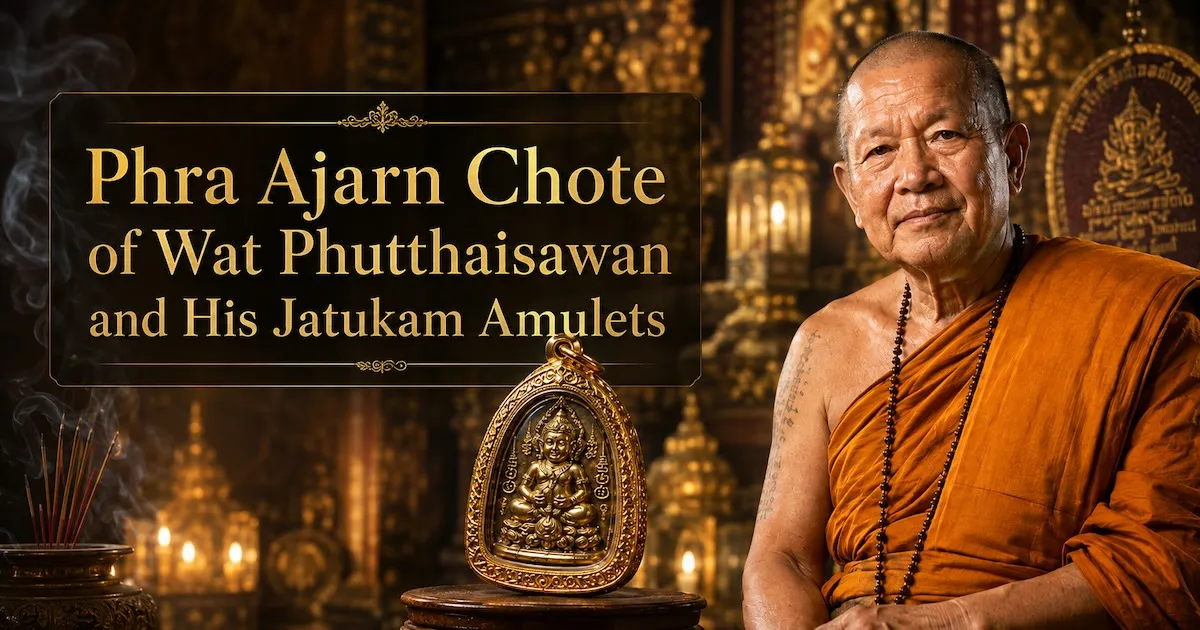
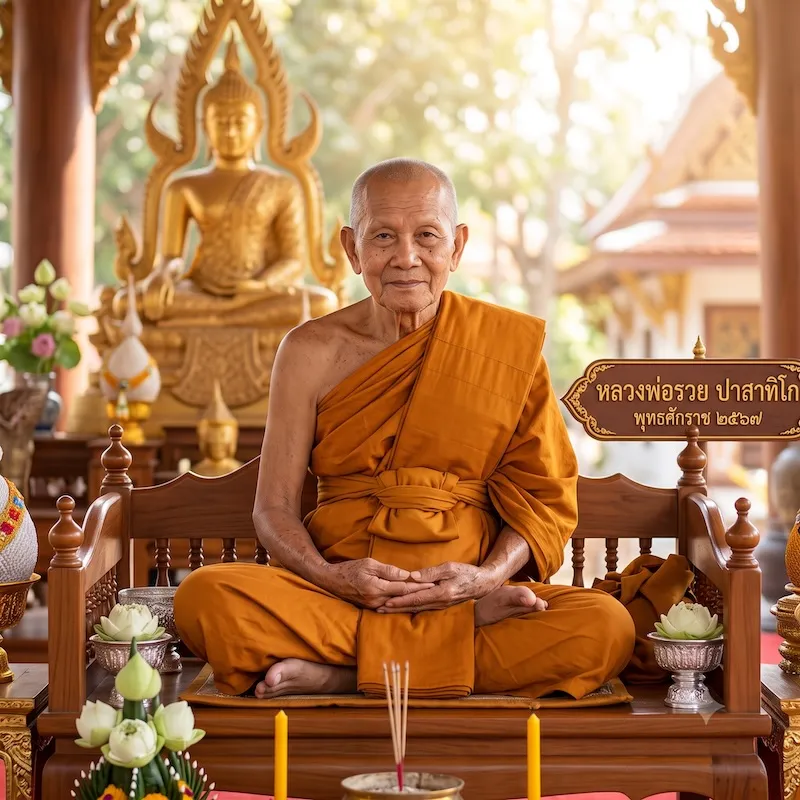
Phra Ajarn Chote (Atichote Thammawaro) is the abbot of Wat Phutthaisawan, a royal monastery in Ayutthaya, and the monk who brought Jatukam Ramathep north from Nakhon Si Thammarat. His timeline, three teaching lineages, the Nuea Duang and B.E. 2550 editions, authentication checks and a visitor guide.
Update, 10 September 2026: Ajarn Chote was arrested at the temple by Thai anti-corruption police that morning over an alleged 92 million baht in temple funds, malfeasance and money laundering, and was disrobed at midday. The allegations remain under investigation and no court has ruled. See our news report. The account below covers his life and amulet lineage during his time as a monk, and its facts are unchanged.
Who Is Phra Ajarn Chote?
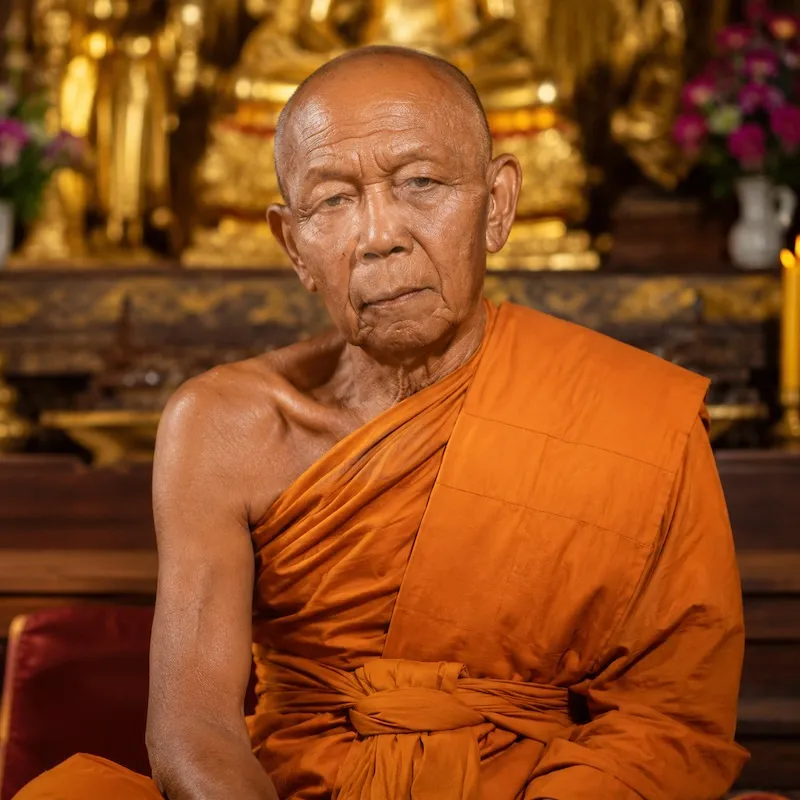
Phra Ajarn Chote (พระอาจารย์โชติ), Dhamma name Atichote Thammawaro (อติโชติ ธมฺมวโร), was the abbot of Wat Phutthaisawan (วัดพุทไธศวรรย์), a royal monastery in Ayutthaya, Thailand. Thai devotees usually call him Luang Phor Chote; Chinese collectors know him as A Zan Chu.
One clarification first, because it trips up a lot of overseas buyers. The Thai word ajarn (อาจารย์) simply means teacher, and it is used for both lay masters and ordained monks. Ajarn Chote is the latter — a fully ordained bhikkhu who became abbot of a royal monastery in B.E. 2565 (2022) and received the royal ecclesiastical title Phra Wachirayan Vi. (พระวชิรญาณ วิ.) in the meditation branch in B.E. 2567 (2024). His amulets belong squarely to the white (orthodox temple) category, not the occult one.
His name is known to collectors mainly for one reason: Wat Phutthaisawan is one of the few temples in central Thailand enshrining a large Jatukam Ramathep image, and the monk who brought that southern deity from Nakhon Si Thammarat to this Ayutthaya monastery was Ajarn Chote himself.
Timeline
The table below follows the temple website and the Thai Sangha registry (sangkhatikan). Market lore about him varies; official records do not.
| B.E. | AD | Event |
|---|
| 2502 | 1959 | Born on Friday 21 November, year of the pig |
| 2540 | 1997 | Ordained at Wat Phutthaisawan on 22 January |
| 2545 | 2002 | Jatukam Ramathep invited into the temple on 1 January; a 29-inch image cast on 19 November (Loy Krathong) |
| 2549 | 2006 | Temple elevated to royal monastery status on 23 June; the Nuea Duang series created in August |
| 2559 | 2016 | Appointed assistant abbot of the royal monastery |
| 2562 | 2019 | Granted the title Phra Khru Phawana Phattarakhun on 28 July |
| 2564 | 2021 | Appointed acting abbot |
| 2565 | 2022 | Formally installed as abbot |
| 2567 | 2024 | Granted the royal title Phra Wachirayan Vi. on 28 June |
To convert these dates yourself, subtract 543 from the Buddhist Era year. Our guide to dating amulets by Buddhist Era covers the edge cases.
Three Teachers, Three Lineages
Ajarn Chote did not inherit his practice from a single master. According to the temple record, three teachers shaped his work:
- Kru Kan Bamrungkit — his adoptive father and the younger brother of Luang Pu Si of Wat Sakae, known for treating bone disease, cancer and rabies bites by traditional means. From him Ajarn Chote learned the making of Brahma images, a method traced back to Ajarn Heng Phraiwan, the legendary lay master of old Ayutthaya.
- Kru Ching Koedkaeo — a disciple in the lineage of Somdej Lun, the Sangha patriarch of Champasak in Laos, celebrated on both banks of the Mekong for the art of the gold takrut implanted under the forearm.
- Kru Yen Khammi — adopted son of Luang Phor Tim of Wat Lahan Rai, who studied under him from childhood. He donated Luang Phor Tim's Phong Prai Kuman powder, hair relics and ashes to Wat Phutthaisawan for the making of Jatukam amulets, and personally mixed the powders and pressed the moulds for the temple's powder editions.
That third lineage is the key to understanding the temple's powder amulets. The Phong Prai Kuman of Luang Phor Tim is among the most coveted sacred materials in Thai amulet history, and Wat Lahan Rai Khun Paen from his hand now trades in seven figures. The Wat Phutthaisawan powder Jatukam of the mid-2540s carries a strand of that lineage in its material.
How a Southern Deity Ended Up in an Ayutthaya Monastery
The temple tells this story in full, and it is the best window into the man.
Ajarn Chote originally set out to cast a 29-inch Luang Phor Thuad image for his temple, enshrining ten thousand small Luang Phor Thuad amulets inside it. He went to Wat Chang Hai looking for herbal-clay Thuad amulets; they had none. At Wat Sai Khao the donation was 30 baht per piece — 300,000 baht for ten thousand, far beyond what he could raise. He returned empty-handed.
Back at the temple he made a vow before Luang Phor Dam, the principal Buddha image of the ordination hall. Days later a disciple introduced him to Anan Saetan, a layman from Nakhon Si Thammarat, who simply donated all ten thousand Luang Phor Thuad amulets and delivered them to Wat Phutthaisawan on 1 January B.E. 2545.
On that same day the visiting laymen performed a rite inviting Jatukam Ramathep. As the temple recounts it, the deity asked what was wanted; Ajarn Chote said he wished to learn the lore of the moonlight that shines over heaven and earth. Asked why, he answered: to help his fellow beings, and above all to find out whether such knowledge is real at all. The transmission followed, along with an instruction to look after the religion.
Later, seeing how far central Thai devotees had to travel south to pay respects, he vowed to enshrine a large Jatukam image at his own temple. The casting ceremony was held on Loy Krathong day, 19 November B.E. 2545, and seven-inch images were cast in the same ceremony for disciples to take home. That is the origin of the Jatukam shrine hall at Wat Phutthaisawan today.
His Best-Known Editions
Nuea Duang, "Above Fate" (B.E. 2549)
On 23 June B.E. 2549 Wat Phutthaisawan was elevated to royal monastery status, in the year King Bhumibol marked sixty years on the throne. Ajarn Chote created this series to commemorate both events and named it Nuea Duang, meaning above one's fate or destiny; it is also called the elevation coin.
Two ceremonies were held. In the first, on 15 August B.E. 2549 at 20:09, Ajarn Chote invited the power of Jatukam Ramathep and empowered the batch in the temple's Jatukam shrine. The second, on 20 August at 14:19, was a full Buddhabhisek consecration attended by sixteen senior monks, among them Luang Phor Ruay of Wat Tako and the then abbot of Wat Phutthaisawan, Luang Phor Huan. That is an unusually strong roster for a provincial temple ceremony.
The B.E. 2550 Jatukam editions
B.E. 2550 was the peak of the Jatukam craze, and the Wat Phutthaisawan issues of that year are the ones collectors know. They run in two material directions:
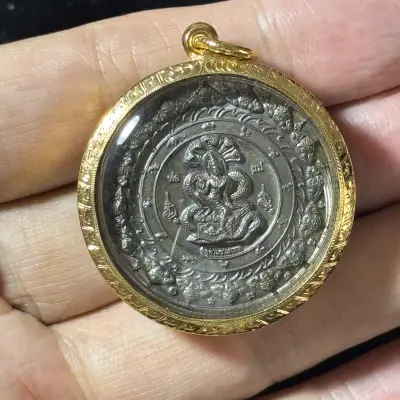
- Nawaloha (nine sacred metals) — dense alloy medallions, mostly within the Nuea Duang family, aimed at deflecting misfortune, commanding authority and reversing a run of bad luck.
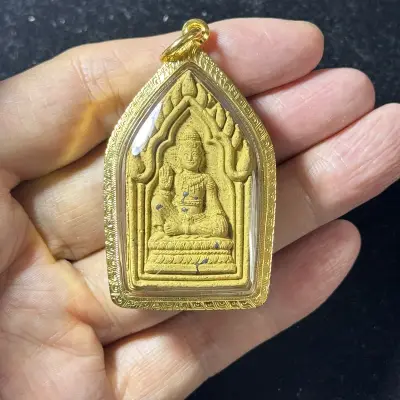
- Nuea Phong (sacred powder) — mixed and pressed by Kru Yen with Luang Phor Tim lineage powders. The best-known mould is Jom Khon, "chief among men," aimed at charm, attraction, customer flow and helpful patrons.
The two pieces currently in our shop sit one on each side of that line: a Nawaloha Khan Chong Pha Tawan Nuea Duang Jatukam and a powder Jom Khon Jatukam, both with third-party authentication cards.
Who Should Wear One
Jatukam is a deva-class amulet, so its effect is broad rather than narrow. Mapped onto Ajarn Chote's editions:
| Material | Primary effect | Best suited to |
|---|
| Nawaloha medallion | Protection, warding, authority and status, reversing bad fortune | Managers, those seeking promotion, people moving through risky environments |
| Sacred powder | Charm, attraction, customer affinity, helpful patrons | Business owners, sales and service work, those seeking a partner |
Pregnant women and children under sixteen are generally advised not to wear deva-class amulets. For the wider picture see our Jatukham Rammathep history and collecting guide.
Checking Authenticity
Jatukam is among the most heavily faked categories in Thai amulets — well over a thousand issuers put out Jatukam around B.E. 2550, and when the boom collapsed the secondary market filled with copies. Work through it in this order:
- Start with the card. A genuine third-party certificate states the registered edition name, material and year, and carries a QR code you can scan. See our guide to Samakom Phra certificates.
- Match the card to the piece. The Thai registered name spells out edition and mould; material, year and mould must all agree with what is in your hand.
- Read the die work. Temple issues have deep, crisp lettering on the reverse. Fakes typically show mushy characters, burred edges, and nawaloha that looks too evenly bright.
- Ask about provenance. Temple-issued or secondary-market return? A serious dealer can tell you, and give you the card number.
Visiting Wat Phutthaisawan
- Name: Wat Phutthaisawan / วัดพุทไธศวรรย์ / 普泰萨旺寺 (royal monastery, พระอารามหลวง)
- Address: 15 Moo 8, Samphao Lom, Phra Nakhon Si Ayutthaya District, Phra Nakhon Si Ayutthaya 13000
- Coordinates: 14.3394 N, 100.5597 E, on the south bank of the Chao Phraya
- Founded: 1353, by King U Thong (Ramathibodi I), founder of the Ayutthaya kingdom, on the site of the palace he occupied before his accession
- Hours: roughly 08:00–17:00 daily, free entry
- Getting there: about 1.5 hours by train from Bangkok to Ayutthaya station, then a ferry across the river and a 15-minute tuk-tuk ride; by car roughly 80 km on Highway 1 or Asian Highway 32, about 1.5 hours. The temple sits south of the historical park island, so a river crossing is involved
- Nearby: Wat Phanan Choeng (about 3 km), Wat Chaiwatthanaram (about 3 km), the core of Ayutthaya Historical Park (about 5 km)
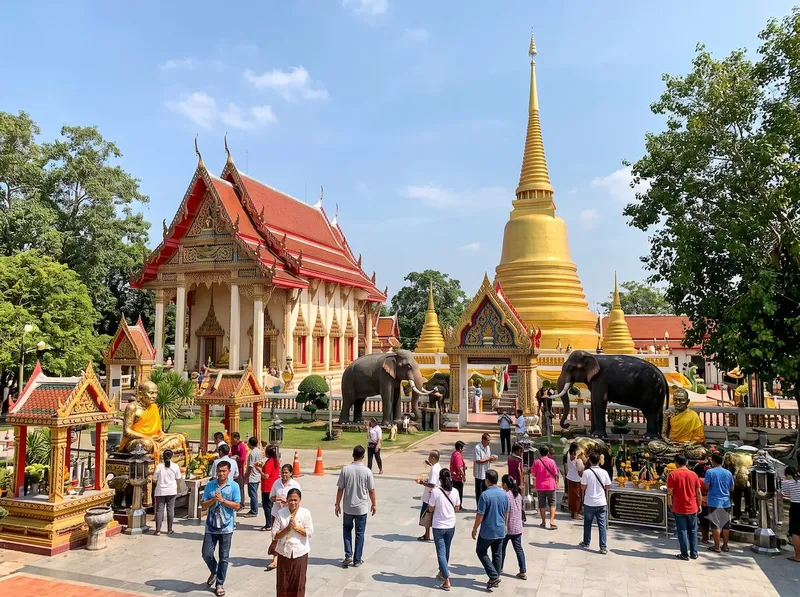
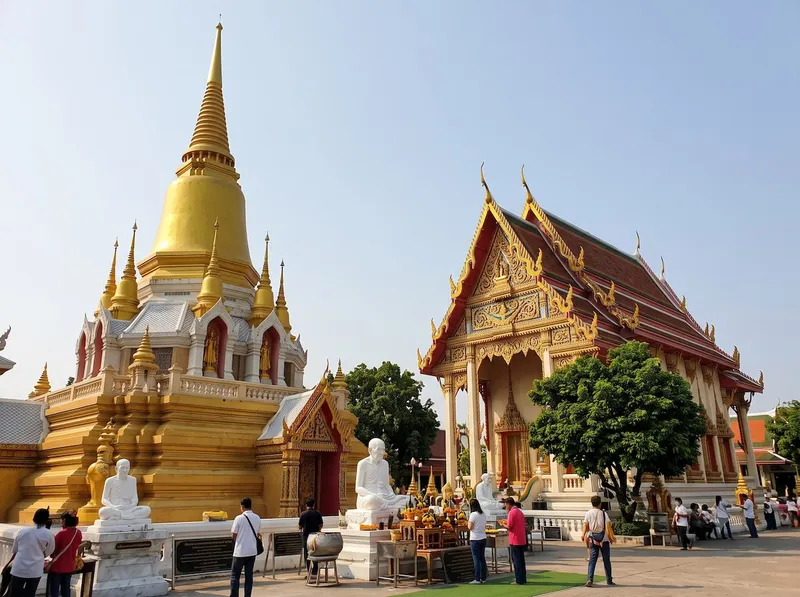
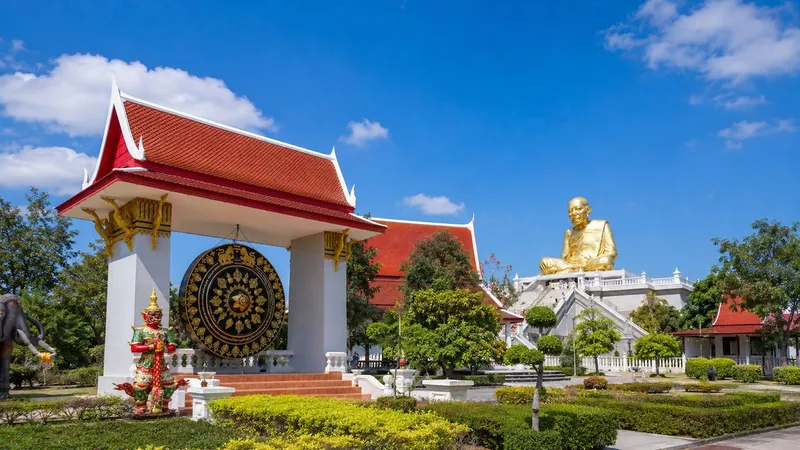
The main sights are the Khmer-style prang, the reclining Buddha hall, the principal image Luang Phor Dam, and the Jatukam shrine Ajarn Chote established. We also run accompanied temple visits if you would rather collect a piece in person.
Frequently Asked Questions
Are Ajarn Chote and Luang Phor Chote the same monk?
Yes. Phra Ajarn and Luang Phor are both respectful forms of address for a monk — the first emphasises his role as teacher, the second is the more colloquial "venerable father." His formal ecclesiastical title today is Phra Wachirayan Vi.
Is the Dhamma name spelled อติโชติ or อธิโชติ?
Thai Sangha records and the temple itself use อติโชติ (Atichote). The variant อธิโชติ turns up in the amulet market from time to time; it is a common misspelling of the same monk.
Are his amulets white or occult?
White, in the orthodox temple sense. He is a royal-monastery abbot holding a royally granted title, and his editions are regular temple issues with no occult restrictions attached.
Is he still alive?
Yes, and still serving as abbot. Living masters have one practical advantage: batch details, ceremony dates and the roster of presiding monks are all on public record, so there is no doubt about whether a piece was actually consecrated.
Is B.E. 2550 Jatukam still worth collecting?
It depends on the issue. Mass-produced boom-era batches have little upside, but pieces from a named temple with a documented ceremony and a third-party card hold their value both as collectibles and as amulets to wear.