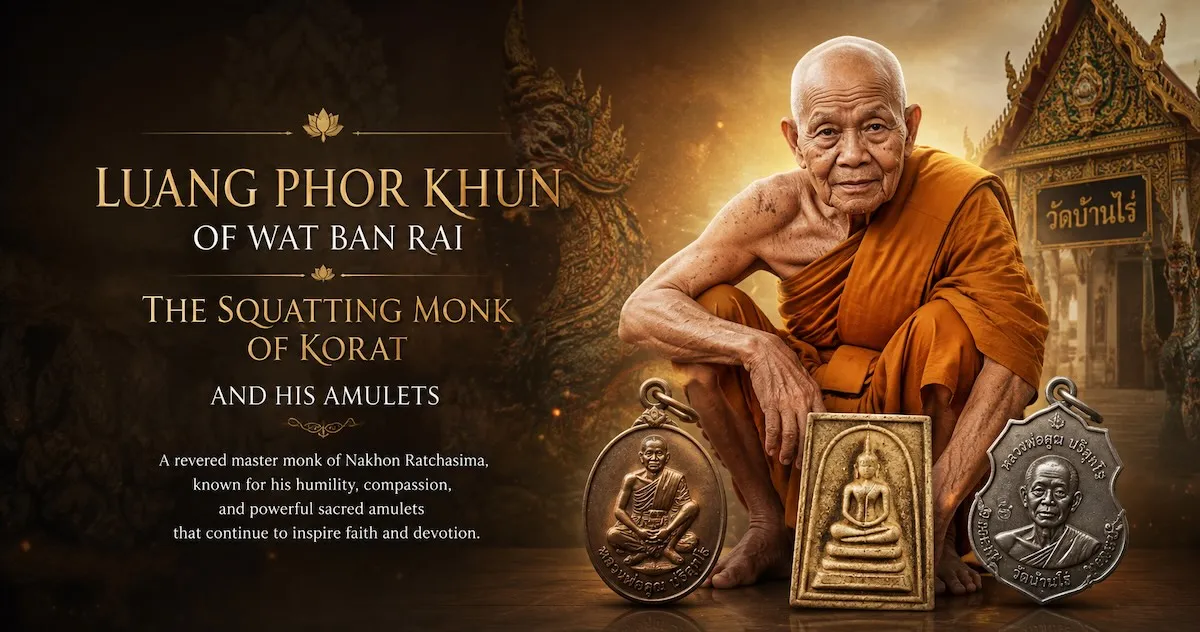
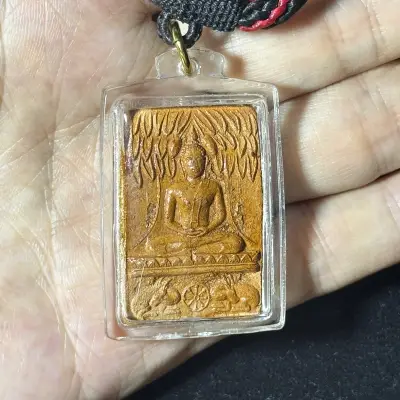
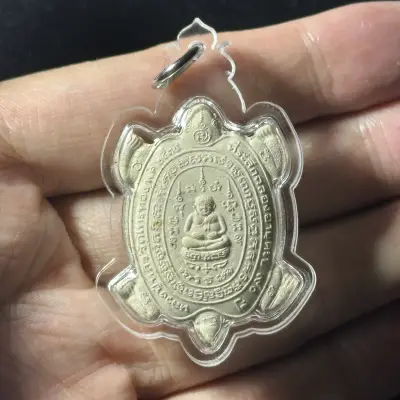
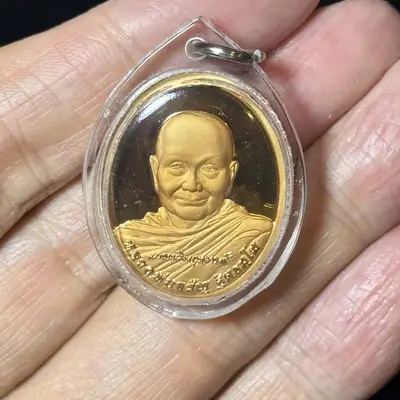
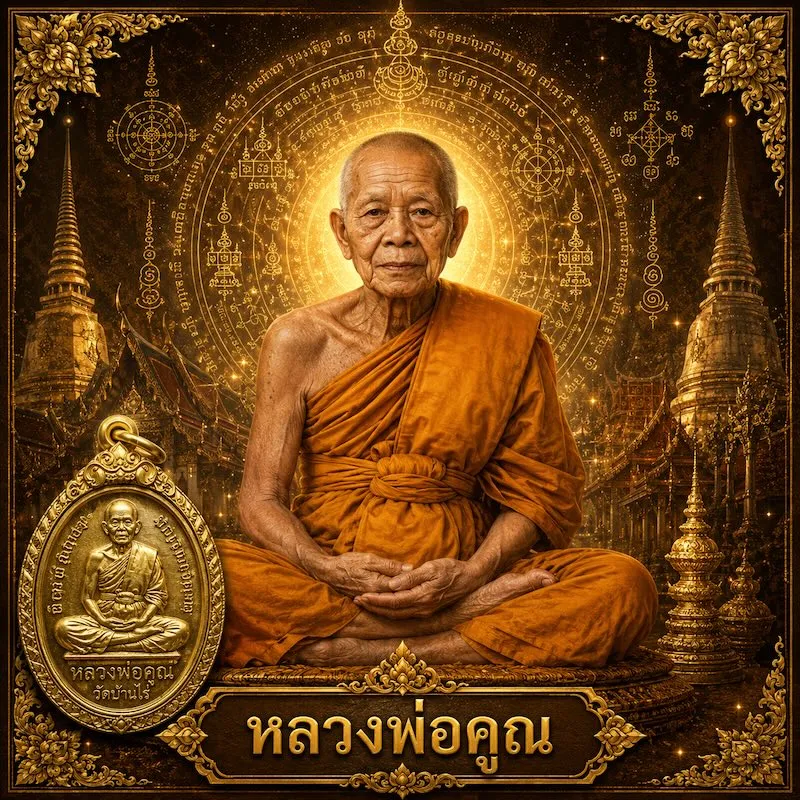
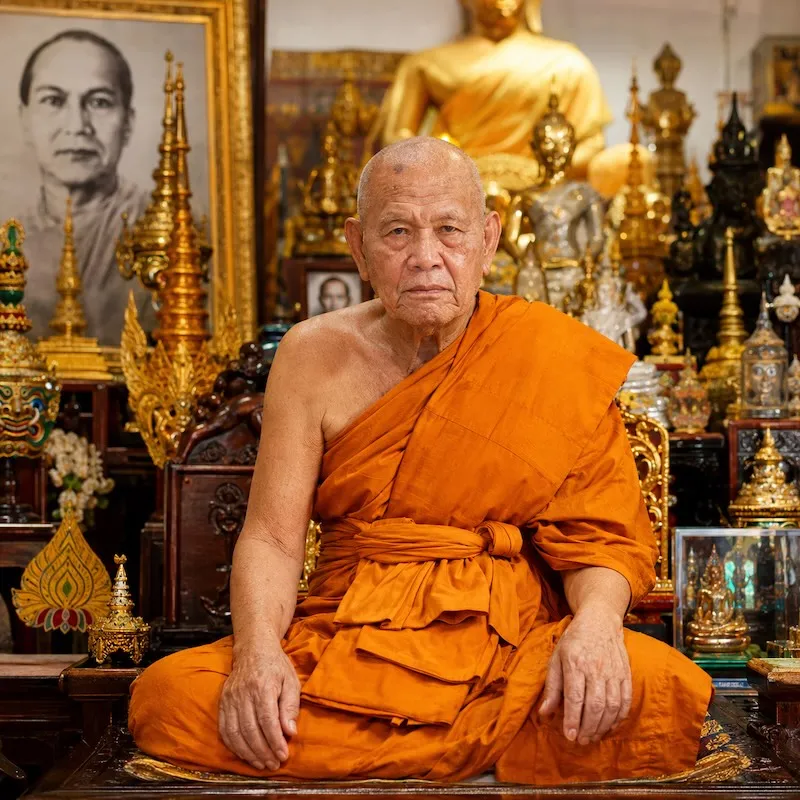
Luang Phor Khun Parisuttho (1923-2015), abbot of Wat Ban Rai in Nakhon Ratchasima, is one of the most widely revered monks in modern Thai Buddhism. Known for blessing devotees while squatting, for addressing everyone in the same blunt Isan dialect, and for giving away almost everything he raised, he became the master most associated with prosperity amulets. This guide covers his life, his teaching, why his amulets are collected, and how to approach them sensibly.
I. Who Was Luang Phor Khun?
Luang Phor Khun Parisuttho (Thai: หลวงพ่อคูณ ปริสุทฺโธ) was born on 4 October B.E. 2466 (A.D. 1923) in Ban Rai village, Dan Khun Thot district, Nakhon Ratchasima province — the north-eastern region Thais call Isan, and the city outsiders usually know as Korat. He spent the greater part of his monastic life at Wat Ban Rai, the temple of his home village, and remained its abbot until his death on 16 May B.E. 2558 (A.D. 2015) at the age of 91.
Within Thailand he is counted among the small group of modern masters whose names circulate far beyond their own province. Thai collectors often place him among the "Nine Great Monks," and a saying that circulates in amulet circles sums up how his speciality is understood relative to his peers: for warding off disaster, people turn to Luang Phor Boon; for prosperity, they turn to Luang Phor Khun.
II. The Squatting Monk: Why His Manner Made Him Famous
Much of Luang Phor Khun's reputation rests not on doctrine but on bearing. Photographs of him almost always show the same thing: an elderly monk squatting on his heels rather than sitting in formal posture, cigarette often in hand, tapping a devotee on the head to bless them. Generals, pop singers, farmers and taxi drivers all received the same gesture, in the same position.
His speech was equally levelling. He addressed visitors in blunt Isan dialect, using the same informal pronouns for a cabinet minister as for a village neighbour — a choice that in the Thai social register is startling, and which Thais read as a refusal to perform hierarchy. For a country where status is encoded in every sentence, a revered monk who spoke to everyone identically became a kind of moral statement in himself.
This is worth understanding before looking at his amulets, because it explains their appeal. People were not only acquiring an object associated with a famous monk. They were acquiring a connection to a figure who was widely believed to be indifferent to wealth and status while being surrounded by enormous amounts of both.
III. What He Did With the Money
Luang Phor Khun's amulets and temple projects raised very large sums, particularly through the 1990s when Thailand's economy was booming and demand for his work reached its peak. What is consistently reported about him is that he kept almost none of it.
Funds raised in his name went into hospitals, schools, universities and public works across Nakhon Ratchasima and beyond. He is remembered for treating donations as something passing through his hands rather than arriving in them. He also left instructions that his body be donated for medical study rather than given an elaborate funeral — an unusual wish for a monk of his standing, and one that was honoured after his death.
For collectors this matters in a practical way as well as a moral one. The scale of his charitable output is part of why his name carries the weight it does, and part of why demand for pieces associated with him has stayed durable rather than faddish.
IV. His Teaching in One Sentence
Luang Phor Khun is frequently quoted, in Thai and Chinese amulet communities alike, as telling devotees that an amulet helps you three parts, and you must do the remaining seven yourself.
The sentence is worth taking seriously, because it is the opposite of how amulets are often marketed. He is not describing an object that produces outcomes. He is describing a support for effort that has to exist first. Read alongside his own conduct — a monk who raised fortunes and redirected them — the statement is consistent rather than modest boilerplate.
Thai masters broadly resist the mystification of amulets, and Luang Phor Khun stated the position more bluntly than most. Anyone approaching his work should hold onto that framing. Our complete beginner's guide to Thai amulets covers the wider cultural context in which these objects are made and worn.
V. Why His Amulets Are Collected
Several factors combine to make pieces associated with Luang Phor Khun among the more sought-after in the modern market.
Association with prosperity. Within Thai amulet culture he is the master most strongly linked to wealth and livelihood, to the point that devotees have long used affectionate epithets casting him as a living source of fortune. Whatever one makes of that framing, it is the reason a large share of demand exists.
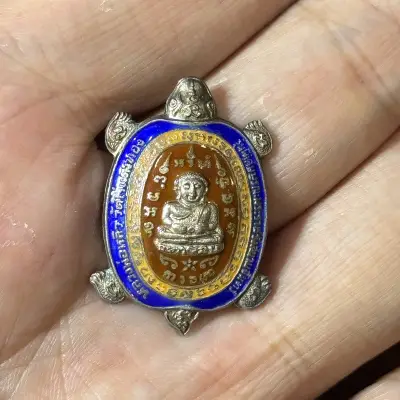
Self-image pieces. Amulets bearing his own likeness — rather than a Buddha image or a deity — are especially collected, because they are the most direct expression of the connection to him personally.
A closed supply. Since his death in 2015 no further pieces can be consecrated by him. Thai market behaviour after a revered master's passing is fairly consistent: prices for authentic pieces tend to firm up over the following years, then settle into slower appreciation. Earlier pieces, made when he was less widely known and produced in smaller numbers, generally sit at the top of that range.
If you are thinking about this from a collecting rather than a devotional angle, our roadmap for starting a Thai amulet collection sets out how year, rarity and provenance interact.
VI. A Word of Caution on Authenticity
Fame and price attract imitation, and Luang Phor Khun's work is among the most widely copied in the market. This is not a reason to avoid it; it is a reason to be deliberate.
Two habits protect a buyer more than any visual checklist. The first is to buy where the piece comes with documentation you can verify independently rather than a verbal assurance. The second is to be sceptical of any early-period piece offered at a price that seems comfortable — for a master this heavily collected, an unusually easy price is information about the piece, not a favour to you.
Common questions about verification, pricing and what documentation should look like are covered in our Thai amulet FAQ.
VII. Where He Sits Among His Contemporaries
Luang Phor Khun belonged to a generation of Thai monks who became nationally known figures in the second half of the twentieth century. He is often grouped with contemporaries such as Luang Pho Pern of Wat Bang Phra, each associated with a different domain — Luang Pho Pern with sacred tattooing and protective power, Luang Phor Khun with prosperity and livelihood.
Grouping monks by speciality is a convention of the amulet market rather than a claim about their practice, and it should be held loosely. It is useful mainly as a map of how Thai devotees themselves talk about these figures.
VIII. Visiting and Learning More
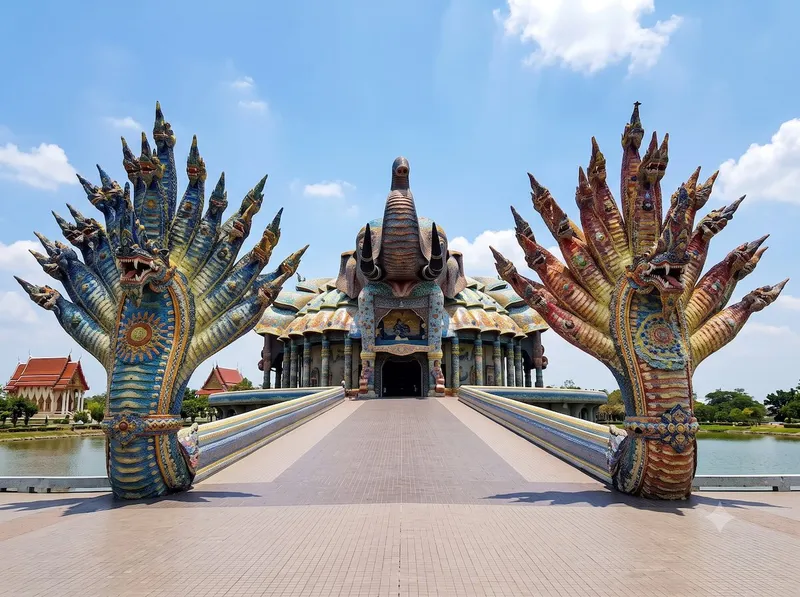
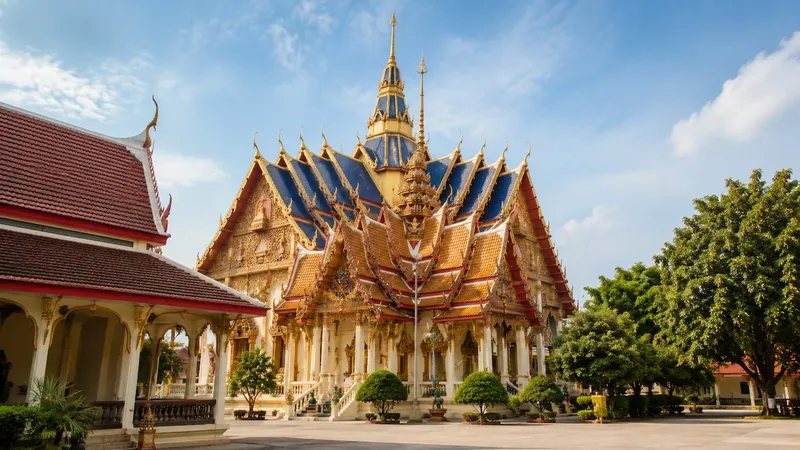
Wat Ban Rai in Dan Khun Thot district remains an active temple and a destination for devotees, with a large temple complex developed in the years around and after his death. For readers building a broader picture of the masters, temples and traditions behind Thai amulets, our encyclopedia section collects profiles of individual monks and the temples associated with them.
Luang Phor Khun's own instruction remains the most useful thing to carry away. The amulet is three parts. The remaining seven are yours.