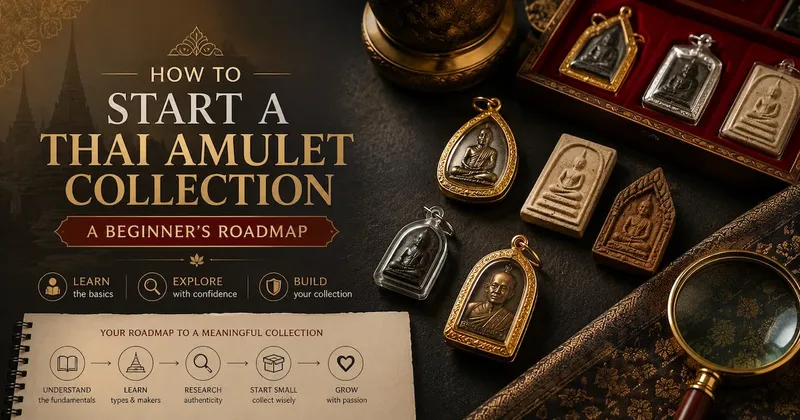
Why Collect Thai Amulets?
Thai amulet collecting sits at the intersection of spiritual practice, cultural appreciation, historical study, and investment. A well-built collection tells a story — of Thai Buddhist history, of legendary monks, of regional traditions and artistic evolution. Unlike many collectibles, Thai amulets carry living spiritual significance: they are not inert antiques but active spiritual objects that continue to serve their wearers.
The Thai amulet market is also one of the few collectible markets that has shown consistent long-term appreciation. Top-tier pieces have increased in value by orders of magnitude over decades, making informed collecting both spiritually and financially rewarding.
Phase 1: Learn Before You Buy
The single most important advice for new collectors: invest time in education before investing money in amulets. The knowledge gap between a beginner and an experienced collector is the difference between paying fair prices for genuine pieces and overpaying for fakes.
- Study the major amulet types — Learn to recognize Phra Somdej, Phra Pidta, Khun Paen, and Luang Phor Thuad on sight.
- Learn the major monks — Understand who Somdej Toh, Luang Phor Boon, and Luang Phor Koon are and why their pieces command the prices they do.
- Understand pricing factors — Read our price guide to understand why values range from ฿400 to ฿3,300,000+.
- Join communities — Thai amulet forums and social media groups (particularly Thai-language ones) are invaluable for learning from experienced collectors.
Phase 2: Start with Affordable, Genuine Pieces
Your first purchases should be in the ฿700-100 range — genuine temple amulets from recent ceremonies by reputable monks. These pieces teach you about materials, weight, texture, and quality without risking significant money.
- Buy from trusted dealers — Establish relationships with one or two reputable sellers who can guide you and answer questions.
- Choose variety over duplicates — Start with one of each major type: a Somdej, a Pidta, a Khun Paen, an LP Thuad. Handle them, compare them, learn to feel the differences.
- Keep records — Document each purchase: seller, price, claimed temple, monk, and year. This habit pays off enormously as your collection grows.
Phase 3: Develop a Focus
As your knowledge grows, most collectors naturally gravitate toward a specialty:
- By monk — Collecting everything from a single master (all Luang Phor Tim pieces, all LP Koon editions, etc.)
- By type — Comprehensive collections of a single amulet type (all varieties of Phra Pidta, all editions of Phra Somdej)
- By region — Northern Thai (Lanna) amulets, southern Thai pieces, Isan tradition
- By era — Pre-war vintage, mid-century golden age, or contemporary masters
- By purpose — All protection amulets, all wealth amulets, etc.
Having a focus helps you build deep expertise in a specific area, which is essential for identifying genuine pieces and assessing fair values as you move into higher price ranges.
Phase 4: Build Toward Premium Pieces
Once you have a solid foundation of knowledge and a collection of affordable genuine pieces, you can begin exploring premium territory (฿9,900+). At this level:
- Competition certificates matter — For pieces above a few hundred dollars, a certificate from a recognized Thai amulet competition (Samakom) significantly reduces authentication risk.
- Provenance chains matter — Know where the piece has been since it left the temple. Documented ownership history adds both confidence and value.
- Condition matters — Minor differences in condition can mean major differences in value for vintage pieces. Learn what constitutes good, fair, and poor condition for each material type.
Common Beginner Mistakes
- Buying too expensive too early — Spending ฿16,500+ before you can reliably distinguish genuine from fake is inviting expensive lessons.
- Ignoring provenance — "It looks right" is not authentication. Demand sourcing information for every purchase.
- Chasing trends — Popular monks or amulet types go through price bubbles. Buy what you genuinely value, not what is currently hyped.
- Neglecting storage — Improper storage damages both the physical amulet and its value. Invest in proper cases and elevated display early.
Start Your Collection
Browse our collection for verified temple-sourced amulets at every price point. Every piece includes provenance information and sourcing details. For buying confidence, read our authentication guide.